Still searching for your perfect jersey? Explore our best-selling products—we're confident you'll find a style that's just right for you in our diverse collection.
A football club’s badge is so much more than just a mere piece of design—it serves as the emblem of the club, and the fans feel the identification and unity through it. We can say this about particularly the Leeds United emblem, the supporters of which always have the club sign and their identity interconnected both metaphorically and emotionally; this is attributed only to the true fans’ love and loyalty. In this write-up, we are going to become quite familiar with the history of the Leeds United logo starting from its very first version and then spread the entire history for the fans to understand the evolution and all the meanings attached to each symbol on the crest. From the old and well-remembered shields that once belonged to the club to the updated logos that persist as a somewhat polarizing issue around fans—we will be here to take you through the long, treasured and cultural path of this logo. Possibly, for you who have been following the club for your whole life or you are just a person that is into the powerful impact of football in molding and perpetuating traditions, the post is still going to be super interesting as it is revealing an important part of football and its symbols.
Introduction to the Leeds United Logo
Overview of the Leeds United Badge
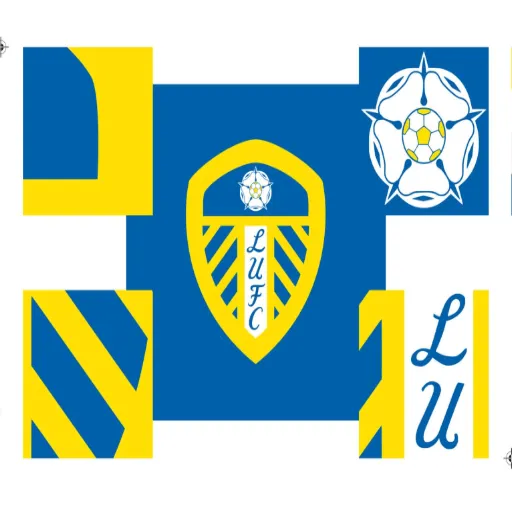
It’s a known fact that the Leeds United badge was given a few tweaks and updates in design time after time since the club was established, and each time saw it being related to a different era and identity in the history of the club. In the current badge, the club’s name, “Leeds United,” is the most visually striking feature and it is put above a shield. The center of the design is where a white rose is placed, an unmistakable symbol of Yorkshire pride and, at the same time, the club’s roots and connection to the region. With most of the white, blue, and gold hues being the dominating colors, they align the team’s traditional kit and also evoke a feeling of unity and tradition among the fans.
The club’s badge has not merely been a symbol, but it has been an expression of the fans’ dedicated and loyal support too. And though there have been discussions around the modifications of the symbol in the past, it has been the changes that have been the undeniable wakeup call for the necessity of fan participation in club identity designing. The badge is still an inspirational and unifying force that helps Leeds United fans with the feeling of being part of the same family and the pride to which the club leads.
Importance of the Crest in Football Culture
A football club’s crest is more than just a logo—it is a strong symbol of identity, unity, and tradition. The badge assumes the role of a sign of honor and burden for the players, and at the same time it is the source of pride and the glue for the fan base. The complex designs frequently tell a story rich in history, highlighting important events, the local culture, or historical accomplishments, hence making the crest a story in itself.
The logo is not just a mark; it creates feelings as well. For supporters, it is a sacred piece and they are going to use the logo on jerseys, scarves, and souvenirs to signify that they share a lineage of the same feeling. Although increasing the crest can amplify its connection with young fans, it is very necessary to keep the tradition to prevent pushing the core oneself from it by updating it too far. Everywhere, people who play football consider the badge as a link, it is a giveaway that not only helps to announce fans on match days but also inside the stadium.
Fan Perspectives on the Logo
More than just a design, the logo is seen by the supporters as the powerful embodiment of identity, pride, and heritage. It is common in the context of changes to the logo that people argue with each other with the logo being discussed as a very emotional topic. The good old days are one of the things the fans respect in new designs and at the same time invites newness by the trend being adapted. Through the history of other clubs, it has been indicated that the fan base would more than agree with a slight but clever twist in the redesigning of the logo than with the making of a totally new one and removal of all heritage symbols. On the other hand, sudden and really bad changes might get very negative feedback from the fans, pointing out the need to consider the sensibilities of the faithful backers before doing anything on this line. The ongoing interaction between the two points of continuity and transformation is a significant part of the fans’ attitude shaping the logo into a thing that both the long-time and the younger followers can relate to.
Meaning and History of the Leeds United Crest
Origins of the Leeds United Logo
The Leeds United logo is an emblem that was originally designed in 1919 to celebrate the club’s formation. It has, through the years, always carried with it the spirit of Leeds, the spirit of Yorkshire, and the spirit of the club. The earliest depictions featured the White Rose very prominently, and it was this sign of the Yorkshire flower which made the deepest connection with the community and simplest way of expressing the club’s place in the community. With the mid-20th century commercialization of football, the crest followed the trend and not only adopted the team’s colors but also became more stylized and simple. Big changes in the 70s and 80s brought forward the peacock and LUFC symbol, which were both to be very much the image of the time and the team.
There is a balance between modern design and tradition that is still being observed in the Leeds United crest today. The badge, introduced in 1999, mainly consists of a shield and the well-known “Leeds Salute” symbol at the center—a true gesture of the devotion to the club’s fans. The arranged colors of blue, white, and yellow speak of the team and its roots. Each version of the logo is not only the club’s identity but also a mark of its continuous connection with fans and its vow to cherish Leeds’ culture and history.
Symbolism Behind the Owl in the Badge
It’s the case that an owl that appeared in the Leeds badge can be seen as a tribute to the Savile family. Three owls of the coat of arms of Leeds were figured out by them and span all over the city. At the same time, those birds bring about the notion of wisdom, vigilance, and a deep connection with the city’s heritage. By means of making an owl a significant part of the badge, Leeds United not only brings up its root but also shows respect for the cultural and historical narratives of the city where it’s situated. The owl, an emblem that has been associated with intelligence and being watchful from time immemorial, thus becomes the team’s symbol of resistance and strategic orientation—qualities that are shared by both players and fans. This well-thought-out integration step lifts the badge above the logo level alone and engages in a unity factor and at the same time the badge turns into a mark of an endless legacy.
Evolution of the Badge Over the Years
The badge of the Leeds United football club has had different designs while having the same essence and the development of the club. When the club was first established in 1919, the emblem was plain and included the main element – the coat of arms of the city with three stars that represented three famous spots in the area. Already in the ’60s the badge was made even more recognizable and likable with the introduction of the “LUFC” that was closely linked in the center of a large and visible crest. The creation of the modernized image of the team as well as changing rankings in the English football must have been effectively communicated through these dual means of the club’s visual identity.
There was another significant time of change in the 1980s, when the white Yorkshire rose became the ever popular icon, just like the team’s area-oriented self-esteem and ties to the foundations. Different versions of the emblem during the 90s and early 2000s showed stronger design components being added, such as a shield, the emboldened color contrasts, which were so many times combined with the club’s iconic golden-yellow and blue color scheme. Yet, every update acted as a bridge between new and old where the fans could still accept the charming history-steeped but forward-going badge.
Today, the badge of Leeds United signifies not only a mere football club but also the love and fervor of the fans and the locale of Leeds. Elements such as the Yorkshire rose that are always trendy and other new features pointing towards grit and honour are fused in such a way that the badge becomes a very significant and easy-to-adapt symbol for present and upcoming generations.
The Current Leeds United Badge: Design and Features
What’s New in the Latest Badge Design
The most recent version of the Leeds United badge reflects a sophisticated and contemporary reinterpretation of its heritage icons, thereby securing its place among current fans and still signaling its past loyalty. The design expresses the Yorkshire rose as the core design element, which as a traditional symbol of the Midlands is the club’s utmost tribute to its regional origin. The ascetic, modern style in which the rose was portrayed makes it a compelling and versatile visual element in both electronic and physical cases.
Moreover, the new badge has a simple aesthetic, deleting all the unnecessary elements so as to create an elegant and strong sign. The well-known name of the club, “Leeds United,” takes a high position and is shown in capital letters; that the club is proud and united will not be missed. The selection of colors, which is mostly about white, gold, and blue, not only mirrors the old ways and the spirit conquering but also brings out a determination as well as an aspiration to be great.
The scale upability of this redesign is definitely one of its main features. The logo, regardless if it is a stadium banner, digital platform or a piece of merchandise, sticks out and maintains the same level of clarity and impact; therefore, it stands in line with the modern brand standards. This redesign guarantees that the Leeds United brand remains loved and relevant as ever, not only by its local fanbase but also amongst visual communication aficionados worldwide.
Comparative Analysis with Previous Versions
There’s a noticeable move of both the Leeds United badge from one era to another and this inclusiveness is the audience-centricity. Before, the designs were such that you could find a lot of mastery in the design and they mostly revolved around the usual motifs such as those of the past, which was a good thing in terms of heritage, but at times that could lead to them being not very flexible in various forms of the crests. They were very complex as far as their astronomical degree of detail was concerned; I mean they would show things like the Yorkshire rose or peculiar lettering that’s hardly visible any longer but that’s a sort of bishoping or professionalizing that dates or harms design in the long run because of its ties with a certain period.
The badge that is now in use is the very essence of simplicity and versatility, complying with the modern branding canons. The design with simplification at its heart is most suitable for continuous and powerful presence everywhere; be it social media icons, banners, etc. Contrary to the older badges that were mostly glorifications of the past, this redesign is placing tradition together with the most modern aesthetic trends, thus showing both the history and the future ambition of the club. The method chosen to refurbish the badge is thus the perfect balance between the historical aspect and the reaching of a younger, more globally diversified audience which means that the club will be continuously upgraded in a world that is more and more digital every day.
Fan Reactions to the New Badge
The new badge has been revealed and the fans have expressed not only admiration but a mix of feelings towards the makeover, presenting deep reaffirmation of the bonding that the fans have of the club’s identity. Some fans have posted comments about the new look they consider as a perfected take that goes with the future and progress face of Leeds United. The others, on the other hand, are worried that the change is too radical and that it is not closely related to the heritage side of the club. The different social media platforms have been very active in this case, one might say that the arguments are mostly connected to the new vs the old but still, the bold step of the club is supported mostly by the lesser known voice on the unspoken side. Although opinions are diverse, one thing stands out yet — the new badge has given rise to lively amity among different people and it is very obvious to see that the Leeds United global fan community is very pasionate and devoted.
Impact of the Leeds United Logo on Club Identity
How the Logo Represents Team Values
The new Leeds United badge has been redesigned to harmonize with the synergised, fearless, and proud side of the club. There is a mix of simplicity with boldness that goes along with the logo as it is moving strength and progress at the same time—the core values of the team and fans. No one can be indifferent to its straightforwardness and impressive looks that represent a common front, it is a tribute to the emotional unity between the players and the Leeds community as well as the fans. Besides, the design also gives credit to the roots of the club in a very subtle way, which would mean that even though it is adopting new ways it is always keeping the old ones close to its heart. The logo wants to reach out to the whole existing and potential fan base across the globe, the only thing that is kept in the minds of fans and observers alike are the soccer club’s banner of pride and ambition that beckons everyone to the same spot.
Connection Between the Badge and Community
The badge is a link between the supporters of Leeds United and the club itself, representing a relationship that goes beyond the stadium. Each detail of its design is carefully picked to be a sign of the club’s values, past, and future dreams that will create a strong feeling of membership in the fans. The badge not just the visual identification of the club; it is more a sign that the Leeds community is resilient and passionate. This bond is made during the matches when the badge turns into a bond emblem and is seen on and off supporters’ chests who show the badge as their unity and loyalty. The badge links the traditional with the contemporary, the badge thence encapsulating the very being of the Leeds spirit, becoming the communion point for the engagement of genuineness through the generations.
Marketing and Branding Strategies Involving the Crest
Leeds United logo is not only an emblem it also plays a crucial role in the sports club’s sales and marketing efforts. It is a symbol of the great past of the team and at the same time communicates with the modern-day public, turning it into a leading component of both domestic and international campaigns. Also, the crest is made a part of merchandise, digital platforms, and promotional materials to enable the supporters to manifest their loyalty in different ways. Luxury brand partnerships very often embrace the crest to design special-edition items, giving rise to thrill and building a feeling of being the chosen ones among the fans.
Moreover, the crest can also be a vital part in various digital activation formats, e.g. AR filters and personalized fan content, which makes it omnipresent even at non-game events. Moreover, Leeds United’s deployment of the crest in community-centered events and charity activities not only creates but also strengthens any positive ties thus securing their one and only badge’s embodiment in the region. By this approach, Leeds United will always be connected with their crest, which is regarded as the unbroken identity of the club, resulting in increased fan loyalty as well as brand-awareness among the public.
Conclusion: The Significance of the Leeds United Logo for Fans
Summary of Key Insights
The Leeds United crest, if understood in my term, is not just a logo but an emblem that is very powerful for it is encapsulating the club’s identity and values. For the fans, that is a powerful representation of a deeply emotional bonding to the history, achievements, and the dreams for the team’s future. The crest, by its very appearance, acts as a rallying point for a whole family of fans and it brings back memories of great moments and the feeling of belonging to the Leeds United fold. The character and the meanings expressed by the crest are not words but figures and therefore, such is a very effective and brief way of reminding the most seasoned fan of his or her roots and at the same time attracting new blood into the family and maintaining loyal support.
The crest also plays a critical role off the pitch, acting as a tool for broader engagement. Whether through merchandise, social media campaigns, or collaborations with local communities, the logo ensures that the Leeds United brand remains visible and relevant. For fans, this dynamic presence reinforces their association with the club, transcending the immediate experience of matches. The club’s strategic integration of the crest into community initiatives further solidifies its importance, fostering goodwill and amplifying its identity while creating touchpoints that extend beyond traditional football fandom.
In general, the crest transcends being just a famous picture; it is a channel of the common identity, the pride, and the bond. It is the very heart of fans, people, and players, this extraordinary spirit of Leeds United which the crest represents, taking the stadium and the district as the epicenter of the mutual respect of all parties.
Future of the Leeds United Badge
I am a profound admirer of the Leeds United Club, so I favor the badge of the club to be designed in the way that it reflects the tradition and at the same time offers the stamp of the modern era. The badge has always been the entity of a mere piece of cloth, it has been the religious symbol for fans, players, and the whole Leeds community in general. Even though there are some talks going on about the badge’s face-lift in the following years, the notion of a tip of the hat to the club’s spectacular past, besides incorporating features that go hand in hand with its ever-changing image and the pursued goals, is still on my head.
Recent reports imply that Leeds United have been researching the conceptual designs which might be a new look of the badge but without undoing its roots. I, for one, would appreciate a compassionate designing strategy which is very much dependent on the fans for the new crest, hence the firm connection of the emblem to the hearts of their supporters. In view of the fact that the club, in 2018, tried to bring in a brand new badge, but the reaction was unfavourable due to the lack of communication with the most loyal members, I see this as a wide-open door for the involvement of very skilled artists in the process, co-incident with the fans’ love for the club.
The new emblem of the Leeds United football club must, after all, reflect the team’s characteristics such as resistance, striving for success, and experience. It is not important if for instance, the white rose of Yorkshire is included or the well-known LUFC letters have to appear in a new light, but the design must communicate the recognition of the past and the hope for a better future. To my mind, the badge would always be very close to my heart, and it will be very interesting to watch it change gradually, thereby, still at the same time bringing together and exciting the Leeds United supporters.
Encouraging Fan Engagement and Connection
As far as I am concerned, enhancing fan engagement is all about providing real ways for supporters to be part of the club’s story and actively involved. A mix of conventional and avant-garde practices may lead to this. Among the traditional measures, the use of social media draws the attention as it is the most efficient of all, allowing supporters to exchange views, to praise the team’s successes and also to link up to their like-minded counterparts all over the globe. One way to do this is to have a friendly and up-to-date profile on several social media platforms like Twitter, Instagram, and Facebook that will enable the club to initiate dialogues, tap into fan feelings, and create awareness among the public regarding the next matches, and even the events and initiatives through the network.
Apart from the digital attraction, human contact is still very important. The host of these events like fan events, meet and greet session with players, and also the community-felt activities also help form the most robust club fan base and the strongest connection between the club and its supporters. Moreover, in the few cases when it is possible, including the fans in the major decision-making process is very important. Surveys, polls, or discussion forums where the fans’ views can be heard are the among the most effective means for fan involvement. Another positive impact that can result from the fans taking part in the club’s activities such as voting on matchday music or the design of oncoming jerseys is that fans would have a sense of ownership and association with the club thus being more loyal supporters.
In the end, the secret to continuously keeping in touch with fans is building a very receptive and inclusive atmosphere which respects the club’s traditions and at the same time calls the fresh supporters to its ranks. By taking the fans’ feedback, giving them a big “THANK YOU” for their help, and creating experiences that not only reflect their love for soccer but also their bond with Leeds United, the club can go on to influence many more generations of fans.
The Leeds United club badge mainly features the white rose of Yorkshire, which symbolizes the club’s origins in the city of Leeds and the West Yorkshire area. The rose and ball badge made use of the rose of yorkshire and a football to connect local identity with the club’s being a professional football club that competes in the premier league and has been at the top at times throughout its long history. The football badge also drew on some of the items located in the city coat of arms of Leeds and previous Leeds City Football Club badges which go back to 1919 and earlier. Fans, on the one hand, often regard the badge as a gesture of regional pride and football league customs on the other, it appears as white accents or with a blue outline across leeds kit on many home and away shirts. The current badge and its previous versions, alike, have been influential in terms of the design of the kits. They paved the way for striped kits which replaced the traditional blue and gold, and sometimes new kits such as blue and white, or yellow and blue.
Meaning and history: How did the white rose become part of the club emblem?
The white rose of York has been long considered the symbol of Yorkshire and at the same time Leeds United took it as a very clear sign of the support of the original land, i.e. the historical county emblem. When the white yorkshire rose appeared smartly in the club’s badges and shirts, the connection of the club with west yorkshire and the wider history of leeds united football club was already made, showing respect for the local culture and at the same time the city of leeds being the real community the club represents. The historical events like when they were promoted to the premier league and the successes they had under managers like Howard Wilkinson and Revie were only some of the reasons for which the white rose ring became a part of the club’s heritage. The white rose can be seen quite often in a circle or shield design, the latter sometimes with a blue circle or blue lines and in white colour accents to make the club logo more distinguishable. Still, even on occasions when non-traditional crests like the smiley badge or the owl badge were suggested or briefly used, the bottom line was always the supporters going back to and insisting on the traditional rose as the authentic emblem.
Leeds United new badge: Why was a new logo introduced?
On some occasions, it was necessary to adjust the brand symbol in order to make it look newer, to widen the appeal to the worldwide audience, and/or to signal a new period that ensues after the change of ownership and the fixing of the team problems. Ideas for the renewal of the badge have centered on a variety of alternatives, e.g. a modern model of a shield, a blue round-contoured enclosure of the white yorkshire rose, or the rose and the ball figures, put in a stylized way and aimed at the creation of a new logo that could serve both as a clothing item and be the object of loyalty of the fans around the world. Over some seasons the team was seen to try out different emblems such as the peacock, three owl birds, and a smiling face in golden color, all of which were displayed on the sports gear used in training or on the promotion materials. However, the negative reaction that came as a result of the club´s decision to go with the new motifs was enough for the management to retreat and go back to the former traditional badges seen in the club´s historic period. The club´s handling of the situation up against the plugs and plugs motif as well as commercial needs in the new design is carried out by the management and the makers. Sporting milestones have also been reflected in badge changes, from the campaigns of the first division and the second division to promotion to the top tier.
Badge meaning and history: What is the origin of the rose and ball badge?
There was a great period in English football when the rose and football badge merged the white rose and the football to establish regional pride as well as the football club’s character as a football club in English soccer. This rose and ball design was a reminiscence of the old club badges and connected to the history of Leeds United, the times when Leeds City existed independently before 1919 and later the club reformed and grew. The logo was very practical for production on shirts, scarves, and the leeds kit, and it has been used in different color combinations like blue and white or yellow and blue to match the strips. Eventually, the badge was adjusted for various shield designs and at times was made to appear inside a circle with a blue outline or white accents for the modern market. The rose and ball however stayed a symbol of unity for leeds fans through all the ups and downs and was a well-acknowledged and respected symbol even during the controversial reigns of administrators like Peter Risdale or the periods in which the confrontations with Manchester United and New Castle United were at their peak.
New badge: How does the current badge connect to Elland Road and Yorkshire?
The current badge maintains links to Yorkshire through the white rose motif and often reflects Elland Road by appearing on club signage, matchday programs, and around the stadium as part of the club’s visual identity. Elland Road is central to the club’s story and the badge functions as a shorthand for the home ground where historic moments in the history of leeds united unfolded, including promotion battles and memorable first division and Premier League campaigns. Designers sometimes emphasize local references in the club crest to strengthen community connections across the city of Leeds and West Yorkshire. The badge used today retains traditional elements to respect supporters’ attachment, while subtle modern touches ensure the emblem works across digital platforms and merchandise. This continuity helps the badge act as both a historic emblem and a practical logo for a premier league club and professional football club competing nationally.
Leeds United badge: How have fans reacted to badge changes over time?
Leeds fans have a strong emotional attachment to the club logo and often react passionately to badge changes, with many supporters favoring the traditional white rose imagery over more radical new crests. When the club introduced experimental designs like the smiley badge, yellow smiley motifs, or proposals for a new leeds badge, sections of the fanbase pushed back and called for a return to the classic rose and ball badge or the older shield design. Reactions are shaped by the club’s rich history, past achievements under figures like Revie and Howard Wilkinson, and nostalgia for classic strips such as white shorts and blue socks or the times blue and yellow dominated the kit. Fans’ opinions also vary based on on-field fortunes — badge changes during successful eras or after promotion to the premier league can be received more positively. Ultimately, most supporters want a club crest that respects the history of leeds united football club while fitting modern branding needs.
I write about football shirts associated with well-known players and national teams. My articles discuss Ryan Giggs's Manchester United kits and Roy Keane's Ireland jersey, connecting the garment to the moments and supporters that made it memorable.