Still searching for your perfect jersey? Explore our best-selling products—we're confident you'll find a style that's just right for you in our diverse collection.
Liverpool Football Club is considered to be one of the most iconic and successful football clubs. With over a hundred years being associated with the club, it represents victory, endurance, and love for the beautiful game. This article narrates some of the rich heritage of Liverpool, covering its mildly humble beginning, glorious achievements, and somewhat bigger moments that have given it a beautiful yet sometimes ugly-meticulous legacy. Be it an old supporter or a new one; this trip through history will provide insights into how deeply Liverpool has really been affecting football and sports culture on a global basis. Together, we will trace the steps, the players, and the events that have etched the durability of Liverpool into the marble walls of football history.
The Origins of Liverpool Football Club
The Origins of Liverpool Football Club
Establishment and Early Beginnings
The Liverpool Football Club was set into existence on the 3rd of June, 1892, after a split with Everton Football Club, following a disagreement over the rental charges for Anfield, which was their shared ground. John Houlding, a certain person who was serving as the then-president at Everton while simultaneously being the owner of Anfield, decided to form a new club after Everton moved out. Thus was born Liverpool F.C., with Anfield as its home.
The early years were years of rapid change and growth for the club. It began life with the first-ever game on September 1, 1892, with an astonishing 7-1 victory over Rotherham Town. The team was composed of many Scottish players, which earned them the nickname of the “Team of Macs.” Their first season in the Lancashire League proved to be successful, and in the following year, Liverpool was elected into the Second Division of the English Football League.
Liverpool rapidly established itself as a competitive club, winning the Second Division title in the 1893-94 season and gaining promotion to the First Division. During these formative years, the club laid the foundations for the tremendous legacy that Liverpool would eventually engender in English and global football, even though the early years were challenging for asserting dominance.
Initial Challenges and Local Rivalries
In Liverpool’s formative years, the biggest challenge was asserting supremacy in an already atmospherically charged footballing environment. From the outset, the club had to bear its local rival: Everton-the neighbors and amongst the oldest football clubs in the country. Such rivalry was born out of Liverpool’s formation after a dispute arose at Everton, which then vacated Anfield as a result. Fierce competition soon became a storyline worth telling in the nascent stage of Liverpool’s history.
The Merseyside rivalry received thunderous acclaim as it was responsible for forging the culture and identity of the two clubs. While Everton had its early days of glory, Liverpool was soon closing the gap and had since proved their mettle with promotions and early trophies. The matches, thus, became contests for pride against dominance on the field, forming the basis of allegiances to the city’s clubs that, in turn, spawned the culture of local football.
But things were not so easy. Liverpool was steadily establishing a name for itself and creating a strong support base, refining its playing style all the while, building strong teams, and developing enough resilience to push through difficult seasons. The rivalry with Everton became known as the Merseyside Derby and has since become an iconic chapter in football history, considered and regarded as one of the most respectable and fiercest football rivalries in existence.
Establishment of Anfield as Home Ground
Anfield became the home ground for Liverpool in 1892, when the club entered a new phase. Earlier, the stadium was being used by Everton Football Club, but following differences between the rent to be paid to the landlord, John Houlding, and the amount being asked of the club, Everton vacated Anfield in 1892. Following the fallout, Houlding decided to have a brand-new club formed, which came to be called Liverpool Football Club, and to designate Anfield as its home.
The stadium itself gradually came to reflect the growing stature of the club. Initially, it would hold in the region of 20,000 people with very basic facilities. Later came expansions and renovations to improve capacity and infrastructure and turn Anfield into one of the most recognizable and beloved stadiums in the game. Additions of heralded stands, such as the Spion Kop, gave even more history and cultural significance to the ground.
Anfield, much more than a mere place of stone and mortar, turned into a bastion of Liverpool FC, being infused with the passion of its fans and the spirit of the club. The famous anthem “You’ll Never Walk Alone” rebounds through its stands, creating an atmosphere electrified with intimidation for the opposition yet bonding for the fans. Because of its rich past and connection to Liverpool FC, Anfield has become a symbol in which pride and a sense of belonging are invested for both the club and its fanbase.
Key Historical Milestones
Key Historical Milestones
The First League Titles
The club’s first league victory, and hence its very first step toward all the glories English football could offer, were in 1900-1901. The club was managed by Tom Watson at that time, and he guided his team to a landmark achievement that proved that Liverpool were worthy of competing with the best. The victory was cemented with steady performances throughout the season because Liverpool finished at the top of the First Division.
The club went on to win the league again in 1905-06, just a few seasons later. With hardly any change, Liverpool maintained a similar hunger and skill and showed that they could consistently dominate the domestic competition. These early successes created the template for building a winning culture that would be passed down through the generations of players and managers.
These initial triumphs had more importance placed into them than simple victories, more so, as they turned all concerned with Liverpool as a nascent football force. The first league wins erected a gallant spirit for the team and created a loyal fanbase that would stand behind the club for decades. This is the success that ran as a vital chapter in Anfield’s storied history and Liverpool FC’s eternal legacy.
European Glory: The First European Cup
First first-ever Series of European Cup Triumphs came upon Liverpool in the 1976-77 season, marking a great landmark for the club. The final was played on 25th May 1977 at the Stadio Olimpico in Rome, Italy. Liverpool took on the very strong Borussia Mönchengladbach and won 3-1, courtesy of goals from Terry McDermott and Tommy Smith and a penalty from Phil Neal, thereby securing a place in the annals of Europe’s greats.
This victory was special not only because it was the club’s first-ever European Cup win but also because it stands as a watershed moment in the history of football. It marked Liverpool’s arrival as an elite European power and was truly a tactical showcase by the legendary manager Bob Paisley. The disciplined defense, ever-dynamic midfield, and clinical forwards of this team set forth a style that was admired throughout Europe. This win united fans and gave into the global sporting landscape, paving an eternal glory path for Liverpool.
The first European Cup win set the stage for future success, becoming the benchmark for the club’s ambitions. It initiated a glorious era, as Liverpool would win the European Cup several times, planting the seed of its legacy on that glorious evening in Rome. That moment constitutes a lasting source of pride for the club and the supporters, a pride that sits so deeply in the very soul and fiber of Liverpool FC.
Major Domestic Achievements
Hence, Liverpool FC is by now counted among the best-decorated clubs in English football history. Their domestic successes stand out because of the sheer number of league championships won. The club won the English top-flight league title a record number of times, while never letting dominance and willpower fade through different eras. These included the glory days of the 1970s and ’80s and more recent glories to consolidate their presence as perennial contenders.
Another landmark is in respect of winning the FA Cup. Such victories show the prowess of the club in knockout competitions, showing that their skill set and determination are no match for any competitor. From sensational games to memorable finals, the FA Cup glories of Liverpool have found a place ensconced in the hearts of the fans and across the landscape of English football forever.
Besides, their performances in the League Cup also deserve recognition. Liverpool’s many triumphs in this competition denote the club’s commitment to all domestic platforms. Their consistency in producing results in multifarious tournaments is an expression of a culture that embraces excellence and a winning mentality, hence greatly contributing to their well-deserved reputation as one of the recognised elites in football.
Iconic Figures in Liverpool’s History
Iconic Figures in Liverpool’s History
Bill Shankly: The Architect of Success
One of the most influential figures in the history of Liverpool FC, he transformed the club into a dominant force domestically and in Europe. Procuring the services of Bill Shankly in 1959, he found the team languishing in the Second Division and transformed it into something else entirely through sheer will, determination, and leadership. He placed great emphasis on teamwork, discipline, and camaraderie, which laid the groundwork for Liverpool’s style of play and their long-term success.
During his tenure at Liverpool, the club won three First Division titles, two FA Cups, and its first-ever UEFA Cup. Probably one of his greatest contributions was the modernization of the training facilities at Anfield, which enhanced the development of the players while also maximizing their physical condition. This approach to innovation and preparation kept Liverpool competitive as the club rose to the top of English football.
Beyond trophies and accolades lies the legacy of Shankly. Deeply going into the heart of Liverpool supporters, he always made them feel that the supporters of a club constituted a vital part of its identity. Charismatic and endowed with a firm belief that football was a social unifier, he left a cultural mark that sustained a winning mentality and sense of pride throughout the establishment. Nowadays, the history and identity of Liverpool FC keep alive the values and deeds of Shankly.
Bob Paisley: The Continuance of Legacy
The British tactician was granted the opportunity to carry on the illustrious reputation of Bill Shankly when he stepped softly into Liverpool FC’s managerial gates. Mr. Paisley was very much an antithesis of Shankly, with his quiet demeanor and calm rationale; he swiftly became recognized as an equal, and perhaps even superior, on strategic considerations. The fame of his tenure remains illustrious to this day, as the Liverpool team went into an era of unprecedented glory days, conquering in the domestic leagues as well as in Europe. Paisley showcased an almost sixth-sense ability in hunting for and cultivating talent and had an unmatched view and wealth of knowledge about the game-many were the foundations of his great era of achievements.
Having Paisley as manager, the club grabbed six league titles, three European Cups, three League Cups, and many other honors, firmly establishing one of the most successful teams in the history of football. Paisley stressed teamwork and tactical discipline, so his Liverpool would always perform at the highest level, keeping the winning mentality Shankly had instilled in the club and iterating on it to lift the team further. His calm nature brought him far respect from players and all supporters.
A tribute of Paisley at Liverpool is in his ability to maintain and enhance the principles and success of the club. Shankly laid the foundation for what would become a dynasty that would change the face of football forever, and Paisley put all the finishing touches upon it. His successes remain celebrated to this day as a pivotal chapter in the history of Liverpool FC, serving as a reminder to their supporters of the high level to which vision, hard work, and unity could take them.
Steven Gerrard: A Modern Legend
Steven Gerrard is considered, by many accounts, to be one of the greatest players in the glorious history of Liverpool FC. Born in Merseyside around 1980, Gerrard joined Liverpool’s youth ranks early and switched so quickly that he was in the first team by 1998. Admired for his raw talent and leadership qualities, his indispensability grew rapidly on the side. He was versatile, with a broader umbrella of midfield skills: the extraordinarily long range passing, potently powered shots; and intensely relentless work ethic.
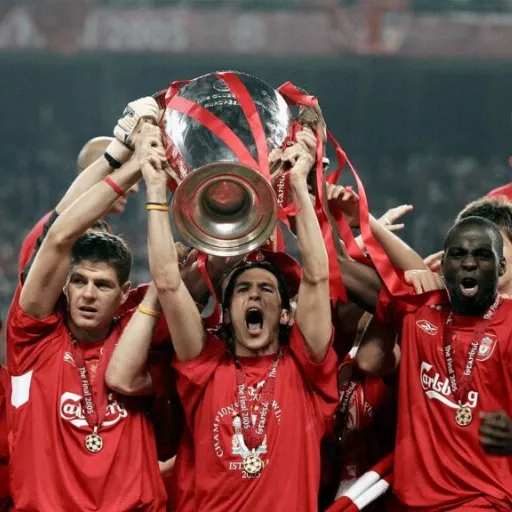
What set Gerrard apart was his ability to perform when it mattered. Most noticeably, in the 2005 UEFA Champions League final, his leadership and gutsy determination inspired Liverpool to come from 3-0 down against AC Milan to win on penalties. This earned him an iconic status among Liverpool fans and cemented his reputation as a true leader on the field. Plus, his knack for scoring spectacular goals, including long-range shots and match-winners in crucial moments, would only cement his legacy as a once-in-a-generation talent.
With his talent and class, he is also worthy of praise for being loyal to his club. He stayed at Anfield through most of his career despite offers from other big clubs and played more than 700 games for the Reds whilst also scoring more than 180 goals in all competitions. Gerrard’s loyalty to Liverpool FC is an inspiration to current players and fans alike, representing the essence of passion, dedication, and commitment that go into building the image of this noble institution.
Cultural Impact and Heritage of Liverpool
Cultural Impact and Heritage of Liverpool
Connections with the City of Liverpool
Liverpool Football Club has deep associations with the city of Liverpool, being most notably a reflection of the culture, values, and community spirit of Liverpool. The club came into existence in 1892 when the city was booming in industry and maritime sectors. This gave a certain perspective to the club, along with linking itself with the working-class culture of the city’s residents, who viewed football as a unifying force and a means of representation.
Here lies something that is so firmly ingrained in the very identity of the city that it fills people with pride and encourages a sense of belonging. The Anfield stadium, being the emblematic stadium of the club, is not merely a place where football matches are held; rather, it is a cultural symbol for locals and tourists alike. One could almost say that the anthem, “You’ll Never Walk Alone,” stands for the perseverance and unity of the Liverpool community, bringing the club’s stature into another sphere of civic pride and resilience.
Besides active engagement in community life and development, it conducts a range of outreach programs and charitable initiatives to resolve social issues existing in Liverpool. These address areas of education, health, and opportunities for the disadvantaged sectors. Such undertakings place Liverpool FC as a catalytic force in the city’s social fabric, offering much-needed sustenance in its cultural and socio-economic development. This gave rise to a symbiotic relationship that blossomed between the football club and the city, making Liverpool FC forever embedded in Liverpool’s heritage.
Liverpool’s Role in the Global Football Landscape
Liverpool FC figures prominently within the global football landscape as one of the most successful and recognizable clubs the world has ever known. The club has had a storied history with many successes in the domestic league and Europe, thus cementing the club’s place among football’s elite. Their consistent exposure in the world arena has attracted immense admiration and support for Liverpool as a symbol of excellence and resilience in sports.
A football club’s international prestige stretches far beyond merely winning trophies. The reputation of Liverpool FC shines in different aspects, made even stronger by its passionate global fan base of millions scattered across continents. Much of this popularity emanates from their production of iconic football stars and playing styles. The club’s ability to inspire and build a bond with fans across continents has, over the years, cemented its status as one of the most respected footballing institutions.
More so, this aspect of global prominence and community-oriented initiatives greatly amplified the impact. Through charitable projects and social programs, the club aims to do some good for communities not only in Liverpool but also abroad. Such a willingness, in making football work for good, has bolstered its standing as a club rooted in values of inclusion, solidarity, and advancement. The longevity and unwavering pursuit of excellence by Liverpool and its brand name assure the chances of creating an influential impact on global football.
Recent History and Modern Successes
Recent History and Modern Successes
Revival in the Premier League Era
Liverpool’s revival in the Premier League period was one of careful rebuilding and revived competitiveness. The team had seen very fluctuating performances in the league period for some years and now was making meaningful progress with a blend of seasoned management and young talent. Gradually but steadily, the team was climbing up the ladder and challenging for more consistent opportunities to win titles both at home and abroad.
This long-term vision was implemented to realize tactical modernity and player development. Applying the framework under this vision to refine playing style and adopt new training methods made the team capable of going toe-to-toe with the best opposition of that era. Their key performances in domestic competitions gradually started to restore the reputation of Liverpool as an almost unbeatable name in English football and somewhat highlighted their resilience and adaptability.
On the international stage, Liverpool’s determination brought about high-profile wins, thrusting the club once again into the international limelight. Such victories entrenched their identity as a powerhouse in European football and kindled anew a relationship between the team and the global fanbase. Their re-emergence in the Premier League era is testimony to hard work, invention, and working to uplift the club’s rich tradition.
Recent European Triumphs
Liverpool’s recent European glories established them among the great clubs in Europe. Their foremost achievement came in the 2018-2019 UEFA Champions League season, where the Merseyside giants downed Tottenham Hotspur 2-0 in the final. That, their sixth Champions League title, decisively showed that Liverpool, perched at the zenith of European football, could assert their dominance and thus grant the legacy of being a terror in the European arena.
The sustained perpetuation of victory in Europe by themselves also speaks about their commitment for excellence over time. This would be the show of great character by Liverpool throughout the 2018-2019 season when they overturned a 3-0 first-leg deficit away to Barcelona with one of the greatest second-leg comebacks of all time, winning 4-0 at Anfield, with the match considered as one of the greatest-ever comebacks in football history. The second-leg comeback epitomized the spirit and determination that characterize Liverpool in Europe.
Beyond this historic triumph, Liverpool has rarely failed to reach at least the last-16 stage in a European competition over the last seasons. As they have contested deep plays in the various European competitions, they have showcased their strategic brilliance and the discipline instilled in the players by the coaching staff. This continued presence gives joy to Liverpool fans and simultaneously causes European football’s ground to be carved out in modern times by their presence.
Current Challenges and Future Aspirations
The club is presently faced with ensuring regular performances while under fierce competition both domestically as well as in Europe. Areas of concern are the need for squad depth to handle the competition intensity and proper levels of fitness to keep injuries at bay. Add to this, growing opposition strength that calls for tactical malleability and player development.
Going further, Liverpool aims to cement its status amongst the elite football clubs of Europe: developing young talent as well as making astute purchases to fill gaps within the squad. In light of resurgent possibilities, innovative coaching approaches and fostering the winning spirit should be another big note on the agenda. Showing up for and winning trophies thus remains one of the biggest priorities in the history and traditions of the club.
To achieve such aspirations, a balancing act between immediate success and sustainable development must be managed. Strategic purchases in recruitment, utilization of emerging technologies in sports science, and broad engagement with its global fan base are all essential. In fact, the club already possesses the legacy and spirit required to surmount the obstacles it faces and pave the way for achievements in days to come.
Frequently Asked Questions (FAQ)
Q: What is the history of Liverpool Football Club?
A: Liverpool FC, established in 1892, is an English football institution with a fervent history. Set up in the city of Liverpool following a rift with Everton FC, Liverpool was one of the earliest clubs to enter the Football League. It has witnessed history being made with multiple league titles, FA Cups, and European victories, making the clubs the most illustrious in English football.
Q: How many trophies has Liverpool Football Club won?
A: Liverpool FC is nonetheless considered the most trophy-winning club in British football history. With numerous trophies under their belt, including 19 title wins in England, 6 European Cups, and various FA and League Cups, their achievements have been drawn from both domestic and international arenas, proving their glory in the world of football.
Q: Who are some of the key managers in the history of Liverpool Football Club?
A: The history of Liverpool FC is peppered with great men and managers. Bill Shankly, the liberator of the club in the 1960s; Bob Paisley, who brought numerous European trophies, and Jürgen Klopp more recently, represent some of the greats who’ve gone before. Each manager has played a part in Liverpool’s rich history, taking the team to notable victories and shaping the identity of the club.
Q: What is the significance of Anfield in the history of Liverpool FC?
A: Anfield, home of Liverpool FC, has been a witness to the history of the club since its inception. Known for the passionate atmosphere especially on match day, Anfield has shared with the world many unforgettable moments, including celebrations for league titles and European Cup victories. That is a landmark location for all Liverpudlians.
Q: What was the impact of the Hillsborough disaster on Liverpool Football Club?
A: The Hillsborough tragedy, which occurred in 1989 during an FA Cup semi-final between Liverpool and Nottingham Forest, had a really deep impact on the life of Liverpool FC and on English football in general. The tragedy urged transformative changes to stadium safety regulations and remains ever so somber in the history of the club and of the city, commemorated by the fans through the anthem “You’ll Never Walk Alone.”
Q: What was Liverpool’s European journey like?
A: Liverpool has had a very illustrious European career, including six UEFA Champions League victories. The club won its first European title in 1977 and later went on to win the UEFA Cup and the UEFA Super Cup. These European campaigns of the club have really established it on the international map.
Q: What about during the Premier League years? How has Liverpool fared?
A: Since its inception in 1992, Liverpool FC has gone through a fair share of highs and lows. Despite the hardships, including an extended period without any domestic title, they finally discovered a worthy partner in the 2019-2020 campaign for their first Premier League title, which is amongst the grandest moments in the history of the club.
Q: Who are some of the legendary players of Liverpool FC?
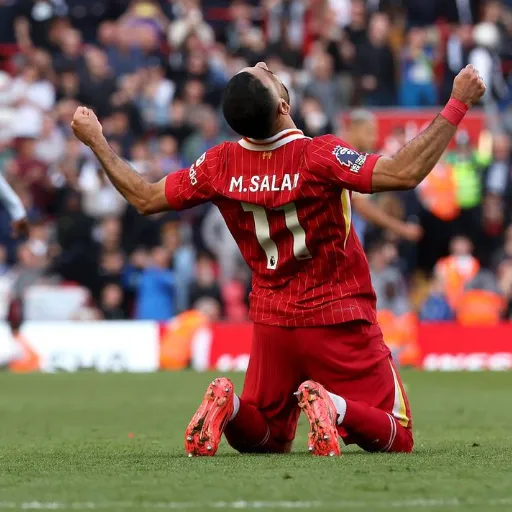
A: Liverpool has been graced by legendary players throughout its history, including Michael Owen, Steven Gerrard, and recently, Mohamed Salah. These players brought success to the club along with quite touching memories of English football in their wake.
Q: What is the significance of the club’s anthem, “You’ll Never Walk Alone”?
A: You’ll Never Walk Alone is an anthem that means much more to Liverpool FC than just being a football club. The spirit of the club lies in the anthem and its supporters. This anthem while sung at Anfield and during matches is representative of togetherness, resilience, and hope – hence becoming one with the identity and history of Liverpool.