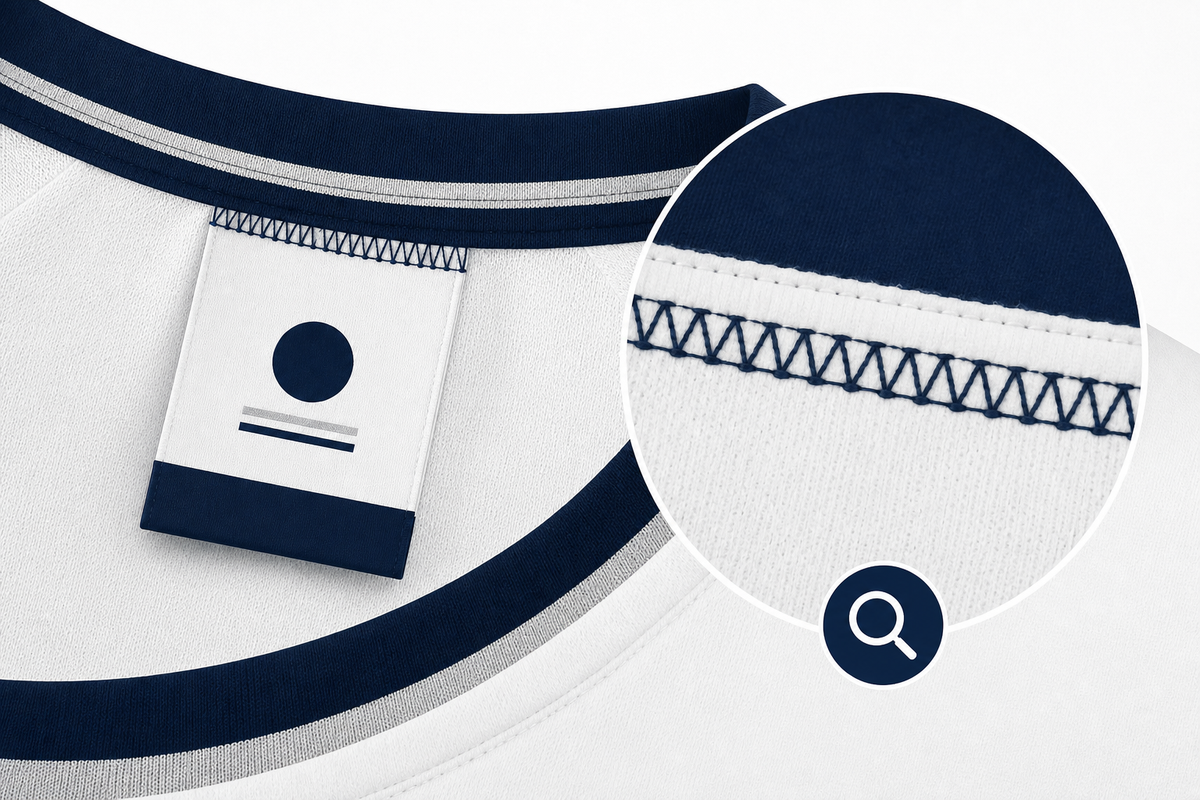
Still searching for your perfect jersey? Explore our best-selling products—we're confident you'll find a style that's just right for you in our diverse collection.
Tottenham Hotspur kit history is the century-long record of the club’s shirts – the white-and-navy home identity adopted in 1898–99, worn under roughly eleven kit manufacturers and eight front-of-shirt sponsors. Every Spurs shirt carries a slice of that history. Whether you already own one or simply want to read a shirt the way collectors do, this guide will help you date any Tottenham Hotspur jersey, from that first cockerel-on-a-ball design to the one you might be wearing today. Think of it as a complete Tottenham shirt history on a single page.
Quick Facts: Tottenham Hotspur Kits
Founded: 1882 as Hotspur FC; renamed Tottenham Hotspur FC in 1884
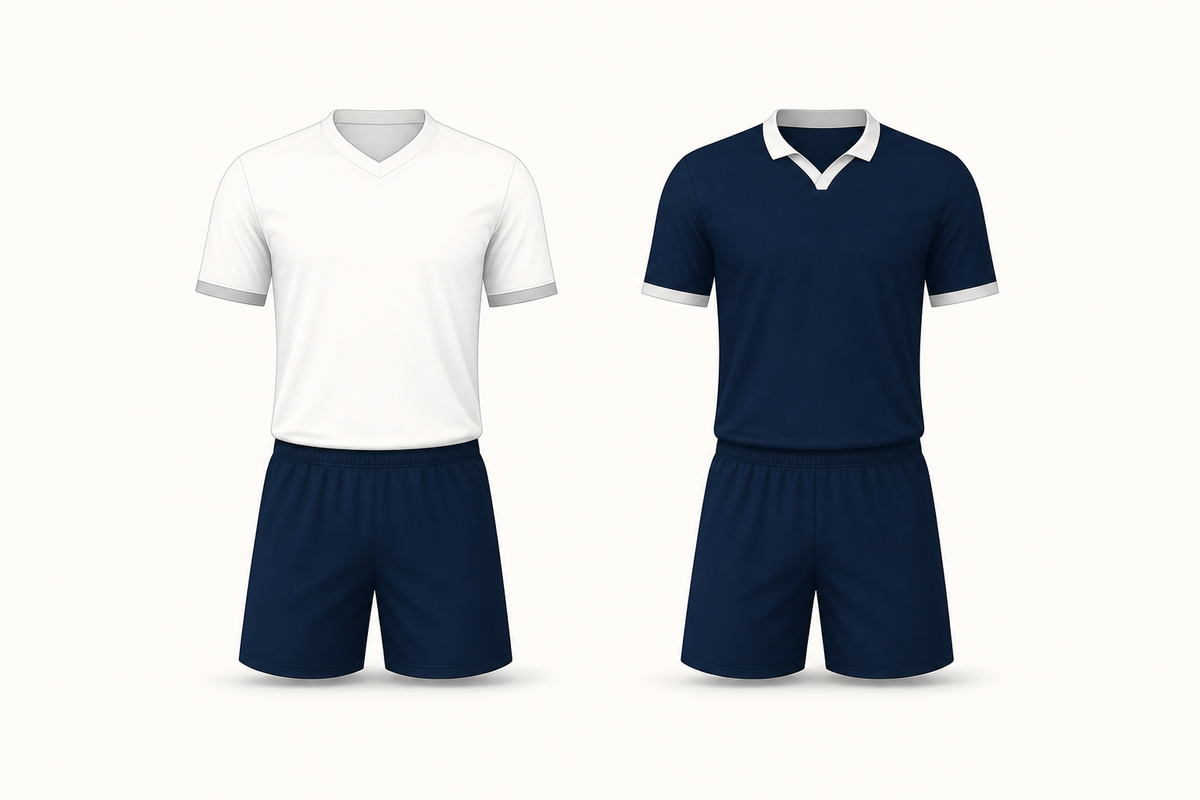
Home colours: white shirts, navy blue shorts – worn since the 1898-99 season
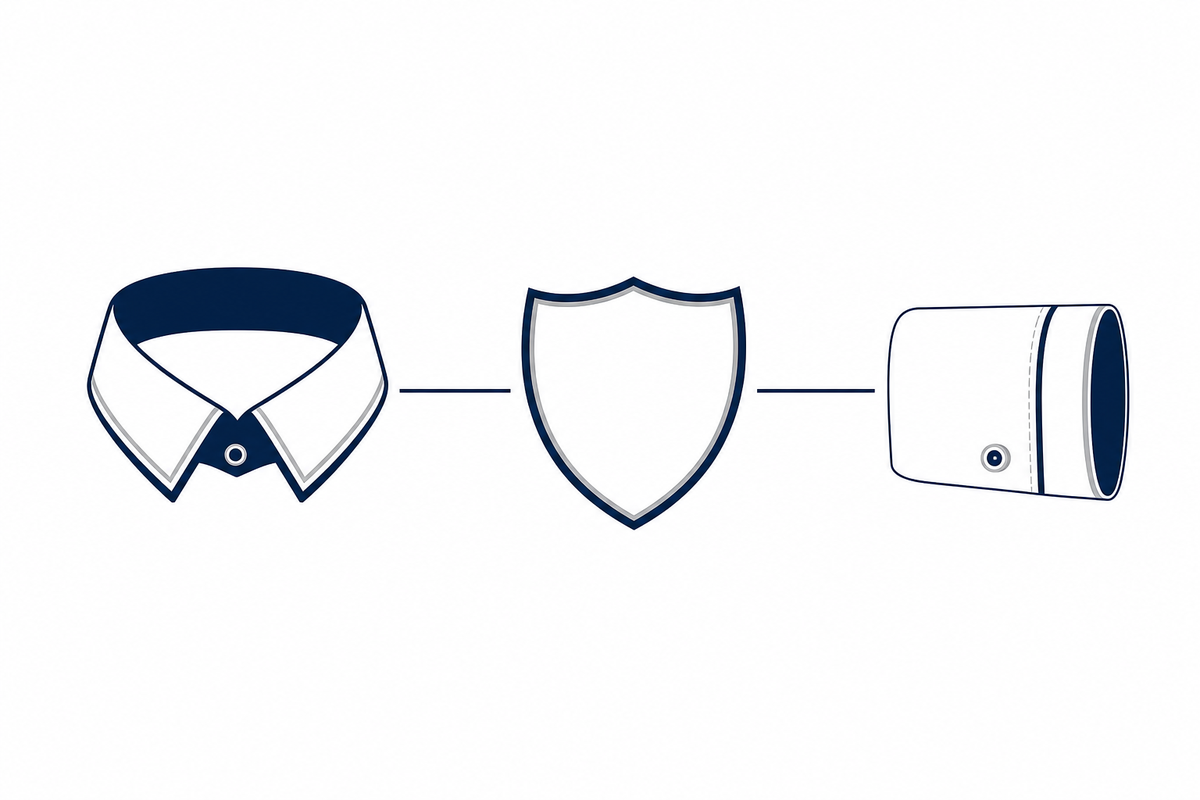
Crest: a cockerel standing on a ball; motto Audere est Facere (“to dare is to do”); on the shirt since 1921
Kit manufacturers: about 11 branded makers, from Umbro and Admiral (1977) through Le Coq Sportif, Hummel, Pony, Adidas, Kappa, Puma and Under Armour to Nike (2017–present)
Most iconic: the 1960-61 Double (Umbro), the 1981 Le Coq Sportif centenary shirt, and the 1991 FA Cup Umbro home
Updated: July 2026
In short: Tottenham Hotspur kit history is the story of a white-and-navy home identity adopted in 1898-99, a cockerel crest that reached the shirt in 1921, eleven kit manufacturers from Umbro to Nike, and eight main shirt sponsors from Holsten to AIA. Any Spurs shirt’s era can be dated by combining three markers – the maker’s logo, the front-of-shirt sponsor, and the collar and crest style.
Key takeaways (start here)
The famous 1994–95 Jürgen Klinsmann shirt was Umbro, not Pony; Pony’s Spurs era only began in 1995.
Spurs put the cockerel on the playing shirt in 1921, roughly two decades after it became the club symbol.
White shirts and navy shorts were adopted in 1898-99, copying then-dominant Preston North End.
Holsten (1983) was the club’s first front-of-shirt sponsor and had two separate spells.
Nike (2017-) is the current maker on a 15-year deal; AIA (2014-) is the current shirt sponsor.
Why Spurs Wear White and Navy: Kit Origins (1882–1921)
Tottenham play in white shirts and navy blue shorts because, in the 1898-99 season, the club took up the same colours as Preston North End – the dominant English side of the era – a switch long described as a tribute to Preston’s success.
Those colours have stayed ever since, giving the team its nickname, “The Lilywhites.”
Founded in 1882 as Hotspur FC by grammar-school boys on Tottenham Marshes, the club was renamed Tottenham Hotspur FC in 1884. Its earliest kits were a patchwork of experiments – navy and light blue halves, even chocolate-and-gold – before the switch to white and navy settled the club’s visual identity.
This is the North London counterpoint that fans still trade on: Spurs in clean white, Arsenal F.C. in red, a colour rivalry as old as the derby itself.
Those kit eras sit on a longer club timeline. Hotspur FC turned professional in 1895, became a limited company in 1898 and moved to White Hart Lane in 1899. Spurs won the 1901 FA Cup as a Southern League side, still the only non-League club to lift the trophy since the Football League was formed in 1888, before joining the Football League themselves in 1908, a decade before league football paused for the First World War in 1915. Through all of it the blue and white club colours and the cockerel club crest stayed constant, from the first home shirts of the 1900s through to today.
When did the cockerel first reach the shirt? Not nearly as early as most supporters assume. Spurs adopted a fighting cockerel on a ball as their emblem around the turn of the 20th century, a nod both to club namesake Sir Henry Percy (“Harry Hotspur”) and to the fighting spurs of a gamecock, and a bronze cockerel sat on the West Stand of the old White Hart Lane from around 1909–10. Yet it didn’t appear on a playing shirt until the 1921 FA Cup Final.
Underneath it, there’s a Latin motto – Audere est Facere – or ‘to dare is to do’.
Kit Note: If a Spurs shirt with a cockerel crest predates 1921 be suspicious – plain white shirts (with nothing on them or a monogram) are more typical before the cock was strutting across the breast of their shirts in that 1921 final.
Every Tottenham Hotspur Kit Manufacturer (1921–2026)
Who makes the Tottenham kit?
Tottenham Hotspur has worn Nike kit since the 2017-18 campaign after the London club secured a 15-year agreement with Nike, Inc., the U.S. sportswear giant, in a deal that began the previous summer. But before the 2017-18 season, Tottenham had been through an abnormally lengthy queue of shirt suppliers – no other English club changed manufacturers more often between 1921 and 2017.
Local firms HR Brookes and Dumbleton & Co supplied kit in the early years, before branded sportswear took over: Bukta outfitted Tottenham’s great side of the 1950s and 60s, and Admiral’s arrival in 1977 marked the start of the designer-kit era.
That whole sequence has since been cross-checked against kit historians’ own year-on-year records. Treat this as The Tottenham Kit Manufacturer Ladder – your quickest method to position a home shirt within a 5-year band purely by kit producer.
Tottenham Kit Manufacturer Ladder (1921–2026)
Manufacturer
Years
Notable kit type & marker
Bukta
c.1921–1930
Earliest branded maker; cockerel reaches the shirt (1921)
Umbro
to 1977
1960–61 Double side; logo appears on shirts from the mid-1970s
Admiral
1977–1980
Patterned collars and shoulder trim, late-’70s style
Le Coq Sportif
1980–1985
1981 FA Cup centenary shirt (no sponsor); 1982–83 centenary crest
Hummel
1985–1991
Chevron sleeves and pinstripes; 1987 & 1991 FA Cup finals
Umbro
1991–1995
1991 FA Cup-winning home; the 1994–95 Klinsmann shirts
Pony
1995–1999
Embossed crests and the Audere est Facere motto
Adidas
1999–2002
Navy polo and V-neck collars on a clean white base
Kappa
2002–2006
Broad navy collar; the division-splitting mid-2000s era
Puma
2006–2012
2007/08 125th-anniversary stitching; first Champions League run
Under Armour
2012–2017
2015/16 sash home; 2016/17 last White Hart Lane season
Nike
2017–present
Dri-FIT era; 2018/19 Champions League final gradient home
Two makers pop up twice which causes the early dating system to break: Umbro, for instance, made the mid-century teams, but was then used again between 1991 and 1995. Whenever you’re in doubt about what maker made the jersey, look up the sponsor logo in the next section to work out which season.
Tottenham Shirt Sponsors Through the Years
Holsten Brewery, the German lager firm, was Tottenham’s first front-of-shirt sponsor, arriving in 1983, and remarkably stayed for two separate spells (the first-spell dates vary slightly across published sources: most give 1983–1995, a few 1985–1995). Reading the sponsor is the second step to dating a modern Spurs shirt, because manufacturers and sponsors changed on different clocks. Below, the timeline reconciles the run, which is where published histories most often disagree.
Spurs Shirt Sponsor Timeline (front of shirt)
Sponsor
Years
Sector
None
pre-1983
—
Holsten
1983–1995
Brewery (first-ever spell)
Hewlett-Packard (HP)
1995–1999
Technology
Holsten
1999–2002
Brewery (second spell)
Thomson
2002–2006
Travel (now TUI)
Mansion
2006–2010
Online gaming
Autonomy / Aurasma
2010–2012
Software (Aurasma was an Autonomy product; Investec featured on cup shirts)
AIA
2014–present
Life insurance (deal increased to a reported £40–45m/year in 2019)
A little nuance a single-line timeline can hide: Spurs didn’t always have the same front-of-shirt sponsor for every competition. The period 2010-12, for instance, had Autonomy on Premier League kits and Investec on shirts for Champions League games and cup ties, while from the 2012-14 period sponsorship differed by tournament until AIA was the uniform club main sponsor in 2014. Therefore a shirt from that era with an alternative or no chest sponsor would be more unusual than a fraudulent one.
The Home Shirt, Era by Era: How to Date a Spurs Shirt
A 3-Marker Method for Dating Any Spurs Shirt
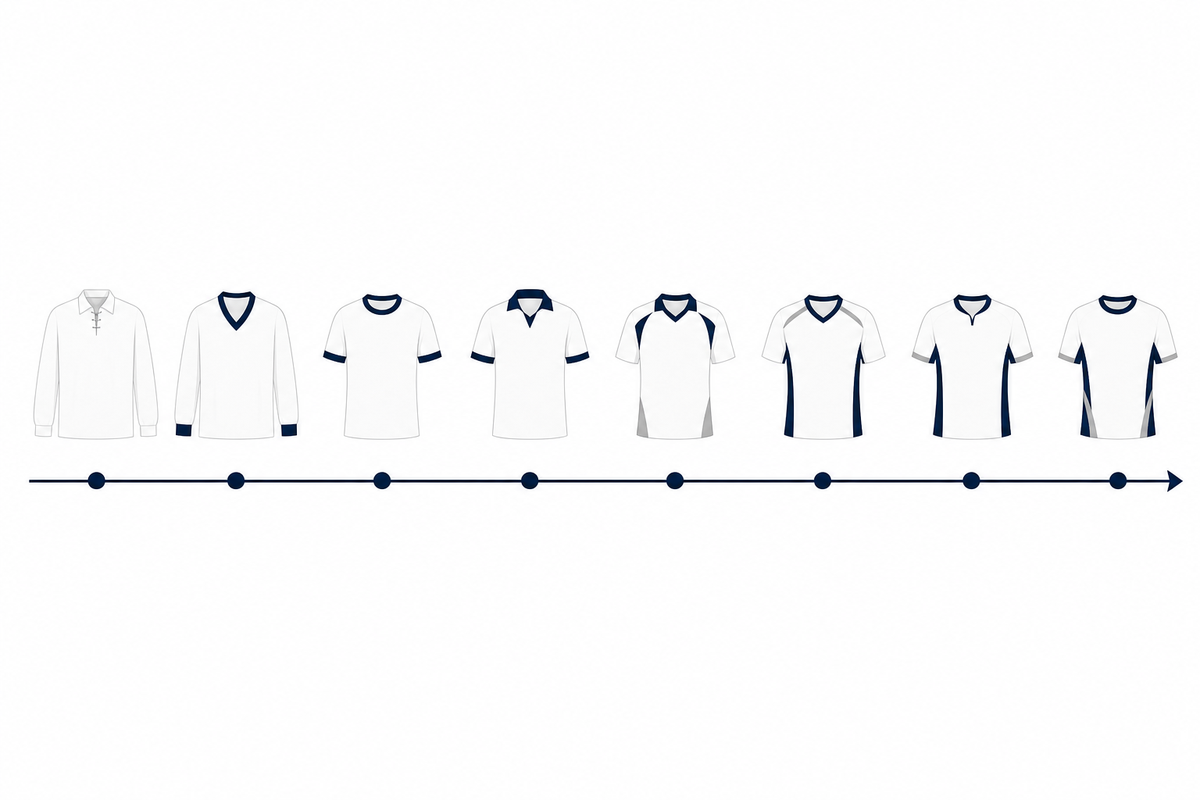
It’s possible to pinpoint nearly every Tottenham home jersey to within a couple years using just three together – the maker’s logo, the front-of-jersey sponsor and the collar/crest combination. That’s triangulation, say collectors, and it lines up with the year-by-year record kept by kit archivists – the single most valuable trick if your listing is photograph-only. The White-and-Navy Era Decoder below combines the makers and you may not have to look at the season tag to figure out the year.
White-and-Navy Era Decoder
Era
Maker mark
Sponsor
Collar / crest tell
1960s
Umbro (small or none)
None
V-neck, stitched cockerel on the left breast
Early 1980s
Le Coq Sportif
None (1981) / early Holsten
Centenary crest on the 1982–83 shirt
Late 1980s
Hummel (chevrons)
Holsten
Pinstripes; chevron sleeve trim
Early–mid 1990s
Umbro (1991–95)
Holsten
Shadow-stripe white; button collar
Late 1990s
Pony
HP (to 1999)
Embossed crest; motto detailing
2000s
Kappa → Puma
Thomson → Mansion
Broad navy collar (Kappa); clean blues (Puma)
2010s
Under Armour
Autonomy/Aurasma → AIA
2015/16 navy sash; gold trim 2016/17
2017–present
Nike (Dri-FIT)
AIA
1950s-style navy-shield crest; Dri-FIT ADV vs Stadium cuts
This decoder also catches the most common mistake in listings: dating a shirt by the star player instead of the markers. A “Klinsmann shirt”, for example, is ambiguous, because his first Spurs season (1994–95) was Umbro while his second spell at the club (1997–98) was Pony.
Iconic Away & Third Kits
The club’s alternate kits have varied from conservative navy blue to some of the wildest colourways of the 1990s. Of all of their away tops, however, the 1994-95 Umbro is by far the best and is frequently cited as Spurs’ best away shirt by fans – just as Umbro were also responsible for their home shirt that season. This was then followed by a sequence of away and third shirts, including the blue third of 1991, two largely yellow away shirts from the 2009-10 and 2010-11 seasons, worn as Tottenham reached the Champions League for the first time and faced sides like AC Milan – and some purple and teal adventures, culminating in the bright turquoise third of 2018-19, the pattern of which was taken from the exterior design of their current stadium.
A useful cross-check when reading away shirts by era: yellow points to Tottenham’s early-2010s European campaigns, whereas navy was the club’s “default safe” alternative through the Under Armour and Nike eras.
European nights run through the kit story too. Spurs first played in the European Cup in 1961-62, won the UEFA Cup in 1972 and 1984, and reached the 2018-19 UEFA Champions League final, the peak of their modern European competition run. Spurs also played home games at Wembley across 2017-18 and 2018-19 while the new stadium was built, and the home kit worn on those UEFA nights, and in League Cup final wins in 1971, 1973, 1999 and 2008, remains a collector favourite.
The Most Iconic Spurs Shirts, Ranked
What is the most iconic Tottenham shirt?
Without a shadow of a doubt the greatest Spurs kit ever is the 1960-61 Umbro home shirt which graced the team which won the Double. Any other Spurs top can be assessed only by using the benchmark set by that famous garment. That ranking comes down to three factors; what era the kit is most closely linked to, how the kit looked and how popular it is with collectors in this day and age.
1960-61 Umbro – Double – Blanchflower, Mackay, and the first double of the 20th century! clean white V neck,stitched cockerel.
1981 Le Coq Sportif centenary – The kit in which Hoddle, Ardiles and Villa helped beat Spurs in the 1981 FA Cup replay, cherished in part because of the absence of a sponsor.
1991 Umbro FA Cup home – Gascoigne’s march to the final and the ghost stripe white is very much a 1990s statement.
1994-95 Umbro, the Klinsmann year, home and away both popular collectables (and Umbro again, not Pony).
1987 Hummel chevron – The kit that was famously worn in the 1987 FA Cup Final and also in Ossie Ardiles’ testimonial.
2018-19 Nike Champions League final home – gradient white to navy, which is a color from that final campaign, also from the new stadium in their first year.
“The 1987 Hummel shirt, the one worn by Maradona for Ossie’s testimonial, is the greatest ever shirt, by far.”
Votes are personal, of course, but the fan voting pattern does show a trend – it’s the non-branded shirts of heritage and the FA Cup winners which come top and the most contentious shirt period seems to be the middle 2000s when Kappa ruled.
Vintage & Retro Spurs Shirts: What Collectors Chase (and How to Buy)
How can you tell a real vintage Tottenham shirt?
To identify an authentic retro Spurs shirt, ensure that the manufacturer, sponsor and collar style all match up; reproduction kits are prone to including elements that never were present simultaneously. Authentic kits tend to maintain consistent collar styles over multiple seasons, have high-quality embroidery for the crest and good placement of the club badge, and have an internal tag that should pass a product code check.
Era, condition, sponsor-and-maker match-ups and the whether or not a shirt is match-worn are all major factors driving value. Some shirt values can climb into real money: a 1960s long-sleeved Jimmy Greaves shirt carried an auction estimate of £4,000–£6,000 in the UK in December 2025. Many collectible replicas trade for far less, and you’ll be well protected at any price if you follow the same dating principles. For Spurs, the most sought-after pieces include the Umbro 1991–95 designs, the classic chevron-sleeved Hummel shirts and the sponsor-less 1981 centenary shirt. Browse today’s Tottenham Hotspur jerseys, and our vintage Umbro football shirt collection guide, to find pieces in current stock.
The Current Tottenham Kits (2025/26 & 2026/27)
Today’s Spurs kits sit within the Nike Dri-FIT era, based on the same navy-and-white foundation the team has worn for more than a century. However, designers have recently added a layer of heritage-focused flair to recent home shirts: the 2021/22 home kit cleverly incorporated the cockerel symbol to celebrate 100 years since its debut on a shirt, while the 2023/24 home jersey returned to an all-white front for the first time since the 2012/13 season. Between them, the 2022/23 and 2024/25 home shirts kept to the navy-and-white template, and Nike now splits each season’s shirt into a match-spec Dri-FIT ADV and a relaxed-fit Stadium replica, so the same design reaches shelves at two distinct price points. Navy change colours and other bolder accents used in our Era Decoder guide can still be seen in away and third kits for the era. Nike’s current Spurs kits feature a navy-shield crest that first appeared in 2017, a design with a distinctly 1950s feel. View our full Tottenham Hotspur shirt range and see how the era markers line up against the club’s present and past kits.
What’s Next for the Spurs Shirt
By far the biggest near-term shift coming to Premier League shirts is due to a new regulatory change: by the end of the 2025/26 season, all Premier League clubs will no longer display betting sponsor branding on the front of matchday shirts. This will make the Premier League the first UK sports league to enact such a policy.
However, the ban applies only to the front of the shirt; gambling companies can still have branding on sleeves and around the perimeter of the pitch. For many clubs, this will mean searching for a new headline sponsor, but the new rule won’t affect Tottenham much as their primary sponsor, AIA (a life insurer), isn’t classified as a gambling company and its contract extends to 2027. It’s likely that Spurs will continue to focus on retro design elements such as cockerel-centric themes, 1960s cuts, and clean layouts appropriate for sponsors.
Demand is the second factor. Leading up to the 2026 World Cup year, interest in classic and retro football shirts continues to surge; as The Guardian noted in June 2025, the boom in classic shirts “shows no sign of fading”, with vintage kits now worth millions. If you plan on making a 2026 purchase, the practical implication is simple: heritage era Spurs shirts – Umbro, Hummel and Le Coq Sportif shirts above – are the ones most likely to maintain or appreciate in value so go with the era that you love and double check the markers before you pay. (Broader market-size figures for the football shirt trade are for directional background only.)
Frequently Asked Questions
Who makes Tottenham Hotspur’s kit?
View answer
Nike have been the kit manufacturer for Tottenham Hotspur since the 2017-18 season, having taken over under a 15-year deal in 2017 to replace Under Armour. Nike manufacture the kit at two main retail levels – the closer, match-spec Dri-FIT ADV shirt and the more affordable, relaxed-fit Dri-FIT Stadium replica – meaning that a “current” Spurs shirt can come in two quite distinct forms and price points even within the same season.
Why do Tottenham play in white and navy?
Show the answer
Tottenham switched to white shirts and navy blue shorts for the 1898-99 season, adopting the same colours as the then-dominant English club, Preston North End. This move was historically described as a tribute to the success of the Lancashire club. Those white shirts led to the team being nicknamed “The Lilywhites”, and the white-and-navy home colour scheme has remained in place ever since, forming one of the longest continuous club colour identities in English football history.
Who has sponsored the Tottenham shirt?
Read the full answer
Holsten was the first Tottenham front-of-shirt sponsor, starting in 1983, and had two stints (1983-95 and 1999-2002) either side of Hewlett-Packard (1995-99). Following the second Holsten era came Thomson (2002-06), Mansion (2006-10) and the Autonomy/Aurasma software sponsorship (2010-12), with AIA becoming the primary shirt sponsor in 2014, a role the club have maintained ever since under a deal that has been reported to extend to 2027.
Was the 1994–95 Klinsmann shirt Umbro or Pony?
See the details
It was Umbro. Umbro manufactured Tottenham’s kits from 1991 to 1995, so Jürgen Klinsmann’s 1994–95 season (both home and away shirts) were indeed Umbro. Pony only took over in 1995, which is why the Pony mix-up is such a common misconception.
When did Nike take over Tottenham’s kit?
Reveal the answer
Nike became the official kit manufacturer of Tottenham Hotspur in the 2017-18 season, succeeding Under Armour, who had had a contract with the club since 2012, under a long-term 15-year deal.
What does the cockerel on the Spurs badge mean?
Open to read
It’s a fighting cockerel with spurs – a symbol that represents Sir Henry “Harry Hotspur” Percy, after whom the club is named, and also the fighting spurs of gamecocks. It first appeared on a shirt in 1921.
Are SoccerKit’s Tottenham shirts official?
Show answer
No, SoccerKit is an independent retailer of unauthorised fan jerseys that draw inspiration from the look and feel of both modern and vintage kits. SoccerKit isn’t affiliated with Tottenham Hotspur Football Club or its official kit manufacturer, and the historical kit facts presented here were obtained from the following reputable sources.
Find Your Era. Whether you’re after the retro style of the Umbro ’90s, a Hummel chevron classic or the very latest Nike home kit, explore our full range of Tottenham Hotspur shirts and match the markings to the era guide before making your purchase.
About this guide. SoccerKit is an independent retailer of unlicensed fan shirts and not officially endorsed by Tottenham Hotspur FC, the Premier League or any licensed kit supplier. Shirt-history dates and details are research compiled and checked using the resources detailed below – if published histories differ on certain issues such as earliest sponsors date we generally provide the more commonly published date.
I write about football shirts in use and in club history. My articles compare training and match-day jerseys and revisit memorable Mohamed Salah Liverpool shirts, helping readers connect fit and purpose with the players and moments that made a kit familiar.