Still searching for your perfect jersey? Explore our best-selling products—we're confident you'll find a style that's just right for you in our diverse collection.
A soccer red card means that someone has been sent off. The role of the dismissed person and the timing of the offence determine whether a player is removed from the game; that distinction in player numbers explains why one team is playing with ten players and the other with eleven.
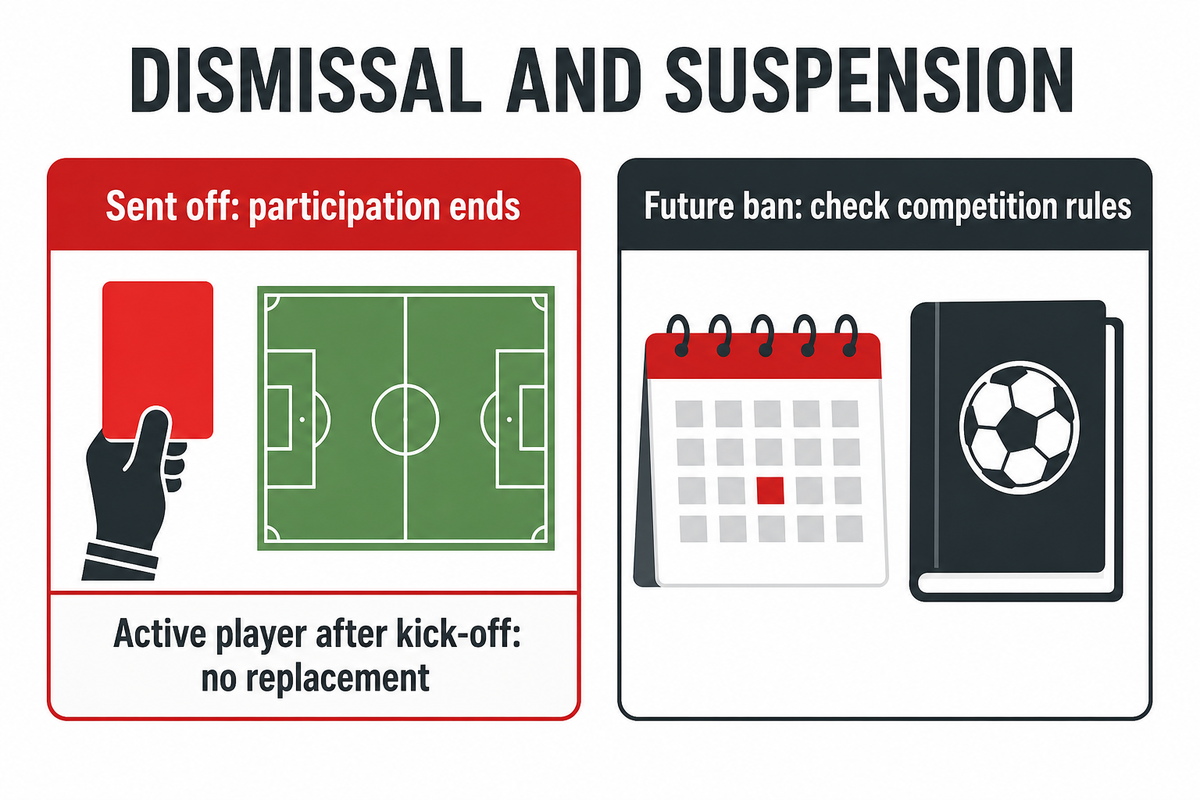
Soccer red card rules remove the offender from participation. An active player dismissed after kick-off can’t be replaced. Future suspension depends on the competition and disciplinary decision.
At a glance
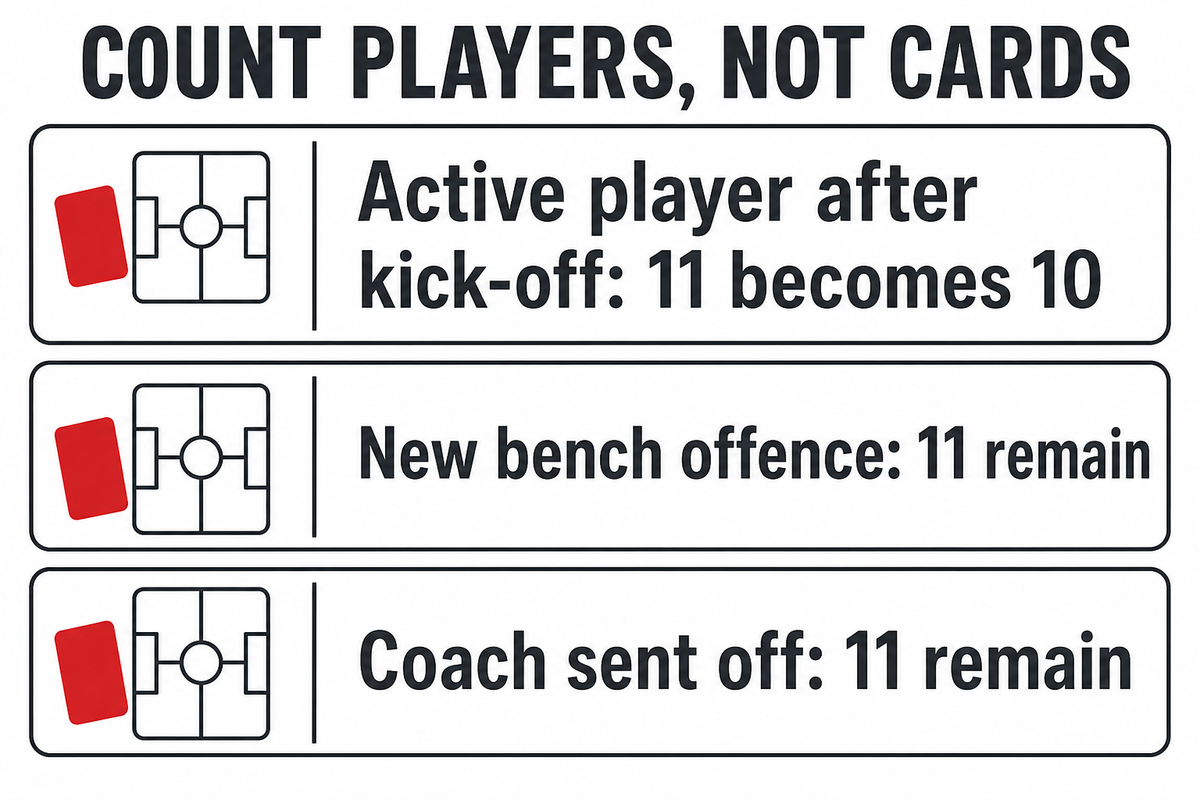
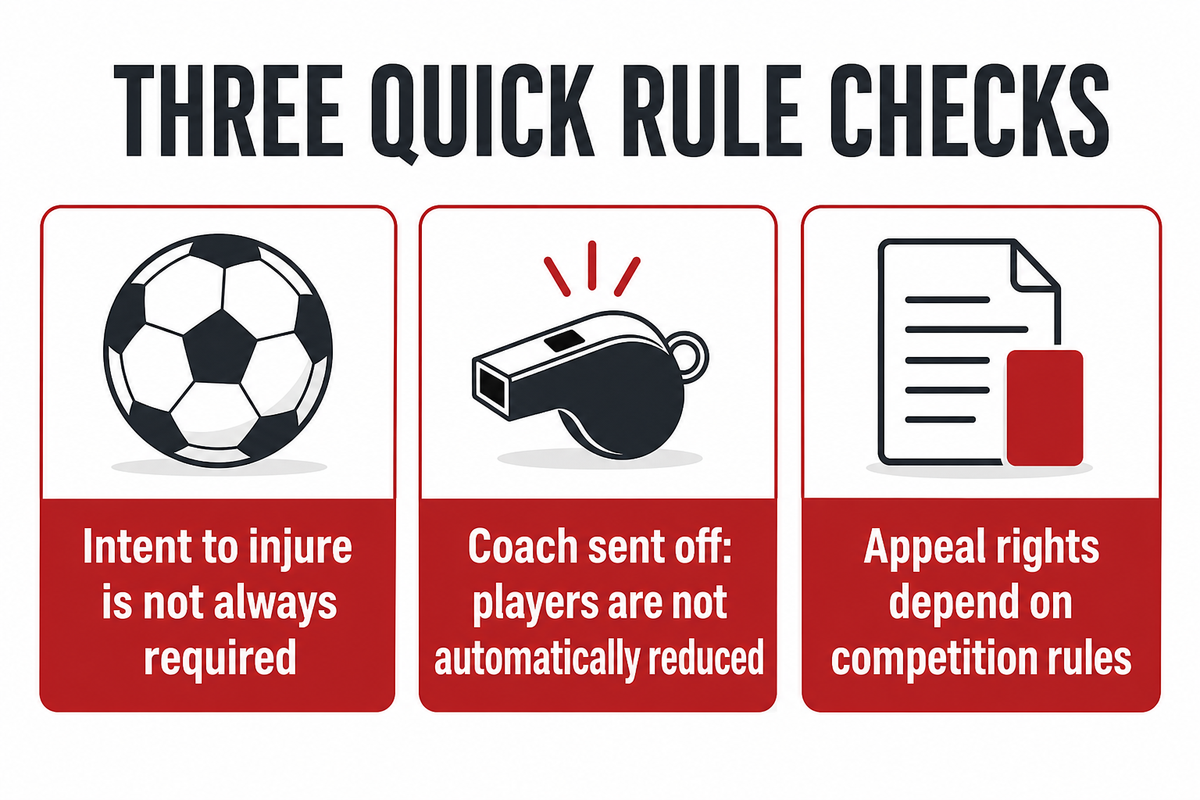
A bench or coach dismissal doesn’t automatically reduce the playing team.
Two cautions in the same match result in a sending-off.
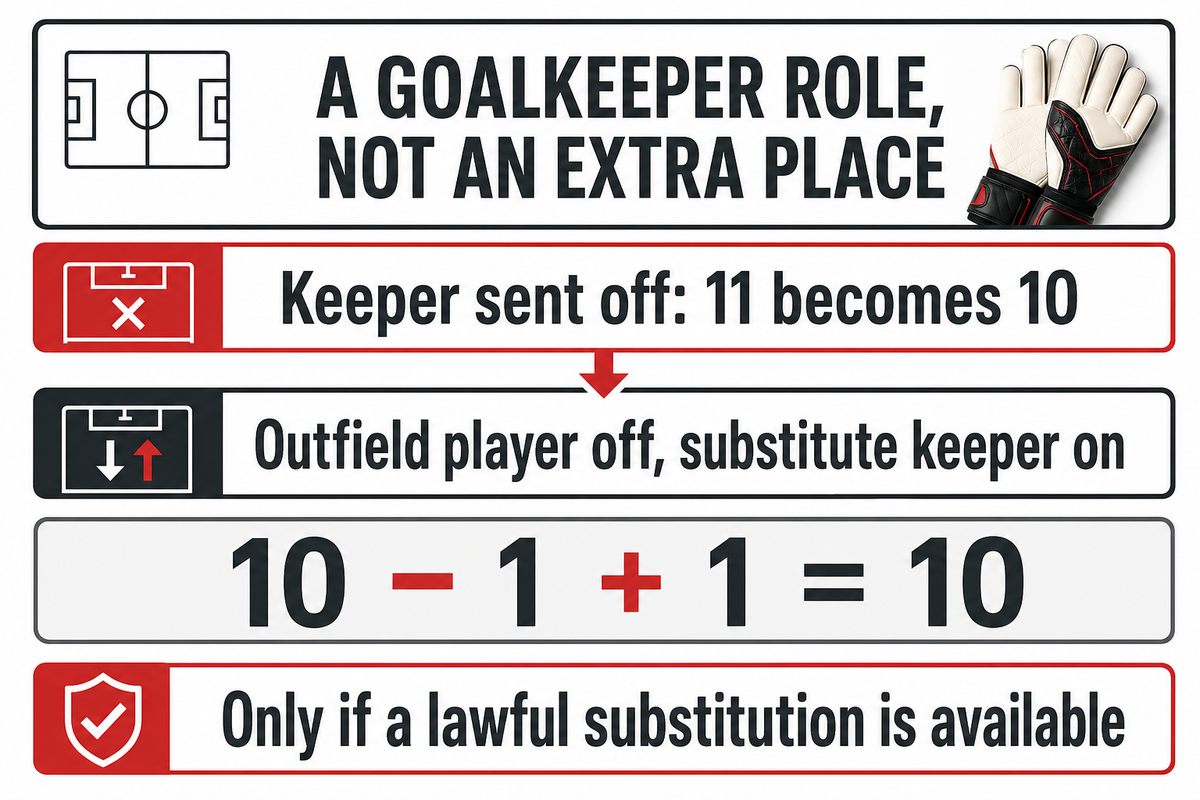
A dismissed goalkeeper can be replaced in goal by an existing player.
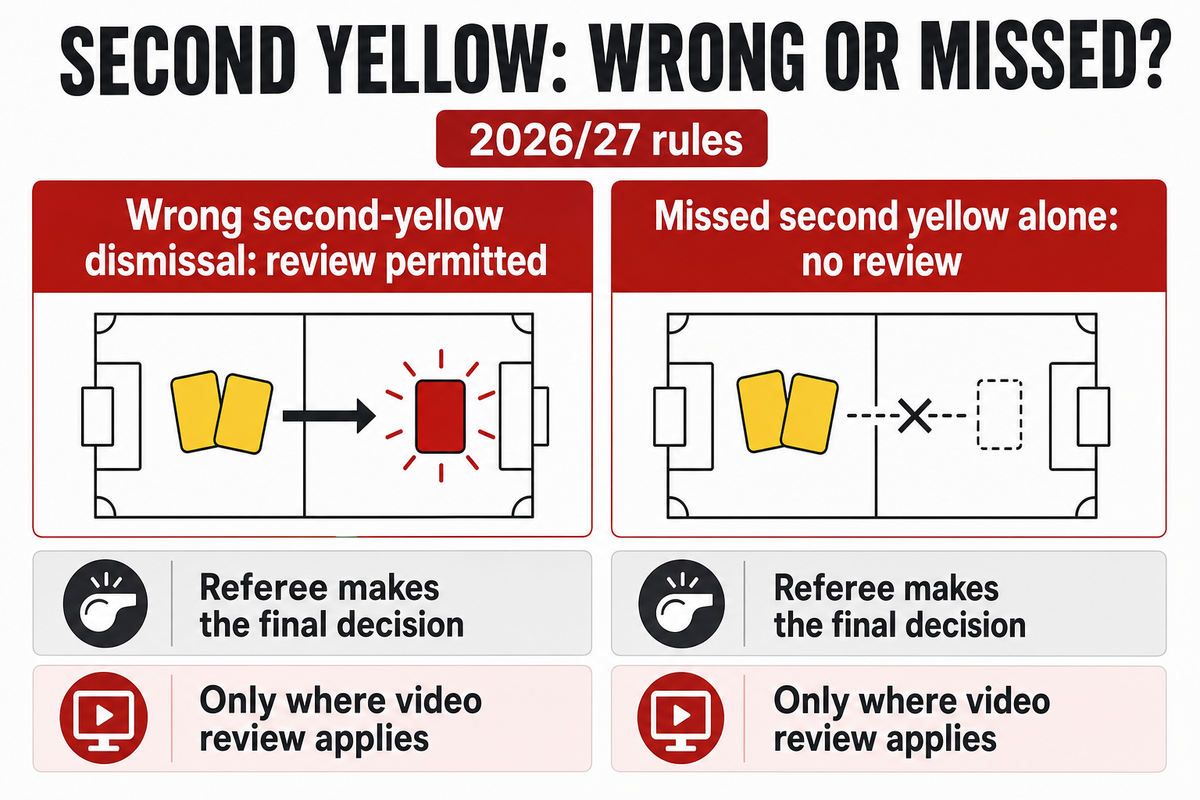
The 2026/27 video-review rules distinguish a wrong second yellow from a missed one.
Scope: (Standard 11-a-side association football under the 2026/27 Laws of the Game.) Rules specific to competitions are located below.
Soccer red card meaning: what happens immediately
In soccer, a red card indicates that someone has been sent off. A dismissed player is required to leave the field of play and the technical area. After kick-off, an active player’s dismissal makes the team play with one fewer player for the remainder of the match, unless the decision is overturned.
“The yellow card communicates a caution and the red card communicates a sending-off.”
Being ejected from the field is the immediate sanction. A separate disciplinary consequence may follow later. The referee records why the player got a red card, and the relevant authority applies its competition rules. A broadcast graphic can’t always illustrate the full suspension for the next game.
If a player is dismissed from an eleven player team, that player’s team normally continues play with ten players. A coach’s dismissal would keep all eleven players in the game. Count the players who are eligible to play, and identify when the offence happened, to interpret the meaning of a red card next to the score. Our soccer match time and added time guide explains how the remaining time in a match is determined.
Straight red card vs two yellow cards
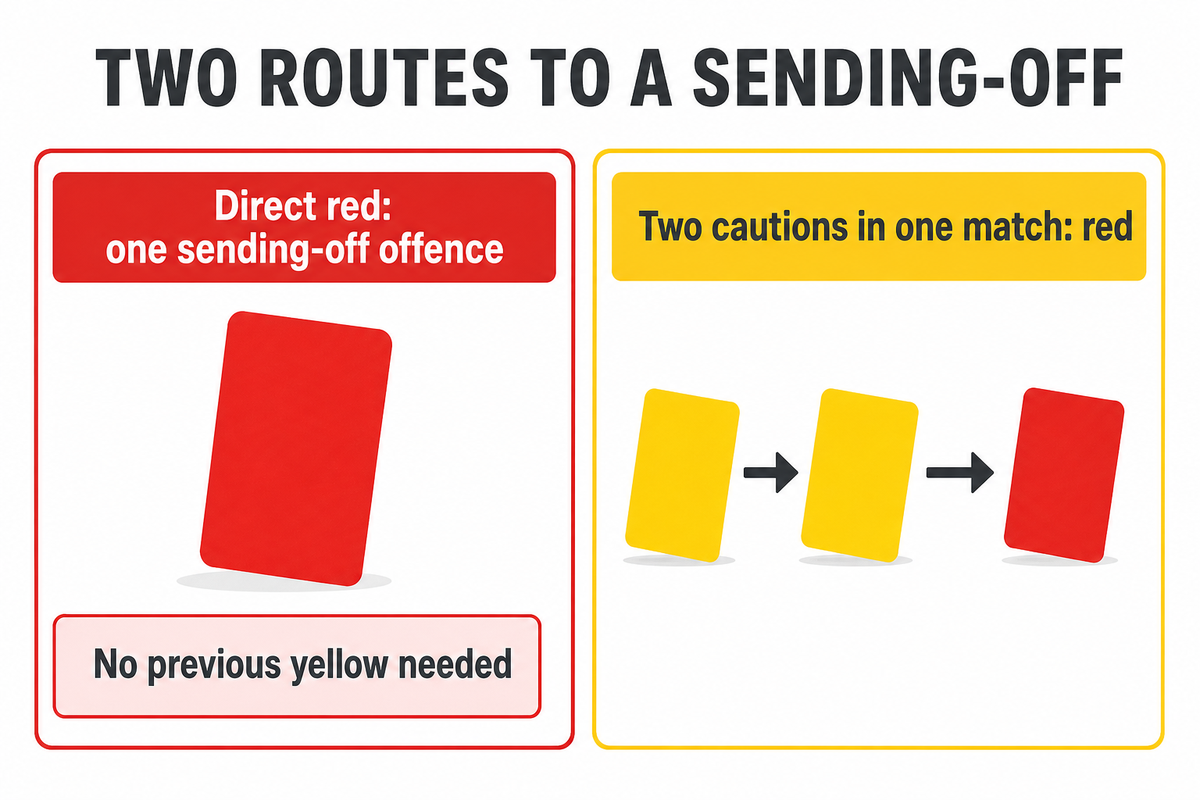
A referee can show a red card for a sending-off offence without first cautioning the offending player. If a player receives two yellow cards in the same match, the second caution also results in a sending-off. Both routes remove the player from the game; the recorded offence determines later disciplinary treatment.
Direct red card
One sending-off offence is enough.
No previous yellow is needed.
The offence category matters for the ban.
Second-yellow dismissal
Two cautions occur in one match.
The second yellow is followed by red.
The competition sets the suspension.
According to IFAB Law 12, yellow cards and red cards record different sanctions. A player can be shown a yellow card and continue playing. Accumulating two yellow cards across different matches isn’t this same-match mechanism. A tournament can define its own caution-accumulation threshold. Being substituted doesn’t remove a caution: the same person can receive another caution on the bench and be sent off.
Receiving a second yellow card and receiving a direct red both end a player’s participation in a match. With 2 cautions, identify whether they belong to 1 match before predicting dismissal. Across matches, consult the competition’s accumulation rule instead of grouping cards together.
Red card offences: foul play, handball and misconduct
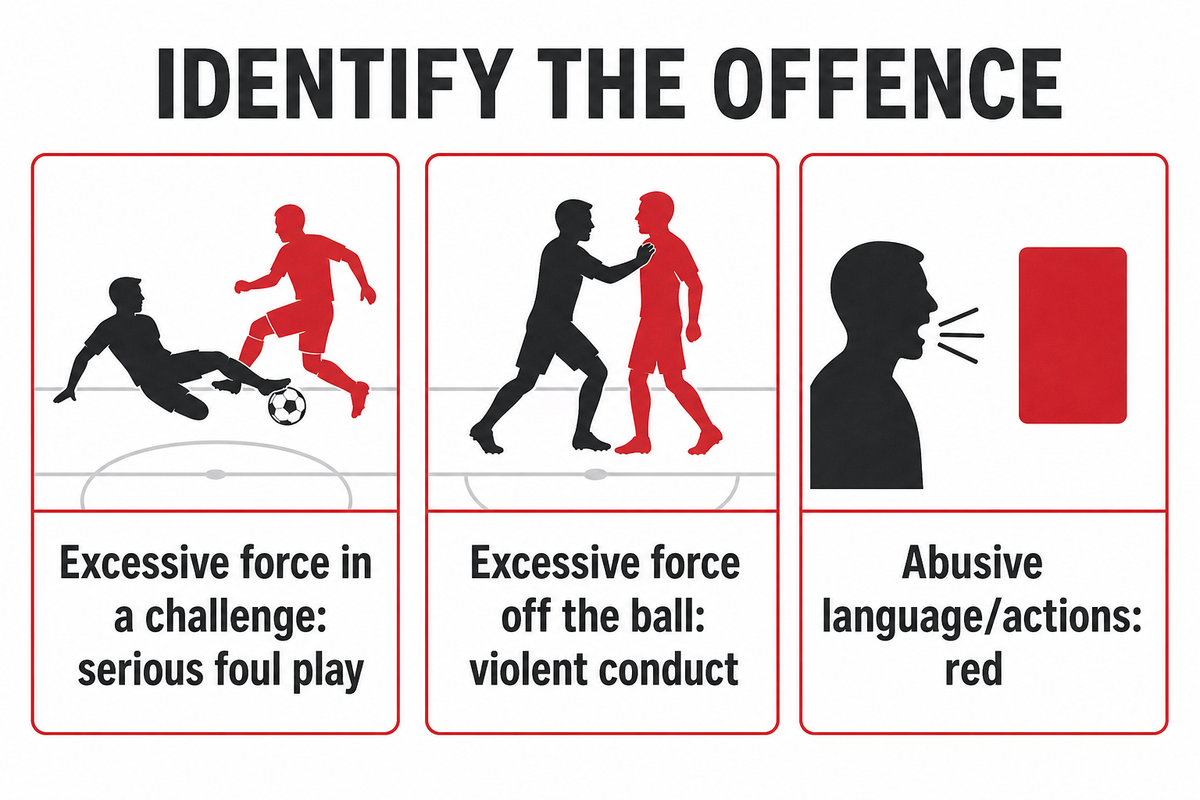
An offense merits a red card if the challenge uses excessive force and/or dangerously endangers an opponent. Violent conduct includes brutal play outside a challenge for the ball. Certain goal denying offences, spitting or biting, abusive conduct and a second caution merit red cards. The nature of the offense and the circumstances determine the sanction. Some types of offences and misconduct have varying thresholds. A foul isn’t automatically a red card.
What fouls get a red card in soccer?
Goal denial offences can also be sending-off offences. Examples include a player’s unlawful obstruction of an opponent that denies an obvious goal-scoring opportunity, subject to the penalty-area exceptions. Serious foul play is independently punishable by dismissal even when a penalty is awarded.
Offence classification: a fan’s reading of IFAB Law 12, not a substitute for the referee’s assessment
Offence type
Disciplinary outcome
Limitations / exceptions
Excessive-force or safety-endangering challenge
Red: serious foul play
Winning the ball does not excuse the challenge.
Excessive force without challenging for the ball
Red: violent conduct
An attempt can qualify without contact.
Spitting at or biting someone
Red
Not restricted to an opponent.
Offensive, insulting or abusive language/actions
Red
Ordinary dissent has a different sanction.
Deliberate handball denying a goal or obvious opportunity
Red
Exception: goalkeeper within their penalty area.
Non-deliberate handball denying an obvious opportunity outside own penalty area
Red
A punishable handball offence and opportunity denial are required.
Non-deliberate handball denying an obvious opportunity, penalty awarded
Yellow
Deliberate goal-denying handling follows the different rule above.
Goal-denying foul with penalty: attempt to play/challenge for ball
Yellow for the opportunity-denying offence
Serious foul play or violent conduct still warrants red.
Goal-denying foul with penalty: holding, pulling or pushing
Red
The attempt-to-play-the-ball exception does not apply.
Second caution in the same match
Yellow, then red
Separate-match accumulation is governed separately.
Source: IFAB Law 12.4. The rules of the game distinguish serious offenses from regular cautionable misconduct.
Common mistakes when judging a red-card incident
Let’s suppose a defender trips an attacker while attempting to reach a ball in play in the penalty area. The referee judges that the foul denied an obvious scoring opportunity and awards a penalty kick. Because the foul was an attempt to play the ball and a penalty was awarded, the defender would be shown a yellow card for denying the obvious goal-scoring opportunity. If the defender had opted for a pull, then the exception wouldn’t hold. Change the action to a tackle that endangers the attacker’s safety, and serious foul play will step in and supply a red-card offense on its own accord. A penalty shot and a dismissal are made separately. Seeing the referee point to the spot doesn’t tell you which card must follow.
Slow motion can emphasize contact, but it can also distort the perceived intensity. The IFAB video-review protocol suggests using normal speed footage to gauge intensity. Merely making contact with the hand isn’t enough to establish a handball offence, much less an obvious opportunity denied. Ordinary unsportsmanlike behaviour can result in a yellow card.
The correct restart must be determined before the opposing team takes a free kick or penalty. If the ball was already out of play, a subsequent dismissal wouldn’t warrant a free kick. A ruling on 1 incident must establish where and what the offense was and if the ball was in play. The card can’t always provide this info.
Red card headcount: who leaves and who can be replaced
The offender’s status and the timing of the offence, in relation to the start of the match, determine how many eligible players remain. A named starter who’s dismissed before the start of the match may have a named substitute take their place. After the start of the match, a dismissed player may not be replaced, even if the team has available substitutions.
Red-Card Headcount Check
The Red Card Headcount Check establishes the status and timing of the offense in relation to the starting of the match to determine replacement and player eligibility.
Headcount scenarios under IFAB Laws 3 and 5; examples assume an otherwise complete 11-player team
Who and when?
Playing-team consequence
Limitations / exceptions
Player barred before team lists are submitted
Team may still name 11 players.
Offender cannot be named; the referee does not yet show cards.
Named starter sent off before kick-off
A named substitute can restore the starting 11.
That substitute’s list place cannot be refilled; substitution allowance unchanged.
Active outfield player sent off after kick-off
11 players become 10 players.
No replacement for the dismissed player.
Active goalkeeper sent off after kick-off
11 players become 10 players.
Someone must take the goalkeeper role.
Named substitute commits misconduct on the bench
11 active players remain.
The dismissed substitute cannot be replaced on the list.
Already-substituted player commits misconduct from the bench
11 active players remain.
Applies to the new bench offence, not an earlier playing offence.
Coach is sent off
11 active players remain.
The coach leaves the technical area.
Active player sent off during half-time
Team resumes with 10 players.
The match has already started; the interval is not pre-kick-off.
Earlier red-card offence discovered after offender is substituted
Substitution cancelled; team is reduced to 10 players.
IFAB’s example specifies discovery before play restarts.
Player sent off after the match ends
No remaining match minutes to play short.
The incident is still reported for disciplinary action.
If a player is sent off after the kick off, he can’t be replaced. A named starter who’s sent off before kick-off can be replaced by a named substitute under Law 3.6, and the replacement doesn’t reduce the permitted substitutions. The new vacant place on the team list can’t be filled.
Suppose a team begins the match with 11 players on the field. A player on the bench commits a sending-off offence there and is sent off. The 11 players remain on the field. Later, an active defender is dismissed, so 11 minus 1 leaves 10 players. A coach is subsequently sent off, but that doesn’t remove another player; the team still has 10. Three people have been sent off, but only one active-player place has been lost. In a separate example, the sending-off offence is discovered before play restarts and after the replacement of the player who committed it. IFAB’s example cancels that substitution. Sitting on the bench when the card is shown doesn’t maintain the original head count.
Goalkeeper red card: substitutions and the penalty kick
When a goalkeeper receives a red card after kick-off, the team has to play with fewer players and must still have a goalkeeper. An eligible existing player can change positions to become goalkeeper, with the referee informed during a stoppage in play.
Take a hypothetical side with 11 players and an available goalkeeper substitute. The goalkeeper is sent off, meaning the side is now playing with 10 players. The coach withdraws an outfield player and brings on the substitute goalkeeper: 10 minus 1 plus 1 still equals 10. The substitute goalkeeper takes the place in the team count of the player taken off, and not the lost place of the dismissed goalkeeper. If a coach has no lawful subs left, then a player needs to take the position of goalkeeper. The referee must be informed, and the goalkeeper must be identifiable. A spectator, for example a parent, of a youth league football match must ensure the substitution rules of the competition being played are checked before assuming the professional soccer procedure is the same. Fitting a goalkeeper jersey is a separate issue, and is discussed in our youth goalkeeper jersey size guide.
A new goalkeeper must be in place before a penalty is taken. A red card doesn’t always mean that the correct restart is a penalty. The type and location of the offense need to be considered.
Before play restarts, a video review of an incorrect goalkeeper dismissal may change the red card to yellow, allowing the goalkeeper to return to the field. In the IFAB example in Law 5, the substitution made because of the erroneous goalkeeper dismissal may be canceled.
With 10 players eligible, the coach needs to decide which players cover which positions. An unused sub doesn’t restore the 11th player. Confirm the final disciplinary decision before counting the players in the restart formation.
Red card limits: when a soccer match cannot continue
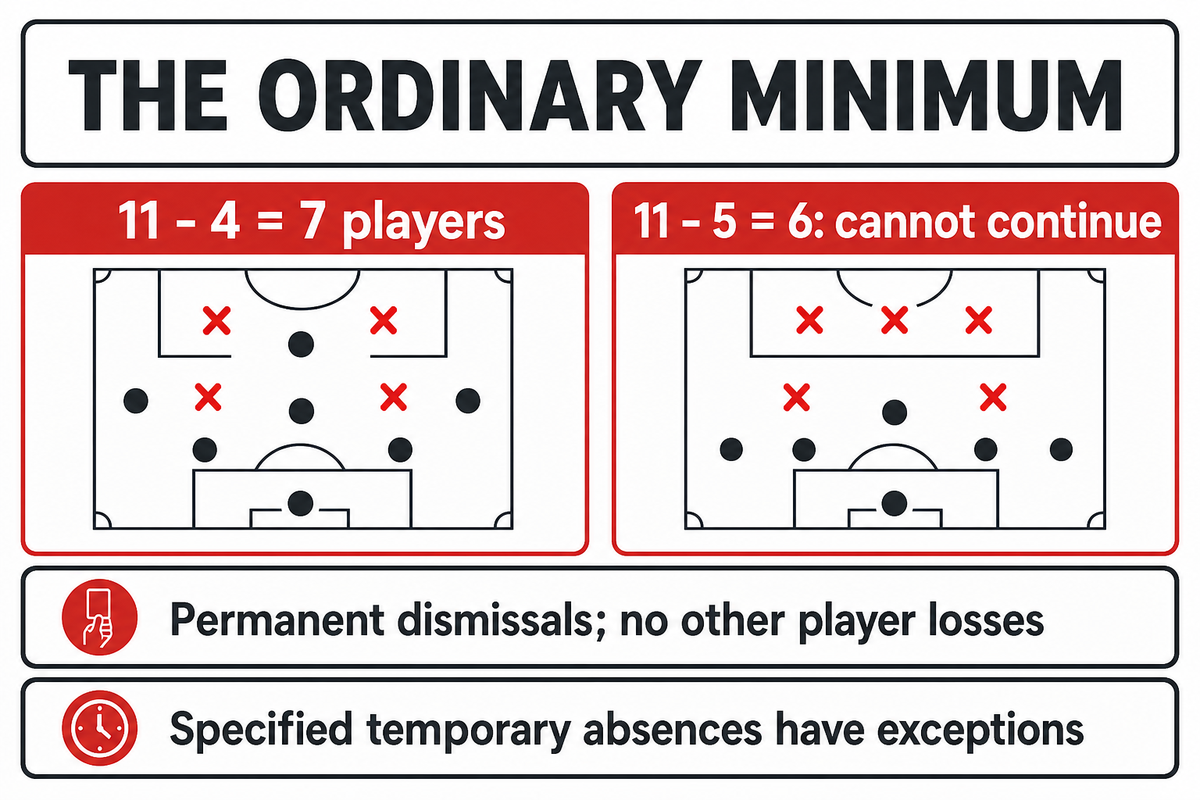
For 11 a side football, the norm is to have seven players as the minimum for a team. A team reduced to six players, by reason of a player having been sent off, can’t continue to play. Counting “5 red cards” across all team personnel is unreliable because bench and coach dismissals need not remove active players.
Current Law 3.1 explicitly states that, during temporary dismissals, and the specified one-minute substitute and off-field assessments, the minimum number requirement of players doesn’t apply. These temporary absences must not be interchanged with permanent sending-offs. Different small-sided games have their own rules.
Four active-player dismissals from an original 11 leave 7 players; a fifth leaves 6. It’s assumed that there are no other player losses and no exceptions. The abandonment decision of the referee, and the result determination by the sanctioning competition, are two separate matters. Don’t infer an automatic scoreline from the number of players dismissed.
Red card suspensions: which next match does a player miss?
While a red card can result in a suspension beyond the current match, its length and the fixtures it covers come from competition disciplinary rules. The following game on a club’s calendar may not be the next match that counts toward the ban. Before specifying a return date, read the decision in question.
Is a red card a 2 match ban?
A red card isn’t always a universal two match ban. Offenses and sanctions vary from competition to competition. In the 2026/27 UEFA Champions League rules, a player or team official who’s dismissed from a match is, as a rule, automatically suspended for the next UEFA club competition match. Serious offenses may result in a longer suspension.
That example is from UEFA Article 63.01. It doesn’t set a binding one-match suspension for every competition. For covered English competitions, The FA’s Player Essentials provides players with current disciplinary guidance and the governing regulations.
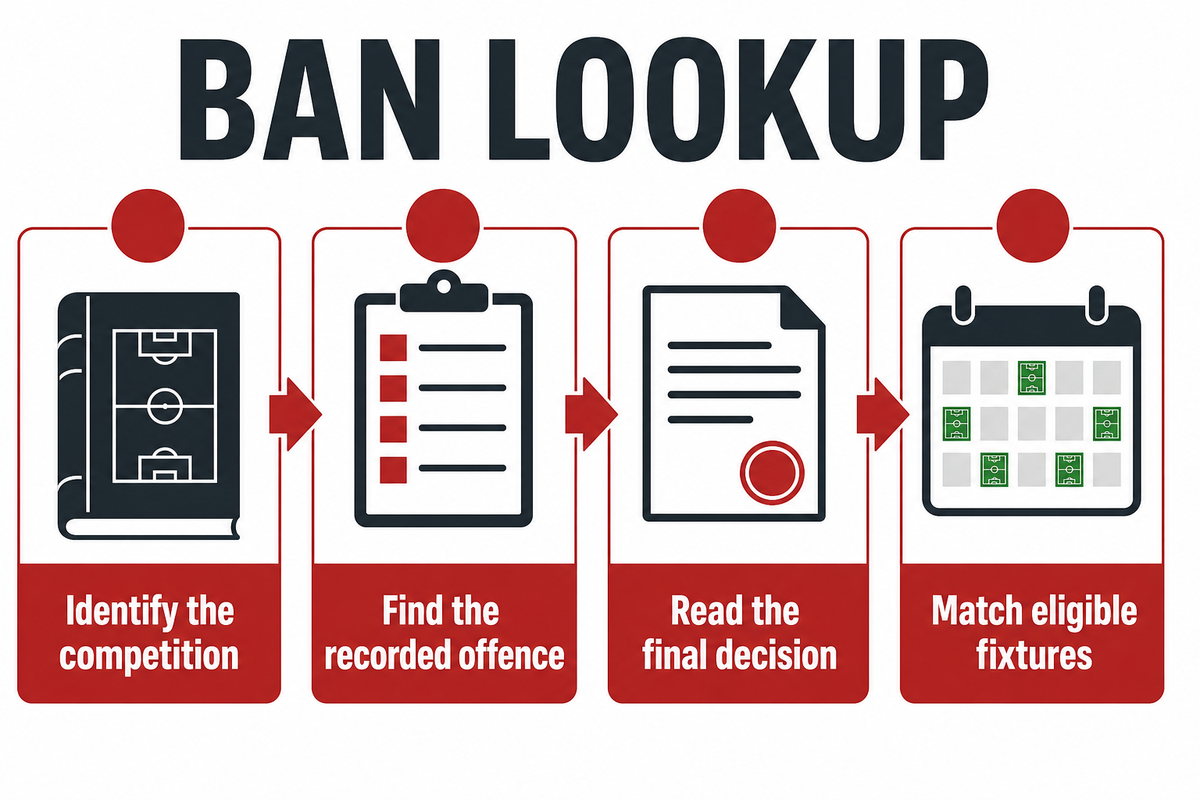
Ban Lookup
Finding the sanction, eligible matches, and return date is a relatively easy process in the relevant competition records. This is called Ban Lookup.
Identify the competition: use its current season’s disciplinary regulations.
Find the recorded offence: distinguish a direct red from a second-yellow dismissal.
Read the final decision: check the length, scope and any appeal ruling.
Match the eligible fixtures: calculate the return date only after confirming which games count.
For a player’s 1-match UEFA club-competition suspension, identify the next eligible UEFA club fixture rather than assuming the next domestic match serves the ban. Longer bans are not automatically served at the next available domestic match. Fans following famous soccer players and their careers should separate a missing name on the team sheet from evidence of a player being suspended.
Red card reviews: the referee and 2026/27 VAR changes
The 2026/27 video assistant referee protocol permits review of a dismissal caused by a clearly incorrect second yellow card. A missed potential second yellow, by itself, doesn’t permit a review. The referee makes the final decision.
The IFAB announcement stated that the new protocol would be implemented from 1 July 2026 with earlier implementation allowed for competitions starting before that date. Therefore, an explainer excluding all second-yellow dismissals from review is incomplete for competitions using the new protocol.
Consider two different scenarios. In the first scenario, a player is incorrectly shown a second yellow and dismissed. The dismissal can be reviewed by the new protocol. In a second scenario, a player is shown a first yellow, and a short while later commits a cautionable offense. The referee fails to show a second yellow. The referee’s action doesn’t warrant a review by itself. However, a legitimate penalty review can still produce a caution, including a second yellow for simulation. The official protocol questions explain this in more detail.
Competition adoption also plays a role with new behaviors. In April 2026, IFAB made sending-off provisions for certain mouth-covering conduct and leaving in protest optional for competitions to adopt. The Premier League’s 2026/27 guidance mentions they haven’t adopted the mouth-covering red-card protocol. As it stands, a World Cup headline shouldn’t be carried unchanged into every league.
For 1 disputed second-yellow dismissal, first establish whether the competition uses video review and the current protocol. Second, distinguish an incorrectly awarded caution from a missed one. A spectator asking for a review doesn’t give players the right to one. Ordinary matches, without video officials, can’t use that process.
Soccer red card questions
These answers cover intent, team officials, time and appeals. Yellow and red cards convey decisions, and the nature of the offense, and the rules, determine the sanction. Local competitions and disciplinary processes can be different from the 11-a-side rules. Identify the competition and check the match rules before applying the answers.
Does a soccer red card have to be intentional?
No. A challenge can warrant red for serious foul play without an intention to injure.
IFAB tests whether the challenge endangers safety or uses excessive force. A player saying that they only wanted the ball does not settle that assessment. Intent does matter in some other definitions, including deliberate handball, so avoid using one test for every offence. The referee evaluates the specific action and its circumstances rather than requiring an admission of intent.
Can soccer coaches get red cards?
Yes. Team officials can be cautioned or sent off, without automatically reducing the number of active players.
A dismissed coach must leave the technical area. Offensive or abusive conduct and certain confrontations with officials can lead to a red card; ordinary low-level disagreement is not automatically the same offence. A narrow medical exception exists: the team’s sole available medical official may remain after a sending-off offence to provide treatment. That does not allow a dismissed player to return.
How long does a soccer red card last?
A confirmed dismissal ends the person’s participation for the remainder of the game. Any later suspension follows the competition’s disciplinary rules.
A sending-off is not a timed absence after which the player returns. If it occurs during normal playing time, the player cannot come back for extra time. Future eligibility requires a separate check of the governing soccer federation or competition decision. Do not equate a severe penalty in the current match with a fixed number of subsequent games.
Can a soccer red card be appealed?
An appeal or claim may be available under the relevant competition’s disciplinary procedures. Availability and effect are not universal.
An on-field video review and a later disciplinary challenge are different processes. Check who may submit a claim, which decisions can be challenged, the deadline and the applicable evidence requirements. A submitted appeal does not by itself prove that the player is eligible for the next game. Use the authority’s published decision for the outcome, and check whether the rules suspend the ban while the matter is pending. Avoid borrowing another league’s fees, deadlines or appeal rights.
When were red and yellow cards introduced?
Red and yellow cards were introduced at the 1970 FIFA World Cup in Mexico, according to FIFA’s account of Ken Aston’s traffic-light inspiration.
A confirmed active-player dismissal after kick-off costs the team 1 player. Check offence timing before counting a bench card, and consult the competition’s disciplinary decision before predicting the next appearance.
SoccerKit publishes this guide for football fans using the official sources linked throughout. The numerical scenarios are worked examples, not reports of matches we officiated. We checked the 2026/27 rules in October 2026; competition adoption and disciplinary decisions can change. For player eligibility or a disputed sanction, the relevant competition’s regulations and published ruling take precedence over this explanation.
I write about football shirts in use and in club history. My articles compare training and match-day jerseys and revisit memorable Mohamed Salah Liverpool shirts, helping readers connect fit and purpose with the players and moments that made a kit familiar.