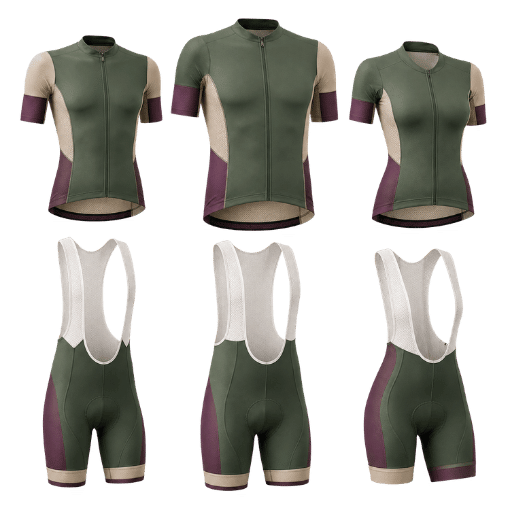
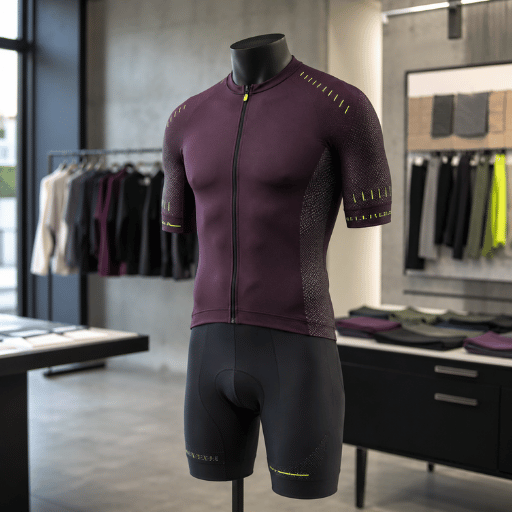
Still searching for your perfect jersey? Explore our best-selling products—we're confident you'll find a style that's just right for you in our diverse collection.
Ordering custom cycling apparel can feel simple, pick a color, drop in a logo, wait for a box of jerseys to arrive. In reality, the decisions that determine whether a kit rides fast and lasts are made long before you sign off on a design: the fabric, the chamois pad, the print method and the minimum order. This guide walks through each one with data rather than sales copy, handy whether you’re a club kitting out for the first time, a start-up bike brand, or a rider who just wants gear that fits.
Custom Cycling Apparel at a Glance
Minimum order (factory-direct team kit)
From ~100 pcs/style/color for lowest unit cost; no-minimum suppliers exist (1–10 pcs) at a premium
Sampling turnaround
~7 days (factory pre-production sample)
Production lead time
~2–8 weeks from final approval (design time not included)
Print method
Dye-sublimation (full-color, bonded into the fabric)
~$60–$130+ each, depending on quantity, fabric grade and design
What “Custom Cycling Apparel” Actually Includes
You may want one printed jersey or a head to toe kit that includes bibs, jacket and accessories too. Clarifying this helps with cost savings as more time is taken, not to mention the greater expense of the actual set up fee and order quantity rather than garment variety. One error that most people make on their first order is getting a single jersey; however for those who ride frequently in a week this means the sweaty kit option will only ever be present in their drawers!
Use the taxonomy below to determine which pieces to customize on this order and which to save on a re-order, when artwork is available and minimums decrease.
9-Garment Custom Cycling Kit Taxonomy
Garment type
What it does
Customize priority
Jersey (top)
Branding canvas; breathability + fit
First — the identity piece
Bib shorts
Carries the chamois; the comfort piece
First — buy quality here
Shorts (waist)
Bib alternative for casual riders
Optional
Jacket / gilet
Wind and weather protection
Season-dependent
Base layer
Moisture management next to skin
Often left plain
Skinsuit (one-piece)
Aero racing / time trial / triathlon
Race teams only
MTB jersey
Looser cut, durable for trail use
Discipline-specific
Accessories (cap, gloves, leg/arm warmers, socks)
Complete the matching look
Add on reorder
Caps / neck warmers
Low-cost brand visibility
Cheap add-on
What to customize now vs. add to a later collection on reorder.
Fabric and Performance Technology That Actually Matters
Cycling fabric isn’t ‘polyester.’ The standard workhorse in the bottom of anyone’s performance cycling drawers is a moisture-wicking four-way stretch polyester knit, and that workhorse is actually working: in a controlled trial, riders wearing athletic clothing made from synthetic fabric significantly improved their 20 km time-trial performance versus natural-fiber clothing, because the fabric moved sweat off the skin and helped regulate temperature; an independent, peer-reviewed review of sportswear agrees that fabric choice measurably affects thermoregulation and comfort.
Anything above the baseline, meanwhile, depends on your climate. It may be worth matching your kit to where you usually ride instead of splurging on the latest “most technical” thing you can find:
hot/sunny: thin, loose-knit jersey with UPF 50+ sun protection, rated by the AATCC 183 test method. A UPF rating on the fabric is very much the lower limit; the effective sun protection of a shirt diminishes as it’s stretched over body/sucked full of sweat, so that summer race jersey under that fierce mountain sun probably don’t do quite as well as it claims.
Warm/wet: waterproof membrane outer with the thermal (brushed) middle and lining, rather than just a medium weight material throughout.
Racing – higher compression; lower denier on ‘aero’ sections to match the pros and cut speed and resistance by giving up durability.
Skin safe: Inquire about OEKO-TEX Standard 100 certification, which tests fabrics for toxic chemicals.
📐 Engineering Note
A jersey body around 110–150 g/m² breathes well for summer; go heavier (180 g/m²+) only for cold-weather pieces. Panel zoning, using different fabrics on the front, back and side panels of one garment, matters far more than a single “premium” fabric used everywhere: the front catches the wind while the back need to dump heat.
The Chamois, The One Component Most Buyers Get Wrong
The chamois, the padded insert in bib shorts, is where comfort is won or lost, and it’s the easiest thing to get wrong. The instinct is “thicker pad = more comfortable.” But that gets it backwards. In a biomechanical comparison of cycling shorts, a well-engineered pad held the rise in mean peak perineal pressure to just +0.6% after 20 minutes, while a lesser pad let pressure climb +5.6% over the same period, a gap driven by pad shape and density, not raw thickness. Most road pads run 6–12 mm thick, but the right figure is the one matched to your ride, not the maximum, past a point, extra foam creates pressure rather than preventing it.
“What sets your average kit apart from great kit is the fabric and the chamois pad. Great chamois pad equates to comfort, pliability, and breathability.”
And of course, a word about padding: tailor your chamois to your ride length; recognize that saddle sores are a real, well-documented (and yes, gender-specific problem) problem, and get the right padding; if the manufacture isn’t supplying you with a brand name chamois like an Elastic Interface, Dolomiti or VEONINSERT-ask which Pad and Density supplier they’re using (see chart below).
Ride duration
Pad spec to ask for
Why
Under 1 hour
Thin, single-density, low-profile
Bulk causes more chafing than it prevents on short efforts
The Chamois Density × Ride-Duration Match Chart. Top-tier manufacturers often integrate branded pads such as Elastic Interface, Dolomiti or VEONINSERT, ask which pad a supplier uses and at what density.
How Custom Design Works, Sublimation vs Heat-Transfer
How can cycling jerseys be customized?
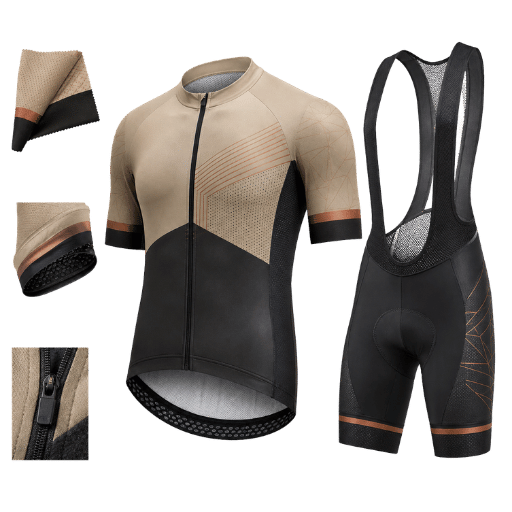
Dye Sublimation Most good-quality custom apparel manufacturers use a dye-sublimation printing process whereby your full-color design is first printed on transfer paper and then-under heat and pressure-the dye turn into a gas and bonds into the fibers of the fabric. When done properly, as one study in polyester transfer printing found, your graphic is absorbed into the fibers-which, if adequately heated (one example was 210°C for 60s), will resist laundering, perspiration, rubbing and light exposure. The drawback is that, as any textiles science shows, the sublimating dye only bonds effectively with polyester fabric-therefore, most of your best options will likely involve polyester. A lesser option is screen or heat transfer vinyl; fine for individual names on an off-the-shelf item, but research shows such designs can degrade through washing and become detached due to low pressure or stretch, a weakness for many highly worn-and highly sweaty-items of apparel. The print quality of lower-grade sublimated designs can also be problematic, leading to faded or blurry images, which explains why requesting a sample is a must.
Whether you take the low-road or the high-road, always, ALWAYS provide hi-res vector art. “Art is generally the most time-consuming component of a custom project,” said one sales manager.
✔ Dye-Sublimation
Unlimited full-color artwork, gradients, photos
Print bonded into fiber, no cracking/peeling
Stays flexible and breathable
Best for full kits and teams
⚠ Heat-Transfer Vinyl
Cheap for a single name/number on stock kit
Sits on top, can crack, peel, stiffen
Limited color blending
Poor on high-stretch race fabric
Sublimation vs Heat-Transfer 5-Point Durability Scorecard: on color range, wash durability, stretch tolerance, breathability and full-kit suitability, sublimation wins on all five for cycling use – vinyl only wins on cost for a tiny one-off.
Sizing and Fit for Teams and Individuals
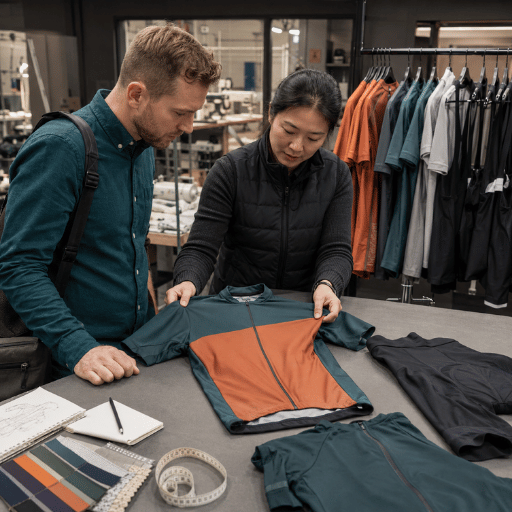
With custom kit there’s usually no returns or exchanges – the factory makes only what you order – so sizing is the step that most often go wrong. Run a fit-kit session first, a set of sample sizes everyone tries on before the order is locked. Running a “fit-kit party” at a club night turn a risky guess into a measured decision.
Decide on cut, too. A race cut is tight and short to stay aero when leaned over; a club or sport cut is more relaxed for all-day comfort. Sizes aren’t standard between brands, and women need women-specific patterns cut for different shoulder, hip and torso proportions rather than a unisex pattern. Build a master size sheet (rider, garment, size, cut) before submitting – your order is only as fast as your least-organised teammate.
MOQ and How to Choose a Manufacturer
What is the minimum order for custom cycling apparel?
There’s no single minimum – it depends on the type of supplier, and the relationship between minimum order and unit price is the opposite of what most buyers expect: the higher the minimum, the lower the price per piece. Suppliers fall into three tiers.
Tier
Typical MOQ
Unit cost
Best for
1. No-minimum print shops
1–10 pieces
Highest per piece
Solo riders, one-offs
2. Small-batch teamwear brands
5–35 pieces (e.g. 5–6 up to 35)
Mid
Clubs, small teams
3. Factory-direct OEM/ODM
~100 per style/color
Lowest per piece
Brands, big clubs, resale
The 3-Tier Custom Cycling Kit Sourcing Ladder. Real-world minimums vary by brand – published examples range from single-piece (at a premium) up to a 35-piece minimum, with combo programs like “10 total pieces, any mix” in between. Treat the tiers as a guide, not a rule: across apparel manufacturing more broadly, minimums and lead times swing widely by model – from microfactories quoting single-garment orders and ~48-hour turnaround to factories that have raised minimums from around 250 toward 700+ pieces per color.
For Tier 3, you are dealing with a factory directly. A custom cycling apparel manufacturer such as TOPOW illustrates what factory-direct sourcing looks like: a minimum around 100 pieces per style and color, roughly 7-day sampling and a 5–7 week production lead time, with quality controlled to an AQL 2.5 inspection standard (ISO 2859-1) and fabrics certified to OEKO-TEX Standard 100. That trade-off is clear, you commit to volume, you get the lowest unit cost and full control over fabric, chamois and labels.
Whichever tier you choose, vet the supplier the same way. Ask for a physical sample, check whether they own their factory, confirm certifications, and – in the words of Pactimo co-founder Karl Heidgen – “make a list of the three most important things to your team… and get it in writing.”
What Custom Cycling Apparel Costs (and What Drives the Price)
How much does a custom cycling jersey cost?
A custom cycling jersey typically lands in the ~$60-$130+ range, with single-piece custom orders running higher (one supplier lists race jerseys from about €120 for a single piece) and bulk factory-direct orders dropping toward $20-$30 per piece at volume. Four factors move that number:
Key cost drivers
Quantity / MOQ – the single biggest lever; setup and artwork cost is spread across the order.
Fabric grade – race-level lightweight and windproof fabrics cost more than club-level knits.
Design complexity – full-sublimation artwork and many panels cost more than a simple two-color layout.
Origin & extras – production region, named/numbered jerseys, premium chamois and hidden fees (art setup, fit-kit shipping, import duties).
Watch for fees that appear after the headline price – art setup, fit-kit shipping and import duty are the usual culprits. For US buyers in particular, 2026 changes that ended duty-free “de minimis” treatment on low-value imported parcels can add real cost to small overseas orders, so ask for itemized, landed pricing up front. Remember, the cheapest quote is rarely the cheapest delivered kit.
Caring for Custom Kit so the Print and Pad Last
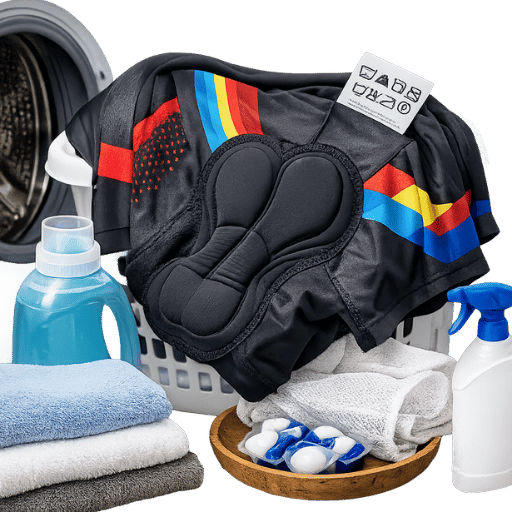
Good kit dies in the laundry, not on the road. Sublimated color is durable, but elastane, chamois foam and seams aren’t friends with heat. A simple routine keep a kit looking new for years:
Wash cold (30C) on a gentle cycle, inside out, soon after riding.
Skip fabric softener – it clogs the wicking fibers and kills breathability.
Air-dry in shade; never tumble-dry or hang heavy bibs by the straps (it stretches them).
✔Don’t iron over prints or pads.
Wash promptly – polyester holds odor more than cotton, so a sweaty kit left balled up gets harder to freshen.
It also helps to know what the care label legally must tell you: in the US, the FTC’s Care Labeling Rule and Textile Fiber Rule require garments to disclose fiber content, country of origin and care instructions – useful when you’re comparing what a supplier actually deliver.
Trends Shaping Custom Cycling Apparel in 2026
Custom cycling apparel sits inside a growing market: the global cycling apparel market was valued at about $2.28 billion in 2025 and is projected to grow toward $3.86 billion by 2034, a compound annual growth rate near 6%. Three shifts are worth factoring into a 2026 order:
Sustainable fabric is going mainstream. Recycled and bio-based fibers are moving from premium to baseline; industry trackers report a sharp rise in new products built on recycled materials. Ask suppliers about recycled polyester, eco-dye options and PFAS-free water-repellent finishes, as regulators increasingly scrutinise “forever chemicals” in apparel.
Low- and no-minimum custom is more available – but it’s a premium convenience tier, not a discount. Volume still wins on price.
Gravel and all-road styling is pulling kit toward relaxed, do-everything cuts alongside the traditional race fit.
Practical takeaway: cycling apparel buying peaks in spring and early summer, so if you want a custom kit ready for the season, start the design conversation in late winter – sampling plus production can run two months before a single jersey reach a rider.
Frequently Asked Questions
Can I order a single custom cycling jersey, or is there a minimum?
View Answer
Yes, you can order a single custom jersey from no-minimum suppliers, but you will pay a premium per piece. Most teamwear brands set minimums of around five to 35 pieces for the first order, and factory-direct manufacturers usually start near 100 pieces per style and color. The higher the minimum, the lower the unit cost — so a solo rider pays more per jersey than a club ordering in bulk. After the first order, reorders of the same design often have much smaller minimums because the artwork already exists.
Can I sample or try on garments before placing a full order?
View Answer
You should insist on it. Most reputable suppliers offer a fit kit — sample sizes of each garment you intend to order — and many will produce a pre-production print sample so you can check color and fabric feel. This matters because custom orders generally cannot be returned or exchanged: the factory makes only what you order. Running a fit-kit session before locking sizes is the single best way to avoid a box of jerseys that do not fit.
Can a manufacturer help design our kit if we have no designer?
View Answer
Almost always, yes. Most custom cycling apparel suppliers have in-house design teams and will build your kit from a logo, colors and a rough idea, then send back a template or 3D render for approval — usually with one or two rounds of revisions included. Policies on design fees vary: some include the work, others charge hourly, so confirm before you start. Supply the highest-resolution (ideally vector) logo files you have, as artwork preparation is the most time-consuming part of the process.
Do custom cycling apparel makers only produce cycling clothing?
View Answer
Many also make running, triathlon and other team sportswear using the same sublimation process, so a single supplier can often handle a multi-sport club’s full range.
How long does a custom cycling apparel order take end to end?
View Answer
Plan for roughly two to eight weeks of production after you approve the final design, plus a sampling stage of about a week. Crucially, suppliers quote turnaround from final approval — the time spent designing the kit and collecting everyone’s sizes is on top of that, and it is usually the part that drags. Order well ahead of your season.
Is custom cycling apparel worth it versus off-the-shelf gear?
View Answer
For an individual who just wants a good jersey, off-the-shelf is cheaper and immediate. Custom earns its keep when identity or fit matters: a club, team, charity ride or brand that wants a consistent look, sponsor logos and a coordinated kit. Because custom lets you choose the fabric and chamois rather than accepting a stock build, a well-specified custom kit can also fit and perform better than a generic one — provided you get the sizing right and choose a supplier whose sample you have actually handled.
About This Guide
This is an editorial buyer’s guide, not a manufacturer’s sales page. The figures here, chamois pressure data, fabric performance, the quantity breaks where unit costs drop, and typical prices, come from the peer-reviewed studies, standards bodies and cycling-industry sources cited throughout, with any brand-specific specification attributed to its source. Where a number depend on a particular supplier or design, we say so rather than presenting a single “right” answer.
I write about football jersey fit and when different shirt styles make sense. My articles cover youth goalkeeper sizing and long-sleeve jerseys, helping players and families think through comfort, movement, weather, and the role of the shirt before they buy.