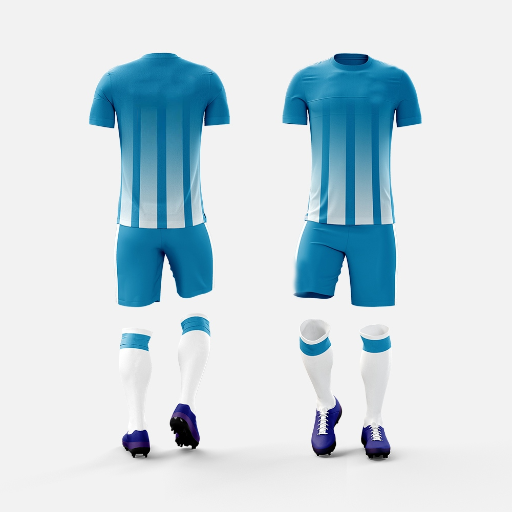
Still searching for your perfect jersey? Explore our best-selling products—we're confident you'll find a style that's just right for you in our diverse collection.
In the case of creating custom team clothing, the method with which you print can have a huge impact. Screen printing has been the standard choice for a long time as it was the most straightforward and economical method. However, full dye sublimation, which is innovative and able to bring about such a result, still remains as the best option for the smart teams looking for high-quality, durable, and stunning results. This method provides exceptional customization, bright colors, and a smooth finish, which surpasses the traditional methods. The article discusses the main points that differentiate between screen printing and sublimation and presents the case of more and more teams switching to full dye sublimation to enhance their performance. Be prepared to learn how this state-of-the-art technique could not only change your team’s appearance but also its performance.
Introduction to Printing Methods for Soccer Jerseys
Introduction to Printing Methods for Soccer Jerseys
Soccer jerseys are mainly printed through screen printing and dye sublimation which are the two primary methods. In screen printing, layers of ink are applied directly onto the fabric through a stencil; thus, it is a good option for bold, simple designs and smaller orders. Conversely, dye sublimation transfers ink right into the fabric with heat thereby producing vibrant, long-lasting designs that will not crack or peel over time. In terms of basic designs, screen printing is more cost-effective. Still, dye sublimation wins when it comes to producing fully customizable, high-quality results, especially for complex patterns or larger quantities. The choice of method depends on the team’s design needs, budget, and desired durability.
The Importance of Choosing the Right Method
Choosing a method of printing it is very important to take into account the particular needs and the order of priorities of your project. Screen printing, with its cost efficiency and versatility on various materials, is perfect for simple, bold designs and making large orders. However, for detailed, multi-colored, or photo-like images, dye sublimation gives the highest quality and longevity as the ink is absorbed by the fabric so it is guaranteed not to come off or crack. Besides, sublimation is suitable only for polyester fabrics, while screen printing can be used with much wider range of materials. Therefore, consider your design complexity, budget, and target fabric type to choose the right approach that is both economical and of high quality.
Impact on Performance and Durability
The performance and durability of the printing methods are the main aspects that should be evaluated. Dye sublimation offers excellent durability for an extended period, particularly when used to apply high-quality images and vibrant colors. The ink becoming a permanent part of the polyester fabric means that it will not fade, crack or peel even after washing and exposure to sunlight, which is so common in the case of dye sublimation printing. On the contrary, screen printing is highly regarded for its performance on different materials, including cotton and blended fabrics, making it a versatile option. However, while screen-printed designs can be durable, they may wear over time, especially if care guidelines are not strictly followed. For businesses or individuals who care most about longevity and premium-quality finishes, dye-sublimation usually wins over screen printing in polyester fabric applications. Weighing these factors can ensure optimal results for your specific requirements.
Cost-Effectiveness of Different Methods
The assessment of cost-effectiveness between the two methods of printing, screen, and dye sublimation for soccer jerseys rests on the number and the material requirements. The printing method generally favored for smaller orders, due to its lower setup costs, is screen printing. It is suitable for cotton or cotton-blend fabrics and creates bright, good-quality images at a competitive price. Nonetheless, for large orders or designs that require high detail and durability, dye-sublimation is the choice that ultimately saves money. To put it another way, this method could imprint an entire design in just one layer on polyester fabrics, making it invisible and eliminating the risk of fading or peeling. Choosing the correct process can be time-consuming for teams when considering long-lasting, high-quality finishes and scalability; however, it is unquestionable that dye sublimation is the better investment over time.
Overview of Sublimation and Screen Printing
Overview of Sublimation and Screen Printing
What is Sublimation Printing?
Sublimation printing is a technique that uses heat to transfer colored pigment directly onto materials, typically polyester cloth or items with a polyester coating. This approach renders the dye a gas without passing through the liquid state, thereby facilitating molecular-level binding to the substance. The final product is a beautiful, continuous, and long-lasting print that will not come off, crack, or fade. Sublimation is perfect for creating top-notch, fully covered designs with fine details and a wide selection of colors.
Understanding Screen Printing
Screen printing is a very flexible and popular printing method that involves creating a stencil, or “screen,” onto which ink is applied to a surface. A mesh screen is prepared and the parts to be left white are covered. Then a squeegee is used to push the ink through the open areas of the screen, thus creating the design on the material. The process is used for printing on textiles, paper, glass, and other flat surfaces. Screen printing is preferred particularly for its long life, bright colors and uniformity of output, particularly in the case of large-scale production. On the other hand, it works best with a limited number of colors because each color requires a separate screen, which increases costs.
Key Differences Between the Two Methods
The key differences between sublimation and screen printing lie in their process, material compatibility, durability, color range, and cost-effectiveness.
Parameter
Sublimation
Screen Printing
Process
Heat transfer
Ink pressing
Material
Polyester-based
Versatile
Durability
Long-lasting
Moderate
Color Range
Vibrant, unlimited
Limited
Cost
Cost-effective
Expensive
Setup Time
Minimal
Lengthy
Production Size
Small/Custom
Large-scale
Design Detail
High
Moderate
Advantages and Disadvantages of Each Printing Method
Advantages and Disadvantages of Each Printing Method
Benefits of Sublimation for Sports Uniforms
Vibrant Colors and High Detail – Sublimation printing offers a vast spectrum of vibrant colors and photorealistic designs, making sports uniforms more attractive and professional.
Durability – The Sublimation process fully incorporates the ink into the fabric; hence, the designs will not crack, peel, or fade over time, even with regular washing and heavy use.
Lightweight and Comfortable – The entire procedure is feasible only with polyester-based materials, which are the lightest and most breathable, making them the best for athletes.
Customization Options – Sublimation offers limitless design options, enabling unique, personalized uniforms for teams or individuals.
Eco-Friendly – The method results into waste that is almost negligible in contrast to other techniques. It is because the process does not require excess ink and fewer materials are utilized, hence it is contributing to sustainability.
Pros and Cons of Screen Printing
Pros:
Cost-Effective for Large Quantities – Screen printing is the best option for large orders, making it budget-friendly for teams ordering multiple jerseys.
Durable Designs – The printing ink for screen printing usually has a strong affinity for fabrics, producing prints that last long even after repeated washing and wear.
Vibrant Colors – The screen printing process makes it possible to have colors that are very bold and vivid thereby, the designs are easily noticed during the match.
Cons:
Limited Customization for Small Orders – The method of screen printing might not be economical for smaller groups or single designs as the cost of setup would be too much.
Design Complexity Restrictions – Multi-colored, detailed designs might be complex to achieve effectively with this method.
Material Limitations – Screen printing is most suitable for some types of fabrics and it might not be effective on modern soccer jerseys made of moisture-wicking materials, which are usually around.
Durability Comparisons: Sublimated vs. Screen Printed Jerseys
Sublimated jerseys generally offer superior durability, retaining vivid colors and detailed designs over time compared to screen printed jerseys, which are more prone to cracking and fading.
Parameter
Sublimated
Screen Printed
Color Retain
Excellent
Moderate
Crack Risk
Low
High
Fade Over Use
Minimal
Significant
Design Detail
High
Moderate
Fabric Fit
Versatile
Limited
Real-World Use Cases for Soccer Jerseys
Real-World Use Cases for Soccer Jerseys
When to Choose Sublimation for Custom Designs
When it comes to soccer jerseys that require vibrant, long-lasting colors and intricate designs sublimation is the perfect choice. This technique is best suited for teams that need full customization and detailed graphics, including gradients, logos, and unique patterns that will not crack or fade throughout the lifetime of the jersey. Furthermore, sublimation is excellent for jerseys that will be washed and worn often, thus quality will not be compromised and the professional and polished look will last for the whole season.
Scenarios Favoring Screen Printing
When the factors of simplicity and cost-effectiveness are considered, screen printing is an outstanding option for soccer jerseys. The teams requiring bright, solid colors and simple drawings, such as single-color logos or messages, would find this method most suitable. It is highly recommended for larger-quantity jerseys, as unit cost decreases with increasing production volume. As a result, the durability of screen printing for basic designs makes it a viable alternative for teams that want to maintain a standard yet reasonable price range.
Comparing Use Cases for Recreational Teams and Professional Leagues
When evaluating manufacturing methods for uniforms for recreational teams and professional leagues, the requirements of the latter differ significantly from those of the former. Usually, the main consideration of recreational teams is the low cost and simplicity, thus they go for the cheapest methods like, for instance, screen printing, when it comes to their basic designs and logos. This way, the team’s funds do not get strained too much and they can still get long-lasting and attractive uniforms. The recreation teams mostly prefer practical solutions that are less costly and suited to their infrequent use, as they might only need uniforms for seasonal participation or occasional tournaments.
At the same time, professional leagues are seeking highly refined, sophisticated designs that not only tell the brand’s story but also attract a wider audience. Sublimation printing, which can produce masterful designs and even use very bright colors, is frequently selected as the method of choice for uniforms of the highest quality. These leagues demand the use of the best fabrics that can deliver the most and yet have a familiar and very nice look and feel across all the apparel. Furthermore, professional leagues require flexibility and a wide range of choices in the volumes of uniforms and merchandise produced for each sponsor brand, as well as in the retailing of fan merchandise, thereby making their presence ever more outstanding in a highly competitive market.
All in all, in the case of the latter, they are always the first ones to benefit from the low-cost, simple solutions available while professional leagues are the ones who still have to go for sophisticated, high-end cubicle methods for their diverse needs and reputation.
Key Factors to Consider When Choosing a Printing Method
Key Factors to Consider When Choosing a Printing Method
💡 Important Considerations
Cost Analysis for Sublimation and Screen Printing
To analyze the costs of sublimation and screen printing, it is essential to consider initial costs, production volume, and design complexity. The new reports say that sublimation printing typically has higher initial equipment costs because it requires specialized printers and sublimation paper. However, it is a good financial choice for small, custom orders because there are no extra setup fees, and it can produce complex, full-color designs without additional cost.
Screen printing, on the other hand, usually has lower unit costs for large production runs due to economies of scale. However, this method requires creating separate screens for each color in a design, which means one has to pay the initial setup costs for complex or multi-color prints. The process becomes less attractive for small batches or one-off customizations, as the setup fees can exceed the benefits.
In the end, the decision between sublimation and screen printing is influenced by production scale, budget constraints, and the desired level of detail in the output. Sublimation is ideal for high-detail, short-run projects, whereas screen printing is often the choice for bulk orders with simpler designs.
Design Flexibility and Customization Options
When considering flexibility in design and customization options, you should review the details of your design, the colors used, and the printing material. Sublimation is notable for its ability to create very detailed, bright, and clear images, making it the best choice for such projects. However, it can only be used on fabrics that have a high polyester content. Screen printing, in contrast, is very good at creating bold, simple designs on a variety of materials and is very economical for large quantities. Consider your design’s intricacy and the material to choose the method that best meets your requirements.
Performance Insights: Which Method is Best for Athletes?
When considering the optimal approach for sportspeople, sublimation printing is the most reasonable choice due to its ability to produce ultralight, breathable designs that are fully compatible with performance fabrics such as polyester. The method guarantees that the designs do not create extra weight or restrict movement, which is a perfect feature for sports that require a lot of movement. On the other hand, for groups that need cheap, large-scale uniform production across different materials, screen printing offers a long-lasting, economical option. In the end, sublimation is the choice for top-performance equipment, while screen printing is fit for casual sportswear.
Reference Sources
📄
Screen Printing vs Sublimation: Ultimate Printing Method University of Arizona
Explains the differences between screen printing and sublimation, including their ideal applications.
START A PROJECT Towson University
Covers decoration types, including screen printing and digital printing, and their best use cases.
❓ Are sublimated jerseys a better choice than screen printing for sportswear?
The sublimated jerseys are a hundred percent made for polyester sportswear because the sublimation inks work on the principle of getting directly absorbed into the fibers, hence the design becomes an inseparable entity with the fabric instead of being just placed over it. The resulting fabric with sublimation printing is very light, has good air circulation and is durable enough not to get cracked or peeled off even after multiple washes. On the contrary, if your requirement includes high vibrancy and spot colors then traditional methods like screen printing or using plastisol would be more suitable.
❓ What are the key differences regarding sublimation and screen printing for soccer jerseys?
The key differences between sublimation and screen printing are mainly in the process and the result: sublimation uses heat to transfer dye into the polyester, so the ink layer becomes part of the fabric, whereas screen printing uses stencils to apply inks to the top of the fabric. Even though sublimation leaves no ink layer that can be felt, graphics are smooth and have good breathability, while screen printing adds a layer that can be thicker and more durable for some uses.
❓ Would you rather have sublimation or screen printing for custom sports uniforms with complex graphic design?
For the complex designs full of colors and gradients, sublimation would be the best printing method usually because it can reproduce even the most detailed and photographic artworks all over the jersey without the necessity of cutting it up with seams. However, if you require things like simple logos, numbers, or the use of specialty inks (metallics, puff) then the traditional screen printing or the heat transfer methods might be a better option. Also, the fabric is an essential factor – sublimation is polyester dependent, meaning, it is the ideal choice for many soccer jerseys and custom sports uniforms.
❓ What are the negatives of sublimation when used on team jerseys?
The main drawbacks of sublimation include its inability to work on natural fibers i.e., sublimation does not stick to cotton thus, sublimated clothing must be made of polyester or its blends. Colors can look muted on dark fabrics if there is no white layer underneath and thick ink textures like that of plastisol screen printing cannot be achieved. Moreover, printing a small number of garments with several color separations tends to be less expensive than some screen-printing methods.
❓ Which method will be more durable, sublimation or screen printing, on jerseys that are washed frequently?
Sublimation printing is very robust for polyester jerseys because the dye is well integrated with the fiber, thus even after many washes the colors do not crack or peel off. On the other hand, screen printing could also last long though mainly with a good quality plastisol or proper curing of water-based inks, but unlike sublimation, screen printing does not get absorbed into the fabric so it might show wear on heavy sports jerseys over time.
Ready to Choose the Right Printing Method?
Whether you opt for the vibrant, durable results of sublimation or the cost-effective versatility of screen printing, understanding these methods empowers you to make the best choice for your team’s needs. Consider your design complexity, budget, fabric type, and long-term durability requirements to select the method that will deliver exceptional results for your soccer uniforms.
I write about club jerseys and the history that gives them meaning. My articles explore Tigres UANL shirts, their designs, and related partnerships, helping readers distinguish the features and stories behind different versions of a football kit.