Still searching for your perfect jersey? Explore our best-selling products—we're confident you'll find a style that's just right for you in our diverse collection.
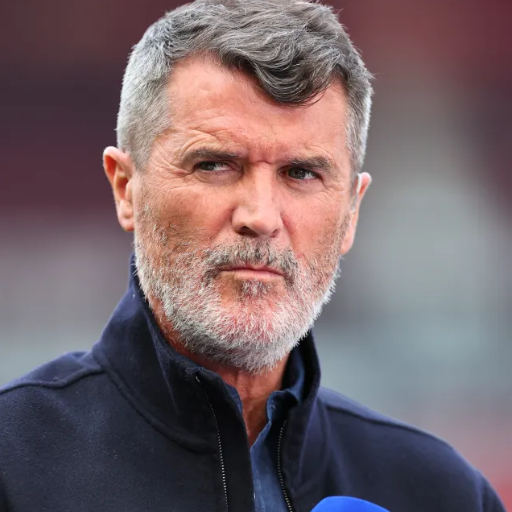
The name Roy Keane epitomizes passion, leadership, and robustness in the realm of football. As one of the finest midfield players to grace Manchester United, Keane put an indelible mark on the sublime history of that institution. The article delves into his wonderful career, from his fiery presence on the field with marvelous contemporary strategic insight to being the heartbeat of Manchester United during the halcyon days of Sir Alex Ferguson. Whether controlling the midfield, motivating his teammates, or coming up big in crises, Roy Keane preserved attributes that are the very mark of leadership. So let us further analyze the life and legacy of a player who redefined the role of the military general, which brought about the success of Manchester United.
Early Life and Career
Early Life and Career
Roy Keane was born in Cork, Ireland, on August 10, 1971. Growing up in a working-class family held no obstacle to his early and continued interest in football. Keane played in a local Cork club called Rockmount AFC. Signed by Cobh Ramblers in 1989, Keane provided the club with quality midfield play. He caught the eye of Nottingham Forest and finally signed in 1990, marking the start of his professional career in England. Under the guidance of the legendary soccer coach Brian Clough, Keane honed his skills well and also became a priority in midfield, alongside his obvious attributes of determination and leadership.
Nottingham Forest: The Starting Point
The football career of Roy Keane began at Nottingham Forest in 1990 under the great Brian Clough. Recruited from the Irish club Cobh Ramblers, Keane quickly settled down to the more grueling English football lifestyle, impressing with his work rate, skill, and midfield domination. In spite of a couple of very tough seasons, including the club’s fight against relegation in the first half of the 1990s that Roy was involved in, he gave his best to the cause of the team while shining through with particular class. Even as the club was relegated from the Premier League in 1992-93, Keane’s performances drew the spotlight, and he was later signed to Manchester United in 1993 for a then-British record transfer fee of £3.75 million. However, his time at Nottingham helped to fully harness all these good qualities for his future, showcasing a competitiveness and spirit of leadership early on in his career.
Influence of Brian Clough
Brian Clough had a good effect on Roy Keane because he modeled his game and his approach to the game. While all oozing charisma at times, Clough allegedly inspired the young Keane with his abrasive presence, and the rest of the fight was provided by “the coach in him” by inviting him to stand up and try to hit back when on the heavy offensive. This ability, in a potion when mixed with an absolute quest for excellence, put Keane on the ladder to becoming an extremely strict and determined competitor. Keane was asked to play many a high-pressure moment against many a small adversary whom Clough had a very high regard for. Through his tough challenges and their resolutions, Keane learned responsibility and discovered that he could cope as situations became more draining. Though it had its waves with moments of discord, the symbiosis grew to sculpt the Keane that fans have come to know at the very highest level of football up to now.
Rise to Prominence at Manchester United
Rise to Prominence at Manchester United
Roy Keane was signed by Sir Alex Ferguson in 1993 to play for Manchester United, setting a then British transfer record. From the get-go, Keane’s sheer work rate and spontaneity in a game, his general traits, including leadership qualities, and his versatility in midfield quickly established him as a stalwart in any team. Continuing to be ever dazzling year after year since 1993 as a protagonist in Manchester United’s total dominance from the middle to the last of the 1990s and into the new millennium with respect to Premiership championships shared with others, successes with the FA Cup in the 1990s, then…the treble in 1999. The eloquent Irishman brushed off doubters as his characteristic qualities of motivating the players and his massive presence on the pitch secured Keane’s position in the short list of the most influential players in the history of Manchester United.
Joining Man Utd: A New Era
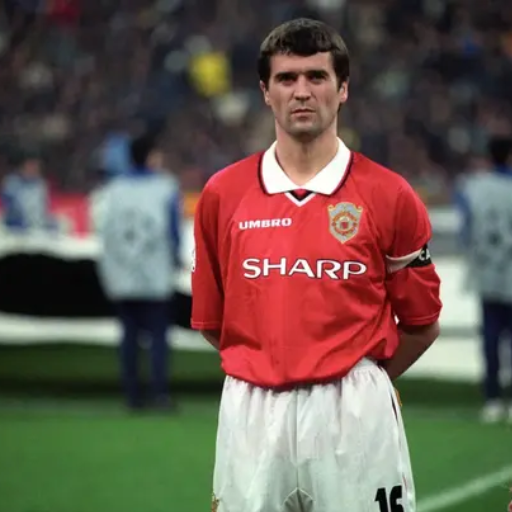
Roy Keane’s move to Manchester United in 1993 was a defining moment for the club and his career under Sir Alex Ferguson. Keane signed a then-British record transfer fee of £3.75 million from Nottingham Forest and was soon an indispensable factor in the side. His aggressive playing conspired thanks to masterminded tactical play, an unrivalled will to win, all in tune with the team that Erickson (Alex Ferguson) was building, which was to eventually dominate English football. Over time, Roy Keane carved out a leadership role, underlined by the captaincy, succeeding Eric Cantona in 1997. His sphere of influence extended well beyond the playing field, driving home lessons of professionalism and high standards within the United dressing room. United Football Club’s gains in that decade were actually driven by Keane’s efforts, the player and the mentor.
Impact Under Sir Alex Ferguson
In the era managed by Sir Alex Ferguson, Roy Keane emerged as one of the most important players in the history of Manchester United. Commonly regarded as a representation of Ferguson’s philosophy, Keane’s leadership as both a player on the field and another dominant figure outside the field was the main drive behind United’s success. His defense was built based on his tactical intelligence and combative style to lay the foundation for the midfield dominance of Manchester United in the 1990s and early 2000s. Keane’s mere presence over the years marked one of the most consistent pushes toward accumulating the gigantic cumulative seven Premier League titles, four FA Cups, and a UEFA Champions League. Through the establishment of overcome-the-impossible standards, the former Manchester United midfielder inspired and then motivated his teammates to reach their extraordinary goals.
Moreover, Keane’s steadfast nature towards high standards brought him into perfect alignment with Ferguson’s emphasis on rigour and work. United thus nurtured a winning attitude for more than a decade with the perseverance towards making it the number one club in England. Similar to Ferguson’s intensity, Keane’s raging conduct formed the link between them and ensured the redefinition of Manchester United’s supremacy on the England and European stage.
Key Matches and Moments
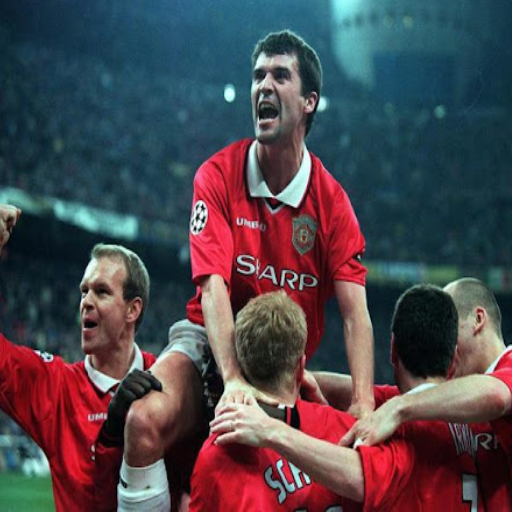
In all probability, one of the most impressive captain’s performances in Champions League history was stirred by Keane during Manchester United’s turnabout against Juventus in Turin. Despite taking a yellow card that ruled him out of the final, it was his considerable effort and tireless running that somewhat saved the Red Devils. Keane’s header, which came as a result of his mammoth jump and incredible precognition inside the box, was a perfect recognition of the team’s best interest. This very match testified to his remarkable role in United’s march towards European glory.
Such memories cited earlier help formulate Keane’s influential legacy in Manchester United, which elevated him as anything akin to the biggest a leader. Neither a single-minded all-rounder nor a team morale booster at critical moments can describe the sort of ways in which Keane has brought his energies, inspiration, and vision in the service of the team.
Comparing Roy Keane with Other Midfield Legends
Comparing Roy Keane with Other Midfield Legends
His primordial points are leadership, athleticism, and defense. While some players have seen greater success in grandeur with beautiful, colossal visions- Zidane’s name comes to mind- Keane has been famous for his ability to literally and mentally dominate the pitch. If one were to compare with Vieira, Keane is quite a thrasher, and his defensive discipline, snowball influence over his team, and temper gave him far greater flexibility in reaching the class. Not only had they accommodated playmaking quality like Andrea Pirlo, but Keane also captained his side from the backlines, dictating the tempo of games and exhibiting terrific leadership in a way that massively influenced the game and made him irreplaceable in his era.
Roy Keane vs. Patrick Vieira
The dualism between Roy Keane and Patrick Vieira is considered one of the most epic clashes in the history of football, where their physicality, leadership, and influence on the game were manifested. Each was the on-field general for their respective teams, Keane at Manchester United and Vieira at Arsenal, during a time overshadowed largely by the domestic supremacy battle of both clubs over the Premier League.
Keane was instrumental to United due to his immense will, tactical flexibility, and leadership displayed through many tense moments to inspire his team to victory. In an age where deft passers and ball players were important in midfield, his capability of breaking up the play and dictating the passage of the game was invaluable to Sir Alex Ferguson. Vieira’s Arsenal was an adept mix between physical domination and his supporting technical qualities through the middle of the park. His world-beating possession, awareness, and tackling were the key ingredients to the unforgettable successes of Arsene Wenger’s teams, including the ‘Invincibles’.
While both midfielders demonstrated excellent leadership abilities, their styles contrasted vastly. Keane, often leading by confrontation, led his team through sheer determination and discipline, often attracting awe and intimidation. Vieira, on the other hand, was more composed in his assertive style of leadership on the pitch while serving as both a destroyer and a creator. These two different leadership styles identified these players with their clubs, as Keane was symbolic of Manchester United’s relentlessness, whereas Vieira represented the uniqueness of Arsenal in their style of elegance and grit. Their clashes stand out as defining moments in Premier League history.
Gary Neville’s Perspective
Gary Neville, a former leg of Manchester United player with Roy Keane, has often mentioned the intense rivalry between Roy Keane and Patrick Vieira as a chief storyline of the Premier League era. Neville found Keane to be the ultimate captain, commanding purely based on fearlessness and having the sheer will to win. He claimed that the roar in Keane’s ego could have lifted a person’s game on its own.
Neville lauded Vieira’s talent and presence, which he thought ideal as Keane’s midfield partner. Vieira could combine controlling duties and flair for creation, earning himself the status of a complete midfielder. These brotherly fights, Neville maintained, embodied the wider United-Arsenal enmity with Keane’s fiery spirit against the quiet yet intense presence of Vieira. For Neville, the battles on the field were not just mere individual duels but, in the greater perspective, defined each other’s teams, shaping English football with sharp distinctions between the two entities.
How Keane Compares to Paul Scholes
Roy Keane and Paul Scholes were contemporaries at Manchester United; in the midfield, however, the distinctive presence each contributed was apparent. An upbeat player, Keane was a dynamic defensive leader who achieved success through his aggressive approach towards tackles, exceptional work rate, and ability to bully the tempo of the team. In fact, these key ingredients officialized him in major roles from ball recovery, defensive organization, to pushing his teammates to maintain their own standards while under pressure. Keane would anchor the Manchester United team through his superb performances in midfield at several critical matches, thus turning out to be indispensable.
Switching topics for now and turning attention to Paul Scholes, the contrast between the two was the fact that Scholes was expected to carry the offensive weight with his precision, precision ball-striking, and goal-scoring vision from all ranges. His excellent passing projection threw precise imagination at the forward runs and dictated possession from the deepest spots. With a deep sense of space and articulation of visualization with an innate intellectual sense of the game, Paul Scholes displayed United’s poetic midfield play in harmony with the tumultuous displays of Keane. Keane was all about leadership and resilience, while Scholes was the best when it came to finesse and daringness. They allowed the team to pull back into harmony with one another, so a midfield partnership was weighted to balance off the dominance held by Manchester United during their period.
Roy Keane’s Leadership and Influence
Roy Keane’s Leadership and Influence
Leadership was the keystone for the successes of Manchester United during Roy Keane’s stay. As the captain himself, he had an indomitable will, stiff discipline, and the sheer will to win. His never-ending powers and interventions on the pitch encouraged his men to perform at the peak of their ability. His trademark way of putting team before self demanded high standards on the pitch and in training. Keane will be known for practically no-fail years on the trot. He was no father figure for his mates, but rather was seen as the source of guidance until his arrival on the team. His personal inner resilience and relentless appetite further served to inspire everyone on his team, making him one of the most remembered football captains ever.
Keane Made as a Captain
The way Keane led was something that set him apart due to particular leadership qualities that took shape in a nuanced mix. The core of his captaincy was formed by discipline, accountability, and unending demand for the highest perfection. Keane, who was famous for his tactical expertise and hard work, led through his own accuracy during the toughest games and by keeping fit and maintaining focus between training sessions. It was during his tenure that Manchester United had success in winning multiple Premier League titles, FA Cups, and that famous Celestial night of 1999 when they took the UEFA Champions League.
Having the team spirit going whilst managing the fiery explosion in attitudes in a direct manner was bestowed by Keane’s exceptional leadership skills. His ability to motivate and not take prisoners made him hold in utmost respect and fear by his teammates. The mental toughness, insanity, physical dominance intellectual coherence kept alive one of the world’s greatest and unsurpassed captains, Roy Keane.
Relationship with Eric Cantona
The Keane and Erick Cantona association created a relationship of mutual respect while minimizing the differences that existed between the two personalities. Cantona, the stylish showman, was there to flatter the more inhibited and militant Keane. The two shared moments of extraordinary professionalism while playing away at Manchester United, thanks to Cantona’s guidance over Keane’s long ascendence to captaincy. Although their affiliation was more professional and less personal, it did actually lay the foundation of Manchester United’s successful reign sometime around the mid-1990s. Keane often praised Cantona for the positive impact on the team, as he made the most of the Frenchman’s undeniable presence in the team and enigmatic performance.
Legacy Among Man Utd Legends
Eric Cantona and Roy Keane are the standout names of Manchester United’s fabled past, their partnerships having helped define the club’s lore in the age of Sir Alex Ferguson. With an emphasis on talent, creativity, and performance in clutch moments, Cantona engendered a new culture based on audacity and attacking capabilities. Led by an equally menacing and hubristic character, he led to a realm
In contrast, Keane embodied tenacity, high standards, and an uncompromising competitive spirit. Both admiration and condemnation were attributed to the times Keane bumped heads and once again straightened some of the crooked attributes of his teammates, in a good way. His kind of leadership may have been accountable; he bore the maximum burden of responsibility, compelled himself, let alone subversion on any MEMBs to keep up with his pace and tempo. This fantastic spirit of artistry and determination injected so much into the team—everything from desire to ambition and emotion.
No one has come closer to nailing the doors on Manchester United’s supremacy over the English game. In the case of Keane, his stint at the helm attracted six Premier League trophies, as well as the legendary treble in 1999. Therefore, those two legends left behind some everlasting moments on the field of Old Trafford as references to all generations of footballers who would follow.
The Aftermath of Roy Keane’s Career
The Aftermath of Roy Keane’s Career
The leaving of Roy Keane from Manchester United in 2005 did not diminish any of his influences on Man Utd’s ethos and game play. Keane went into management almost immediately after his playing days were over, running teams at Sunderland, which were promoted to the Premier League, and Ipswich Town. Besides this, his blunt self-criticism is also appreciated when Keane, formerly a pundit on football, tweets all over social media. Although mixed results characterize his time after retiring from footballing activities, his career both in and off the pitch still remains the calling card of a genuinely ferocious competitor and a leader, which can best summarize his legacy as a footballer.
Transition to Management
The era of Roy Keane as a football manager began in 2006, as he was appointed the manager of Sunderland. The club witnessed incredible change under his leadership in a promotion from the bottom of the table to the very top of the Premier League in the same season. Such success does not undermine his poor judgments and unfavorable results while in charge of Sunderland, and in 2008, he was to resigned under his signature resignation pattern. Thereafter, Keane served as the town manager of Ipswich from 2009, fraught with the challenge to repeat his previous success. The initial feeling in Keane’s case was dashed by a hugely disjointed and unsatisfactory tenure, leaving his managerial post in 2011. And then, he donned a position as an assistant coach, lending his support to managers at Aston Villa, Nottingham Forest, and eventually the Republic of Ireland’s national team. Throughout the years, this illustrated Keane’s tactical skill and his unyielding, firm approach to coaching style, with his winning and unfruitful experience since becoming a football coach, always gaining both admiration and detraction.
Continued Influence in Football
Although my managerial career had its good and bad moments, I believe that my existence in football is an embodiment of my affection for the game. Working as an assistant manager and a mentor has allowed me to share my tactical input with several teams while instilling a sense of discipline in them. I am still committed to football, whether in the context of coaching, analysis, or any kind of advice for players and staff. I long to have a lasting influence on the game.
Legacy as a United Legend
The legends of the Red Devils that United has made under my leadership on and off the field are incontestable. While on the pitch, I stood out as a leader armed with tactical intelligence and unfaltering perseverance conducive to the club’s many victories on both the domestic and international scenes. My deciding victories and titles are milestones that significantly set me apart in the annals of the history of Manchester United.
Apart from my retirement, working with football as a coach, assistant, and mentor served to confirm my affection for the game and its traditional values. I helped carve out the players’ careers and gave them a better knowledge of the game with my transformational responsibility. The spirit of unity, hard work, and resilience shall eternally live with the club, uniting the fans and the players. This impact is a constant navigation of commitment to the growth and success of the club.
How did Gary Neville describe his former teammate Roy Keane?
Gary Neville has always been kind in his praise for Keane as a leader full of intensity from his days with Manchester United. Neville highly recommended Keane as the driving force behind the success of United. He also commented about how Keane’s intimidating attack is well suited for the atmosphere on the Old Trafford pitch, at which the call for professionalism from new players became imperative and helped immensely to plunder the European crown in 1999, accompanied by the Premier League/United had climaxed victory trophy after continued success.
Denis Irwin and Roy Keane: What was the nature of their partnership at Manchester United?
Midfield steadiness and rock-hard defense were the hallmarks of the Integrative side of Manchester United that had Denis Irwin and Roy Keane ushering it in. Denfer’s foolproof method of defensive cover rounded off the highly-tempered midfield drive behind Keane. Eventually, United weathered some Premier League wins, UEFA Cup victories, and the 1999 UEFA Champions League success. It epitomized the time of Sir Alexander Chapman Fergusson, manager of Manchester United.
values of the Premier League: What is the legacy Keane left behind in the Premier League, according to Greg Dyke?
Roy Keane’s standing in the Premier League is marked by numerous league title wins, as well as seasons for which his peers and commentators voted him Football Writers’ Player and Professional Footballers’ Association Player of the Year. Keane was pegged in the middle of the line in the 1990s and the early part of the 2000s. His consistency, tough-tackling nature, and ability to drive goals in major matches, such as against Sheffield United, helped him carve himself into the soul of the competition.
Profile of a Midfielder: Why is Roy Keane perceived as one of the great midfielders?
As a midfield player, Keane possessed leadership qualities combined with the know-how of the game. He loved to lead by example, with his teammates and opponents revealing stories surrounding the Irishman demanding “every blade of grass” from his mates. This influence extended to the international arena. Despite dancing to the tunes of every whim in the heady days of the Guy Small affair, Roy represented the Republic of Ireland safely through two successive major tournaments and was a front-runner, it not being for his retirement on being guaranteed qualification rights for another shot at the 2002 World Cup qualifiers. The Republic lost the goodwill of a leader and candidate for greatness with his withdrawal.
How did Roy Keane’s playing career at Celtic and his links with both Manchester United and Celtic influence his post-playing career?
His will-to-win predecessor was associated with narratives about British clubs and alluded to United and Celtic FC in discussions about a coaching role and a pundit slot. Through his implicit or explicit altercations between them, such periodic stories induce recollections of players who signed for Celtic before completing only six months of their career, or stories about the rivalry between the Scottish and English football leagues. Keane inherited his directorial-artistic voice from his experiences garnered in top clubs.
Injuries and exit: What happened to Keane, culminating in his leaving Manchester United in 2005?
Keane’s departure in 2005 was in the wake of a litany of injuries, changing dynamics at Old Trafford, and perceptibly going down at the onset of the turmoil. The driver of an enfeebled Keane’s going out of the door was a fitness disaster and disciplinary friction. It was only after a few brief sojourns elsewhere that he officially dropped out of the field of play, having by then picked up many triumphs in the domestic league with the National Team of Ireland (incl. the 1999 Champions League) and also his World Club triumphs.
I write about football shirts associated with well-known players and national teams. My articles discuss Ryan Giggs's Manchester United kits and Roy Keane's Ireland jersey, connecting the garment to the moments and supporters that made it memorable.