Still searching for your perfect jersey? Explore our best-selling products—we're confident you'll find a style that's just right for you in our diverse collection.
Authenticity in soccer jerseys can be a big deal—no matter if you are a die-hard fan, a collector, or just want to wear your favorite team’s colors nicely. The issue of counterfeit jerseys mixed with the originals on the market has made it very hard to spot the difference between the real and the fake. But this guide will help you do so. Before your purchase, we will inform you about the main signs of the genuine soccer jersey which vary from subtle design details to quality and official labeling. Ultimately, you will have the confidence and knowledge of the authentic product, which will be a source of pride for your team and ensure the absence of counterfeit products.
Understanding Authentic Soccer Jerseys
Understanding Authentic Soccer Jerseys
Official Branding and Logos
Authentic jerseys will always include the team, manufacturer, and league logos and branding. These are usually embroidered or heat-pressed with high precision and quality, without any misalignment or irregularities.
Unique Serial Number or QR Code
Authentic jerseys contain a unique serial number or a scannable QR code on the tag. This can frequently be verified on the manufacturer’s official website to confirm authenticity.
Premium Quality Materials
An authentic jersey will be made from high-performance fabrics; for instance, the material will be moisture-wicking, making it feel light yet strong. The fake brands may use lower-quality materials that are either rough or heavy.
Proper Tagging and Packaging
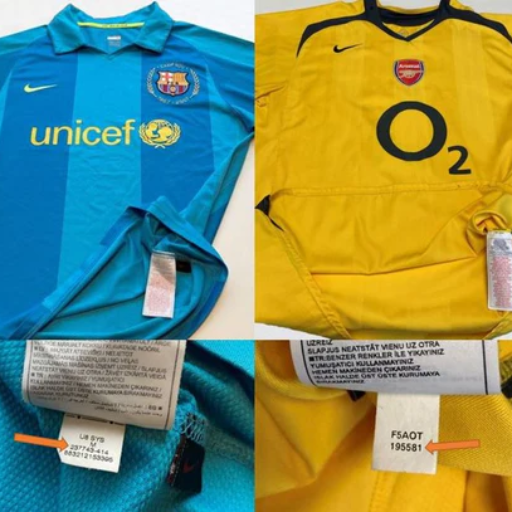
Check for correct tags with clear printing and proper spelling, which are often used on official packaging. The genuine jerseys will also include care instructions in multiple languages.
Price Consistency
An authentic jersey is not likely to be significantly discounted, especially when it is just released. If a bargain appears too good to be true, it would be prudent to investigate further.
Key Takeaway: By closely scrutinizing these features, you can purchase an authentic soccer jersey and support your team with confidence.
Defining Authentic vs. Replica Soccer Jerseys
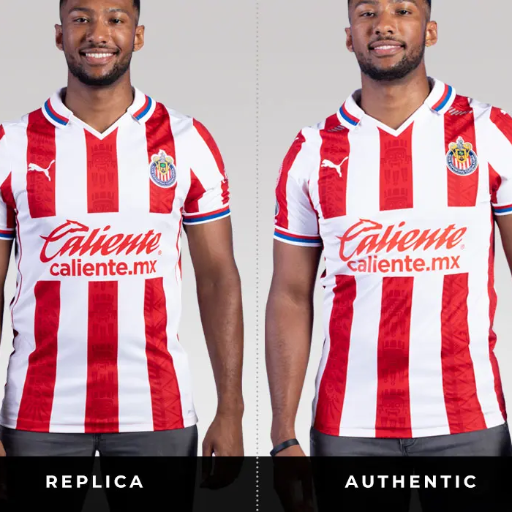
Authentic soccer jerseys are designed to match those worn by players on the field; replica jerseys are made for fans, prioritizing comfort and affordability.
Key Point
Authentic
Replica
Fit
Slim, athletic
Looser, relaxed
Material
Lightweight, premium
Standard, thicker
Design
Exact match
Simplified
Logos
Heat-pressed
Embroidered
Purpose
Performance
Casual wear
Price
High
Lower
Durability
High-tech
Standard
Ventilation
Advanced
Basic
This table provides a quick, straightforward comparison of the core distinctions, helping buyers make informed decisions based on their preferences and needs.
Key Features of Authentic Soccer Jerseys
✓ Advanced Ventilation
Authentic jerseys use the latest fabric technology to ensure maximum airflow and keep the athlete cool during hot season or over time.
✓ Lightweight Material
Made with the top, ultra-light materials for better movement and athletic performance on the pitch.
✓ Tailored Fit
It features a perfect, skin-tight fit that reduces resistance and enhances aerodynamics.
✓ Heat-Pressed Logos
Logos and branding are applied through heat pressing for a refined, uninterrupted appearance which minimizes the player’s distractions.
✓ Durability and Performance
Construction designed for high-performance conditions, providing durability, so the consumer gets the product for a long time.
Importance of Authenticity for Soccer Fans
For soccer fans, authenticity is essential because it deepens their connection to the sport, players, and teams. Fans are willing to spend on genuine jerseys and equipment because these items express their loyalty and acceptance, giving them a direct connection to their favorite teams. Besides, wearing official merchandise creates a sense of community among the fan base, thereby increasing closeness among supporters. Moreover, authentic products are often of higher quality, meaning they will last longer and better represent the team’s brand. This dedication to authenticity not only brings about personal pride but also directly aids the clubs, thus, making the bond between the fans and the sport they love even stronger.
Identifying Official Tags and Labels
Identifying Official Tags and Labels
Official tags and labels can be recognized by first verifying the presence of trademarks, holograms, or specific serial numbers, which are indicators of authenticity. Additionally, the official product is usually accompanied by a label that includes the brand’s logo, licensing mark, and, in some cases, the product’s full specifications. Moreover, obtaining the item through reputable dealers or team stores is a great way to verify its authenticity.
Common Tags Found on Authentic Soccer Jerseys
Brand Logo Tag: Displays the brand’s logo, usually heat-stitched or printed onto the jersey.
Official Licensing Hologram: A holographic sticker or patch that certifies the jersey as officially licensed merchandise.
Unique Serial Number: A single serial number or code is often provided to verify authenticity.
Fabric Details Tag: Lists the substances used, care directions, and production information.
Team Crest or Badge: An embroidered or heat-applied team crest, which signifies that the jersey belongs to the official team collection.
How to Verify Brand Authenticity Through Labels
To authenticate a brand through its labels, it is crucial to examine the details that are almost impossible for counterfeiters to replicate.
🔍 Step 1: Inspect the Holographic Sticker
Begin the inspection with the holographic sticker or patch as it is the first thing to catch your eye. An authentic jersey will have a hologram with multicolor elements that change frequently and are clearly visible when light shines on it. Fakes usually have a hologram that is either printed poorly or is just static.
🔍 Step 2: Check the Serial Number or Code
Then, look at the exclusive serial number or code. The confirmation for this will often come from the brand’s official site or customer service, at least for Adidas, Nike, and Puma. These brands sometimes offer online authentication tools that let you enter codes to verify your identity.
🔍 Step 3: Examine the Fabric Details Tag
Furthermore, check the fabric details tag for correct spelling, consistent fonts, and accurate information. Authentic jerseys are made of high-quality materials, with clear instructions and manufacturing details, while counterfeit labels may have spelling errors, inconsistent fonts, or vague descriptions.
🔍 Step 4: Scrutinize the Team Crest or Badge
Lastly, the team crest or badge should undergo a thorough examination. An authentic jersey will have a crest with a finely embroidered or seamlessly heat-applied effect that is perfectly aligned, with no frayed edges or misplacement. If you are still unsure, comparing the jersey’s details with the brand’s official product images on its website is an effective way to verify.
Spotting Inconsistencies in Tags
When reviewing the tags, assess the quality of the materials and the printing. Genuine tags are typically made from sturdy materials and printed clearly and uniformly. Fake tags might contain illegible text, inconsistent fonts, or incorrect information.
Confirm the size, care instructions, and country of manufacture printed on the tag, and ensure they correspond to the official product specifications. Also, check for a hologram or an authenticity sticker, as these are usually found on genuine products.
⚠️ If a tag looks bad and has mistakes, it is probably not genuine.
Examining Logos and Stitching Quality
Examining Logos and Stitching Quality
During logo and stitching quality checks, ensure the logo matches the original design, with precise details and the correct position. Stitching should be examined for uniformity, tightness, and a clean finish, since authentic products usually do not have loose threads or uneven seams. Any flaw in these areas may indicate a counterfeit product.
Placement and Design of Official Logos
Genuine soccer jerseys feature official logos that are perfectly positioned and sized according to the team’s and the jersey’s specific requirements. The logos are usually finely embroidered or heat-pressed, exhibiting clear-cut edges and bright colors.
Ideally, they should align with the rest of the jersey’s design. Misalignment, dull colors, or unclear details may indicate a fake product.
💡 Pro Tip: For verification, it is always advisable to compare the logo placement and design with those in verified images of authentic jerseys.
Quality and Consistency of Stitching in Authentic Jerseys
Stitching is a significant indicator of jersey quality and authenticity. Authentic jerseys always have very accurate, even stitching, with no loose threads or irregularities. The thread color blends perfectly with the jersey design, giving an elegant look.
Also, the manufacturing processes are so advanced that the stitches are produced with such high quality and that they can last long and resist wear and tear. In contrast, counterfeit jerseys typically have uneven, fraying stitching and thread colors that differ from the rest of the jersey, revealing inferior craftsmanship.
🎯 What to Check: When justifying the authenticity of a jersey, one should pay close attention to the stitching of the hems, logos, and patches, where the sewing is expected to be consistent and professional.
Common Logo Mistakes in Fake Soccer Jerseys
✗Misspelled Team Names or Sponsor Logos Fake jerseys often get little letters or whole words wrong and missequence, which is a clear sign of poor attention to detail.
✗Incorrect Font Styles or Sizes The typography on counterfeit jerseys may be inconsistent with the official team’s branding, with fonts that are too bold, too thin, or improperly scaled.
✗Blurry or Pixelated Prints Logos on counterfeit jerseys may appear blurry, pixelated, or faded due to inferior printing techniques and low-quality materials.
✗Misaligned Logos Fake jerseys often feature logos that are off-center, crooked, or improperly positioned compared to their official counterparts.
✗Colors That Don’t Match the Official Design Counterfeit products often use incorrect colors that deviate from the team’s official branding, making the logos appear less vibrant or inconsistent with authentic designs.
Price Differences: Authentic vs. Fake Soccer Jerseys
Price Differences: Authentic vs. Fake Soccer Jerseys
Authentic soccer jerseys are significantly more expensive, often costing $90-$150, whereas fake jerseys are typically priced around $20-$40.
Parameter
Authentic
Fake
Price
$90-$150
$20-$40
Material
High-quality
Low-quality
Detailing
Accurate
Flawed
Durability
Long-lasting
Shorter-lasting
Logos
Well-aligned
Misaligned
Colors
Vibrant
Faded
Understanding the Cost of Authentic Jerseys
The main reason for the higher price of genuine soccer jerseys is the use of high-quality materials and the artistry in their production. Authentic jerseys are made to last, offer comfort and performance, and typically use featherweight, air-permeable, sweat-absorbing tech fabrics.
Moreover, they feature meticulous detailing, such as bright colors, authentic logos, and proper positioning, which make them look and feel premium. These jerseys are produced according to the very specifications followed by the professional players, which further adds up to their price.
💰 Value Statement: Though they are costly, the authentic jerseys are the perfect companions for the fans who value quality and authenticity since they are the ones who make a lasting investment.
How Price Can Indicate Authenticity
Price is often the first thing that comes to mind when it comes to soccer jerseys and their authenticity. Jerseys considered authentic or, in other words, made for professional use, are more expensive than the replicas, imitations, or counterfeits.
The reason for these high prices is the careful, labor-intensive production, the incorporation of cutting-edge fabric technology, and the detail-oriented design, all of which go to characterize a genuine product. Authentic soccer jerseys typically cost $90-$150, or more for current-season designs, while counterfeit or low-quality replicas are usually significantly cheaper—sometimes as low as $20- $40.
The gap in pricing is usually a direct result of counterfeit products not being as precisely crafted and the whole range of materials used being of lower quality. Thus, when buying an authentic soccer jersey, the more expensive option is likely the one that carries the signs of authenticity traditionally associated with a higher price tag and, therefore, connects fans with their favorite team in a more lasting and genuine way.
Recognizing Deals That Are Too Good to Be True
Whenever you come across a deal that appears excellent, it is advisable to exercise caution. Prices that are significantly below market value often indicate that the items being sold are counterfeit or of poor quality.
⚠️ Protection Checklist:
Find out what the product is really worth in the market and then do a price comparison between the reputable retailers
Look for genuine branding, proper labeling, and warranties
Keep away from unapproved websites or sellers who have negative feedback
The pricing of trustworthy deals is usually reasonable and not far from the regular pricing for the quality of products
Common Signs of Counterfeit Jerseys
Common Signs of Counterfeit Jerseys
🚫 Poor Stitching and Material Quality
Authentic jerseys feature excellent stitching and are made from high-quality materials, whereas counterfeit jerseys can feel cheap and exhibit uneven seams.
🚫 Incorrect Logos and Designs
Check for differences in logo positioning, colors, or other design elements that are not aligned with the official team or brand standards.
🚫 Missing or Incorrect Tags
Real jerseys come with authentic brand tags indicating the correct size, barcode labels, and care instructions.
🚫 Suspicious Pricing
Prices that are too low usually indicate the item is not authentic; genuine jerseys are priced the same across all reputable retailers.
🚫 Seller Reputation
Check sellers with very few reviews, those who give negative feedback, or those selling jerseys through unofficial websites.
Poor Printing Quality and Incorrect Fonts
Poor print quality and incorrect fonts are common signs of counterfeit jerseys. Authentic jerseys feature sharp, high-quality printing, precise alignment, and meticulous attention to detail. The typefaces on authentic jerseys are in line with brand specifications, which guarantees precision in size, spacing, and style.
Fake jerseys often feature unclear logos, uneven printing, or incorrect fonts that differ from the official versions.
💡 Verification Tip: Always sketch a comparison between the printing and typography with the acclaimed authentic versions to spot the differences.
Mismatched Colors and Design Flaws
One of the most apparent signs of counterfeit jerseys is incorrect color application and design imperfections. The real ones are made with strict adherence to high-quality specifications, ensuring exact color matching that conforms to the official team or brand shades.
The forgeries, by contrast, nearly always have their colors incorrect or washed out due to poor manufacturing methods and materials. Moreover, the imitations often feature design errors, such as incorrect logos, misaligned patterns, or missing details.
⚠️ Important Note: A lot of people who buy jerseys say that such insignificant differences in design elements—for example, different stitching patterns or wrong locations of team symbols—are major hints in spotting fake products. If you notice these things, you can be confident you are buying a genuine, high-quality product.
Other Red Flags to Spot a Fake Jersey
🔴 Price Discrepancies
An unbelievably low price is one of the most frequently encountered warning signs. Authentic/Original jerseys are typically sold within a specific price range; therefore, very low prices usually indicate imitation products.
🔴 Material Quality
Fake jerseys can be made from lower-quality materials. The fabric might be thinner, less durable, or feel harsher than the real one.
🔴 Tags and Packaging
Authentic jerseys are sold with official tags and in proper packaging. Imitation ones may have poorly printed or missing tags, and the packaging might look unprofessional or incomplete.
🔴 Seller Reputation
It’s always a good idea to check the seller’s reviews and reputation. Don’t buy from sellers with negative feedback or a suspiciously small online presence.
🔴 Sizing Irregularities
Unofficial jerseys often do not follow the official sizing standards. They might be much smaller or larger than expected, which is another indicator to watch for.
Reference Sources
Friend or faux: The trademark counterfeiting act’s inability to stop the sale of counterfeit sporting goods
This article discusses the challenges of identifying counterfeit sporting goods, including soccer jerseys, and offers insights on how to distinguish authentic products. Read more on HeinOnline
Azul y Oro: The many social lives of a football jersey
This study examines the authenticity of football jerseys, including the impact of counterfeiting and methods for identifying counterfeit products. View on SAGE Journals
Legal Review of Trademark Rights Infringement on Football Club Merchandise Plagiarism
This paper examines the legal aspects of counterfeit football merchandise and provides insights into the differences between authentic and fake jerseys. Read on UNESA Journal
❓ What are the distinguishing features between a real adidas jersey and a replica?
Starting with the materials and construction, the main difference will be the use of materials: authentic adidas jerseys are made of high-end materials, such as Climalite or AEROREADY, and have stitched badges and player names and numbers, and even battery-heating-ed or embroidered more precise logos. On the contrary, the replica kits are made from cheaper fabric, have printed badges, and looser fits, and less precise logos. Compare seams, check the tags (for serial numbers and holograms), and purchase the official jersey retail packaging. Shopping online? Always buy from official online stores or authorized soccer retailers to avoid counterfeit jerseys.
❓ What are the signs that indicate the authenticity of a nike team jersey and that it is not a fake one?
Brand-specific details are leading indicators: Nike has specific tags, an inside collar with a unique serial code, and exact swoosh stitching, or sometimes heat-pressed marks. The genuine men’s soccer shirts will be accompanied by the manufacturer’s information, care labels, and, in some cases, a size strip with additional certification. The colors and fonts should match those worn by players; poor print quality, misspelled club names, or slightly off shades all indicate that they are fake.
❓ What are the main differences between players’ jerseys and the replica kits sold to fans?
Players receive match- or authentic-quality kits that maintain high performance and are suitable for field use; they are usually lighter, made of advanced materials, and tailored to fit. On the other hand, replica kits intended for fans and non-professional use are made of more durable, heavier fabrics and feature simpler construction. If the product description reads “wear on the field” or “authentic match,” it is safe to assume the product has higher-end features; however, if the description is just “replica,” the focus is on affordability and appearance.
❓ When I am shopping online, how can I be sure that the jerseys are authentic and that I am not falling for the best fake ones?
Seller feedback, high-quality pictures, and return policies are good indicators. Look for close-ups of labels, stitching, inside tags, and the hologram or serial number. Also, compare the pictures with those on the official club or brand sites. Descriptions that use the terms “authentic and replica” are warning signs. Instead, think of filters that use terms like “authentic adidas” or “official jersey” and prefer sellers who provide authenticity guarantee.
❓ Are adidas soccer cleats or other branded items good hints when verifying an authentic kit from brands like Nike or Adidas?
While cleats may not be direct evidence of a jersey’s authenticity, you can increase your chances of receiving authentic gear by buying several items from official online stores or authorized soccer retailers. Nike and adidas maintain consistent quality and branding across their products; if a seller is offering a combination of authentic adidas soccer cleats and jerseys at suspiciously low prices, it is advisable to exercise caution. Use these tips — verify tags, packaging, and seller reputation — to help you in spotting the fake ones.
Final Thoughts
Armed with this comprehensive knowledge, you can now confidently distinguish authentic soccer jerseys from counterfeits. Remember always to verify tags, examine stitching quality, check pricing carefully, and purchase from authorized retailers. Your investment in an authentic jersey not only ensures superior quality but also supports your favorite teams and the sport you love.