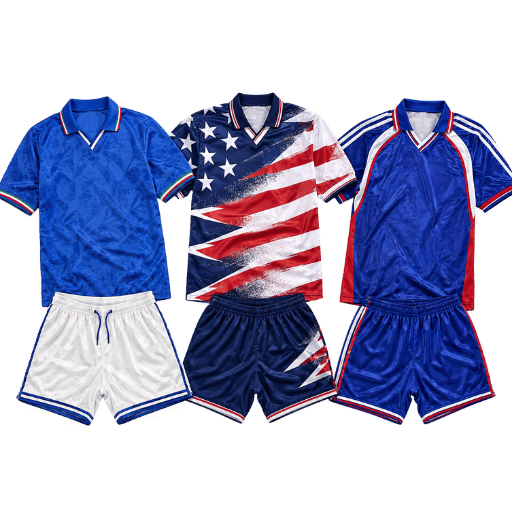
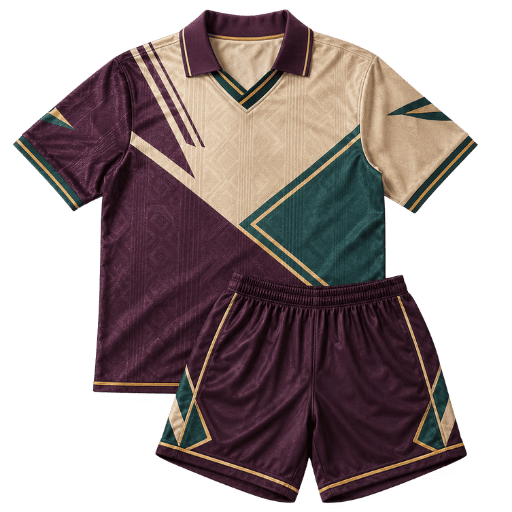
Still searching for your perfect jersey? Explore our best-selling products—we're confident you'll find a style that's just right for you in our diverse collection.
The Nineties represented football kits’ most experimentally bold decade. Designers had budget, liberty, and none of the modern risk-averse data influence which tends to lead to generic functionality. Patterns were created by hand from simple blueprints. Team badges were woven into fabrics. Unimaginably bright dyes somehow found their way onto the Arsenal away kit – now one of the decade’s greatest collectors’ treasures.
Within this article, we high light and rank 25 iconic 90s football jerseys, perhaps the most definitive list of football shirts of all time, based on a triplet of metrics: the creativity of their designs; their association with moments in history; and the latest 2025 collector demand. We include four bonus fan-favourites as well as providing sections on eras of design, authentication tips, and estimated current values for each shirt.
Investment value: The Football Shirt market remains booming. Classic Football Shirts, the leading retailer of retro shirts, generated over 31.8M revenue FY June 2024 (+30% YOY growth) and successfully raised 38.5M in financing in May 2024.
What Made 1990s Soccer Jerseys a Golden Era of Kit Design?
Pre-digital football shirts were manufactured under drastically different circumstances. While early computer assisted design software existed, they limited output resolution. Therefore designers needed creativity, not just complex coding. Kits were designed to stand out and function both on a tv screen and during sport, unlike today’s much tighter designs. This results in a decade where football shirts look stranger, more vivid, and more distinctive than most football shirts ever made.
The mid-1990s brought significant technological changes that transformed the design of football kits. One such innovation was Adidas’ Equipment line launched in 1991, characterized by an expanded set of three stripes used consistently on both club and international teams – first adopted by Liverpool and Marseille in club football. Moreover, manufacturers started adopting jacquard weaving, which allowed them to knit designs and club crests into fabric rather than applying them with printing methods; a subtle texture that later reissue designs have failed to replicate accurately. Finally, the development of sublimation printing provided designers with the ability to achieve vibrant all-over graphics, most evident on such pieces as the uniquely tie-dyed 1994 USA away strip.
By the mid-1990s, kit manufacturers began to compete for market share not just through the technical features of their garments but through aesthetic innovation as well. Umbro quickly established its presence on numerous clubs in England, whereas Kappa utilized its bold shoulder stripes to dominate visually on the Italian (Serie A) and Spanish (La Liga) fronts. Although having been present in European football since 1982, Nike, focused largely on basketball through out the early to mid-1990s, would reorient its strategy toward football clubs in 1996 to become one of the sports’ leading competitors in design.
Expert advice: how to distinguish the 1990s Original from a modern version
Check the inner washing label first. Genuine 1990s shirts have a woven (not printed) composition label sewn into the collar, separate from the washing instructions. Any pre-2002 Adidas Equipment shirt will not have a product barcode on the inner label – this is normal, not suspicious. Current reissues are more likely to have a printed barcode and may say “Made in Cambodia” or “Made in Thailand”. Fabric weight needs to be checked; originals tend to be 180-220gsm, reissues and counterfeits tend to be much lighter 100-130gsm.
Premier League Icons — 8 Kits That Defined British Football in the 90s
The Premier League period (from 1992 onwards) was the first time manufacturer kit companies had an international profile. Satellite television translates to English football watching to your own living room, in every possible corner of the earth, which meant away kits in particular became open-air commercial trends. Of the thousands of football shirts produced through out this period, we have selected the eight most culturally relevant, post innovation, collector wise.
1. Manchester United 1990/91 Away — “The Snowflake” (Adidas)
Manchester United’s 1990/91 away shirt heralded the start of the Premier League era, thanks to the bright white and sharp light blue pixels forming an almost snub-nosed jagged pattern showing the Adidas Equipment template up close. An eye-watering sponsor, Sharp Electronics, is featured without compromising the design. No official reissue surfaced for almost 25 years, gradually nudging the value upward with collectors then the football-shirt market. A reissue show in 2021/22 sold out rapidly and saw demand for original style shirts rekindled, with a current range of 120-280 for the true original.
2. Arsenal 1991/93 Away — “The Bruised Banana” (Adidas/JVC)
For all the kits we have to offer, none has more collector value per square inch than Arsenal’s 1991/93 away top. The yellow to blue gradient was created via a process called sublimation, where colours bleed into one another at the seams and give the finished article a damaged, bruised appearance. The Club used this shirt during their only club-level piece of silverware in the period and identified authenticated originals are priced at around 399.99 at specialist retailers. Market range: 150-400+.
The difference between a vintage replica of this kit and an original is sometimes negligible but one key point stands out. Adidas reissued the Bruised Banana in 2019/20 as part of their Originals range and this sale immediately shut down the market for replicas. A club contract buy from their FA Cup-winning 1992/93 season explains why Arsenal have the association. Reissues of that season’s away shirts exist and are undoubtedly collectible but they are not 1991 originals. Woven wash label, no barcode, Western European country of origin. Reissue, printed barcode, outside mainland Europe country of origin.
Reebok’s Liverpool kit from season 1996/97 is the best football kit the company ever produced, and stands apart from the saturation of being dominated in red on the market by creating fresh aesthetics, for example a cream base with an oval badge and sponsor sitting isolated at the midsection. Despite Liverpool failing to win anything that year, the shirt has not garnered the extra premium some shirt replicas of that period have due to its trophy price, yet remains one of the most popular classics on the vintage shirt market.
4. Manchester City 1996/97 Away — “Laser Blue” (Kappa)
The Manchester City 1996/97 Kappa away shirt ditched the traditional sky blue for almost neon electric blue, offset by kappa’s shoulder-logo bands to give a modernist structure. City were relegated this season but won promotion through the playoff – it was in this shirt that Paul Dickov scored his famous equaliser against Gillingham. That relegation and return narrative has secured the shirt’s place in the club’s folklore, and to spot a genuine Kappa original, check the stitching on the shoulder band, where the kappa stitching is very dense, and not peeling off the fabric.
Every 90s football kit enthusiast knows the Le Coq Sportif 1996/97 Coventry City away, but few own it. With a brown interconnecting diamond pattern – sometimes nicknamed ‘the English Croatia kit’ due to its similarity to the Croatian national kit’s design – there’s no real sense why it ever appeared on a mid-table English club’s away kit; that’s the point. Le Coq had a short contract at Coventry, and production runs were small so few were sold anywhere outside the Midlands, genuine scarcity applies.
6. Celtic 1995/97 Home — Jacquard Hoops (Umbro)
The 1995/97 Umbro Celtic home shirt introduced the club crest motif within its hoops via jacquard weaving – invisible at speed but subtly visible on close examination, technically, it’s the smartest evolution of the Celtic hoop ever conceived. City won the Scottish Premier League in the first year wearing it. Umbro’s switch from printing to weaving means that unlike many shirts of the time, genuine originals have remained relatively new, the jacquard pattern will neither fade nor crack, nor peel.
7. Rangers 1995/96 Home — Crest-Pattern (Adidas)
The 1995/96 Adidas Rangers home kit has the club crest motif woven through it to form an all-over design – it’s a subtle, almost text-like effect at distance but appears far more detailed up close. It was worn by the likes of Paul Gascoigne and Brian Laudrup as Rangers clinched their eighth consecutive league title. Rangers fans routinely refer to this shirt as being the finest version ever made, but all Adidas Equipment kits of this era follow standard rules: look for thick polyester, the woven label, the absence of a barcode, and elevated trefoil branding.
8. Aston Villa 1993/94 Away — Teal/Navy Diagonal (Reebok)
Reebok put out some of the most underrated English club shirts of the early ’90s, the Aston Villa 1993/94 away kit being, arguably, their finest – divided into two diagonal halves, it uses teal and dark blue. It features nothing in the way of obvious trophies being on display for what was the second Premier League season, which accounts for its undervaluation despite the stylishness of the design; at the time teal wasn’t a conventional primary shirt colour.
What Is the Most Valuable 90s Premier League Jersey for Collectors?
The undisputed King: Arsenal 1991-93 Away (Adidas/JVC Original Bruised Banana) The single most coveted Premier League jersey of the 90s is undoubtedly Adidas’ ‘Bruised Banana’ away strip for Arsenal circa 1991-93. Specialist retailers are charging £399.99 for a genuine original in excellent condition and the open market values them anywhere from £150 to over £400. The key to understanding the value of this piece is knowing how to differentiate between the 1991-93 Adidas/JVC original (woven inner label, no barcode, European manufacturing) and the 2019/20 Adidas Originals reissue (printed barcode, international manufacturing).
Both are desirable but the original comes with a serious markup. “I’d give anything for just one more…”.
European Masterpieces — AC Milan, Barcelona, Fiorentina & the Continent’s Finest
“European clubs during the 90s had different approaches than the premier league. Particularly withinSerie A football, sport and fashion intertwine to position sport as a consumable, fashionable product and these pairings were no coincidence.
This next list includes the nine most representative European design teams that defined this decade and are a particular reminder of that historic sport & fashion dynamic.
9. AC Milan 1993/94 Home — Adidas Equipment Peak
Milan AC 1993-94 Home: The minimalist beauty of pure Adidas Equip-ment In Adidas’ Equipment design aesthetic the “philosophy of minimalism with maximum performance “is distilled with material quality of any particular design. This 1993/94 Italian top home shirt is a perfect case of classic red and black stripes which don’t require graphic innovation in order to achieve “iconic status“in the world of sports.
AC Milan achieved glory with this shirt: the clubs 1993/94 Champions League win vs FC Barcelona 4 – 0 “in The Champions League Final held on 18 may 1994 “ at the Olympic Athens Stadium “will long be remembered”. This shirt has become an authenticate point for a European 90’s Adidas Equip-ment-era replica.
10. Barcelona 1995/97 Away — Kappa’s Gaudí Moment
Barcelona 1995-97 Away (Kappa) “I wear Nike, but Kappa’s design with Barcelona between 1995 and 1997 must surely be seen as amongst Kappa’s very finest football product, ” says football shirt collector Alex Mcintosh. “ The subtle pattern on the shirt design is a nod to the intricate tile work of Gaudì, and Kappa cleverly incorporates logo visibility via their iconic three stripe bands across the chest.” Barcelona wore this shirt in their Cup Winners Cup journey of 1997, while authentic examples are instantly distinguishable from replicas by their dense embroidery of the Omini on the shoulders”.
11. Fiorentina 1997/98 Home — Fila’s Purple Masterpiece
Fiorentina 1997-98 Home (Fila) For 24 Serie A goals, the prolific Gabriel Batistuta wore Fila’s bold purple V-neck home jersey for Fiorentina in 1997/98 – a distinctive shirt featuring a shadow-print design. purple as a shirt colour is notoriously tricky – it reads inconsistently in different light conditions – but Fila got it right by utilizing dark-on-dark “tone on tone” to create the design depth, with none of the clutter of secondary colors.” Fiorentina are still frequently cited as having produced their finest football shirt to date with this top, but genuine wearable ones… not that common.
12. Borussia Dortmund 1996/97 Champions League — Nike’s UCL Template
Borussia Dortmund 1997 Champions League Final (Nike) When Borussia Dortmund beat Juventus in the 1997 Champions League final at the Olympiastadion, most supporters were seeing an entirely new kit for their side, worn exclusively for European ties – a Continentale-Branded UCL-specific Nike number with striking vertical black stripes on a yellow ground. In the context of this unique shirt’s rarity and the historical significance of its’ triumph in Dortmund’s first ever European Cup, the shirt carries collector value above even the best standard issue Dortmund tops from the decade.
13. Ajax 1994/95 Home — Umbro’s Amsterdam Weave
Jacquard used to depict the Ajax Amsterdam skyline in the white panels of this 1994/95 home shirt, a pattern so intricate that at match speed it’s barely discernible, yet up close it stands out for its detail. This shirt has significant historical relevance as it was worn by an Ajax side that claimed the UEFA Champions League title, beating AC Milan 1-0 in the final at Vienna with a team featuring talents like Patrick Kluivert and Edgar Davids. It represents a perfect instance of the jacquard technique, where weaving itself carries narrative purpose, going far beyondmere adornment.
14. PSG 1996/97 Away — Nike’s Crest Engineering
This striking PSG 1996/97 Nike away shirt features an ingenious manufacturing technique where the club badge is embossed directly into the fabric – only visible under the right angle of light, creating a subtly hidden detail. Set against the prominent central red stripe and an era defined by Opel as sponsor, this jersey represents one of the most technically sophisticated designs of the 1990s. While PSG wasn’t in European title contention during this period (reflected in its price point being below AC Milan and Ajax), this shirt stands out as a technical achievement in kit engineering. Nike implemented a similar approach to third kit and third shirt designs for numerous clubs during this time, but the PSG iteration remains among the most ambitious, and rarest, to obtain in its authentic original condition.
15. Real Madrid 1994/96 Home — Adidas Laudrup Era
Worn by none other than Michael Laudrup during his final season before his move to Barcelona in 1994, this 1990s mid-period Real Madrid home shirt (iconically white with subtle teal trim around collar and cuffs) signifies a specific evolutionary stage for the club. Crafted with classic Adidas Equipment clean lines and contemporary aesthetic of the time, it’s a prime example of the clean design principles of that era. Genuine examples are frequently sought, often presenting the teal trim incorrectly – making it a valuable clue for authenticity.
The 1990/91 Boca Juniors away kit shows the cross-collaboration at the heart of the Adidas Equipment era, utilizing the very same template worn by the German national team of that era, meticulously adapted for the distinctive yellow and blue of the Argentine club. This template-sharing was a signature of the Adidas Equipment era – a universal design across a multitude of club and national teams, customized by colours and emblems. South American-based originals are highly scarce and thus most sought-after by collectors outside the continent.
17. Bayern Munich 1999/00 Away — Lothar Matthäus’ Final Season
Bayern Munich’s 1999/00 Adidas away jersey is divided in striking vertical half sections of red and white, worn during an exceptional season for the German powerhouse which saw them secure victory in the Bundesliga, the DFB Pokal, and the UEFA Cup. This kit marks the farewell Bundesliga season for the legendary Lothar Matthäus, etching itself into football history and connecting the shirt to an irrevocably past era of German football. For an Adidas offering of the period, the asymmetrical split design was bold, demonstrating the brand’s willingness to venture into unconventional territory for Bayern’s away identity, compared to the relatively standard home jersey designs.
Club
Season
Manufacturer
Design Signature
Trophy Won
AC Milan
1993/94
Adidas
Classic red-black vertical stripes
Champions League
Barcelona
1995/97
Kappa
Gaudí all-over pattern, shoulder bands
Cup Winners’ Cup
Fiorentina
1997/98
Fila
Purple V-neck, tone-on-tone shadow print
Serie A runner-up
Borussia Dortmund
1996/97
Nike
UCL-only horizontal black stripes
Champions League
Ajax
1994/95
Umbro
Amsterdam cityscape jacquard weave
Champions League
PSG
1996/97
Nike
Embossed crest, red central stripe
—
Real Madrid
1994/96
Adidas
All-white with teal collar/cuff detail
—
Boca Juniors
1990/91
Adidas
Equipment template in yellow-blue
—
Bayern Munich
1999/00
Adidas
Split red-white torso, Matthäus era
Bundesliga + DFB Pokal + UEFA Cup
World Cup Kits That Became Collector Classics — Italia ’90, USA ’94 & France ’98
Representing three unique design aesthetics that defined international kit design of the 1990s, each with their own specific visual characteristics. International supply is limited and global demand is immense, with tournament history imbueing each of these shirts with a gravitas that extends beyond club level apparel.
Italia ’90 — Germany, Argentina, Italy
Germany 1990 Home (Adidas) Germany’s black, red, and yellow chest band on white 1990 World Cup home jersey was nothing short of The template of its day. The white top with bold German hues was what Germany donned when they defeated Argentina 1-0 in the Rome final, and as most people who care know, that is what is among the most iconic sports garments ever produced. Adidas did issue a Germany 1994 diamond shirt re-issue in 2026 but the 1990 OG still stands tall as stand alone item of desire.
Argentina 1990 Home (Le Coq Sportif) Argentina’s dress before their jump to the 3-Stripes -albicaleste stipes created with the Le Coq Sportif mid-2000’s shirt template-the most overlooked natonal team kit for Italia ‘90, Dago Maradona donned this top for the run up to their second consecutive WC final. The significance of this Argentina kit alongside scarcity-Le Coq Sportif had very short football contracts at the time-as makes a hugely attractive collector’s piece.
Italy 1990 Home (Diadora) Made by Diadora the Italy 1990 WC home kit had very understated chevron print design on Azzurri blue for the tournament.
This was Diadora’s best WC kit ever and only subtly showed the chevron if viewed under strong light, a very classy understated design, Italy got knocked out by Argentina in the Semi-Final of this World Cup.
USA ’94 — America’s Most Daring Football Shirt
USA 1994 Home (Adidas) Undoubtedly the most disliked shirt ever made for a football World Cup, the acid-wash US 1994 Adidas jersey made for World Cup 94 is what every single player from the USA team had ‘despised. “I just remember we had a meeting with the players and the design team, and basically the players, one by one, looked at it and were just saying, ‘What is that?’ It was such an abomination,” Heifetz said. Thirty years later it is among the more actively sought for 90s World Cups shirts – particularly with the original retail with correct tags.
This, above all else, is football shirt folklore from the 90s.
Nigeria 1994 Home (Adidas) Nigeria’s debut tournament and also biggest selling soccer jersey, in Adidas the brand brought home success to The Super Eagles for Italia 94. Nigeria’s home kit featured bold green with eagle symbol and adidas triple stripe design which immediately sold all across Europe, Asia and The USA.
It was so far apart from anything that had graced the World Cup that no manufacturer still references it. If you own a 1994 it has Equipment-era authentication features with in it that distinguish it from fakes, and is a shirt worth more than its weight in gold.
France ’98 — Croatia, Japan, Mexico
Croatia 1998 Home (Lotto) Croatia achieved a semi-final at their inaugural World Cup as their national team, with the Lotto-produced Croatia shirt providing perhaps their most iconic images.
After Lotto presented Croatia with the red and white checkered pattern, they finished in third place. The ahovnica wasn’t a well known Croatia national team emblem before that particular 1998 shirt.
JAPAN 1998 HOME (Asics) Their maiden World Cup appearance gifted Japan an Asics shirt emblazoned with flame graphics on the ends of the sleeves – this is Asics exuding more swagger than we’ve ever seen from them, or see them exude, on the international stage. They lost all three group stage games but the shirt has become increasingly sought-after alongside worldwide adoration for J-League culture.
Mexico 1998 Home (ABA Sport) Arguably the most detailed shirt of any national team during the 1990s – and one of the most culturally expressive – Mexico’s 1998 home kit for their home World Cup features a complex Aztec-style graphic, created by ABA Sport, covering every millimetre. They’d also be one of the hardest to imitate perfectly.
technical note 90s kit fabric vs modern performance fabric
Original 1990s football shirts are made from polyester woven to 180-220gsm – considerably heavier than modern kit. Modern performance fabrics ( Nike Dri-FIT, Adidas Climalite ) are around the 100-130gsm mark for moisture management, hence the heavier material of original 90s tops resists aging much more successfully. If a 90s original jersey that you are looking at, feels too light, then it is likely a replica.
Plus: 4 Cult Kits Beyond the Main 25 — J-League, MLS & European Rarities
But outside of these major club brands, there’s a very select list of non-European leagues’ kits that’s perhaps the biggest collectors territory of the last 10 years you’ve missed. They just don’t come up that often and a flood of collectors in recent years has yet to bump the prices up in relation to the design or historical significance.
Verdy Kawasaki 1993/95 Home — Mizuno (J-League)
Launched in 1992, the J. League has churned out arguably the most vivid sportswear of the decade in its opening seasons. Verdy Kawasaki, the Yomiuri newspaper sponsored, Brazilian superstar infused side would take both J.
League titles of 1993 and 1994. This striking, acid green Mizuno home shirt worn in both seasons marks Mizuno’s finest design era when creating team sports kits and often appears in pristine vintage markets having been kept not worn following original support waning.
Cerezo Osaka Home — Mizuno’s Floral Kit
Perhaps more crucially, the only Japanese club shirt of the 1990s featuring a graphic of some kind is the Cerezo Osaka Mizuno home shirt. As implied by its nickname, Cerezo translates as ‘cherry blossom’ from Spanish, so what you have here is the symbol woven in cherry blossoms across the chest: one club kit representing the Japanese love for this flower. But Cerezo Osaka isn’t solely appealing for such niche attributes.
It also ticks boxes for both J-League collector and an Osaka-centric shirt connoisseur, and these models are very rarely available in the West.
LA Galaxy 1996/97 Home — MLS Year One
The Galaxy’s first MLS jersey, a yellow-and-black pinstripe on a pale sea-green base, was made for the 1996 season, when the league was formed. It is almost every traditional design rule-violation, and exactly correct as an artifact from the sport’s most sincere effort to adopt a professional face. Early MLS Year 1 Jerseys are overlooked for their significance to history: the beginning of the most valuable soccer business expansion in the 21st century.
Notts County 1993/94 Away — Matchwinner’s Finest
1993-1994 Matchwinner Notts County away. It’s pretty obvious what you have at the bottom of any list and when I tell you what’s here and for how little I make you start wonder what on earth was going on with money back then. If, that is, anything like this even actually existed for real. Only design of the small British manufacturer that disppeared a few years after appearing with many kits for lesser known England lower league sides which ever really threatened any sort of collecting life is the McEwan’s Lager branded shirt below, from an away kit manufactured for the County in 93/94 that we found on the bay in an all purple, blue and white mix. Unlike Adidas or Umbro their runs would have been tiny by standards of the other giants and few and far between would even make the secondhand market today.
💡 Pro Tip: Sourcing Japanese 90s Originals
1996-1997 J-League Cerezo Osaka (Japanese made). These are almost always in unworn or near-unworn condition as the domestic Japanese market generally collects this stuff with an almost institutional thoroughness. If they’re for sale at the moment the market is for J-League shirts generally runs for prices between 3-12,000 (Japanese Yen, roughly 15-60 in Dollars) for the shirts themselves plus another 2-4,000 for shipping overseas – about 30-85 total for shirts that often sell for 90-200+ in Europe – where there is little to no likelihood of finding a 90s fake, as there’s not much demand on any global level for fake 90s J-League shirts (check: mercari.com/jp).
The Brands Behind the Decade — Adidas vs Umbro vs Kappa vs Nike’s Disruption
The 1990s could best be divided into three “phases”, each defined by a major kit manufacturer and a specific design style that it would promote as a template for all of its contracted club and national teams. Learning which manufacturer belonged to which phase and period, while helping to create your collecting strategy, is the beginning of everything.
The Three Manufacturer Moments Framework
Phase 1 – The Adidas Equipment (EQT) Era (1990 – 1993) A standard, all-purpose geometrical template adopted by Adidas to tie together its vast club and national team sponsorships, it was used across almost all its client base during its tenure. Liverpool, Marseille, Germany and Argentina all have very similar kit layouts using this template. The emphasis of the design team was on the overall consistency of the adidas “family”, uniformity across clubs and consistency of structure and of design with the distinctive mountain logo.
Phase 2 – The Jacquard Revolution (1993-1997) Both Umbro and Kappa built on the template concept by implementingwoven jacquard fabric techniques that allowed for complex designs to be sublimated directly into the weave. Celtic’s hoops and diamond pattern, Ajax’s city-scape design on their 94/95 kits and even Rangers’ intricate crest design on their 95/96 jersey are perfect examples of creatively integrating complex graphics into club strips on a commercial scale for the first time. Many kits associated with this era are considered the best football jerseys of the decade.
Phase 3 – The Nike Disruption (1996 – 1999) After initially carving out a niche within football from 1982 on, Nike rose to global stature after establishing large national teams and major club accounts beginning in the mid 1990s to challenge Adidas’ supremacy in the industry, and its design strategy in most cases, emphasised simple geometric template work and big Nike logo placements which resulted in sharp, clean kits (eg. Borussia Dortmund 96/97; PSG 96/97) with very little in terms of complex weaving as had marked the previous phase.
Short contract runs = low print quantities = high rarity; museum-condition stock from Japan
Scarce Nike football originals
Nike (pre-1996)
Very few football contracts = any genuine Nike 90s football shirt is inherently scarce
The 90s Kit Collector Market — What They’re Worth in 2025 & How to Authenticate
Market valuation Update:The vintage football shirt market has seen a major increase since 2020. For the financial year ending in June 2024, Classic Football Shirts (CFS) – one of the leaders in the market – generated $31.8M in revenue, an increase of 30% year-on-year and has subsequently secured $38.5M in growth equity from institutional investors. Any values provided represent an indication of market prices as of May 2025.
Jersey
Condition
Market Range (May 2025)
Arsenal “Bruised Banana” (original Adidas/JVC)
VGC
£150–400+
Manchester United “Snowflake” (Sharp sponsor original)
GC
£120–280
USA 1994 Home (Adidas)
GC
£80–180
Nigeria 1994 Home (original Adidas)
GC
£60–140
Verdy Kawasaki 1993/95 Home (Mizuno)
VGC
£90–200
Common 90s originals (non-hero kits)
GC
£30–80
⚠ Prices as of May 2025. VGC = Very Good Condition, GC = Good Condition. The vintage football shirt market is active; values shift seasonally.
5-Step Authentication Checklist for 90s Soccer Jerseys
Inner label. Real 90s shirts have a separate woven, not printed, fabric composition label which isstitched in tothe collar. Pre-2002 Adidas Equipment shirts do not havea barcodeon theinner label – that’s quite normal!If the care instructions section oftheinner wash label has any marks made with pen then it’s very likely a fake.
Weight. Hold the shirt.Real90sshirts should weigh approximately180-220gsmcompared tofakeswhich tend to weigh only100-130gsm.Hold the fabric up to the light.Original 90s polyestershowsa looseweave whereasreicas’ fabricis opaquerand more uniform.
Badge.Press the club’s insigniaor sponsor with your thumb.A real 90s badge is embroidered with a raised, three-dimensional texture; a fake often uses heat-transfer where the material is pressed onto the shirt with a slightly discoloured and flat effect.
The sponsor.Comparethe letters on the shirt against contemporary photographs- theprecise typefaceof JVC, Sharp, Opelor Candy is key. A different weightof letteringor variationin the spacing of the lettersmeans it’s a fake.
Sleeve cut and stock.Original90s shirts are very loose andbaggy; if the cut is slim-fit then it’s highly likely a modern fake. A seller who claims to havea genuine rare 90s shirtavailablein sizes all the way fromXXS to 3XLwill very rarely have authentic originals in stock across such an even spectrum of sizes.
The 90s Kit Revival — Why Retro Soccer Jerseys Are More Popular Than Ever in 2025
The market has expanded considerably in 2020 – especially so in 2021/22 – driven by three clear trends. These willhelp predictwhich classic shirts have the strongest potential for appreciation going forward.
StreetwearCrossover.When the trend ‘blokecore’ took over in mid-2021 (inspiredbyTikTok),it brought vintagefootballshirts to the mainstreamby merging them with ‘baggy jeans and Sambas.’ Even for individuals with no connection to the actual game of football, ‘90s authentic” shirts are seen as a fashion statement – no less so given that Depop, during the Euros, reported a 294% growth in football shirt sales. Since 2020, google search interest for ‘vintagefootballjerseys’ have risen by over 90%, to the peak level ever.
ReissueMarket Boom. As brands like Adidas and Nike revisit their iconic archive designs – the Gunners’ famous ‘Bruised Banana’ for 2019/20, Germany’s 1994 ‘diamond kit’ by Adidas for 2022, and an incoming slew of national team re-issues through 2026 – new generations discover the power of these kits. Many of these reissue-buyers will inevitably go on to chase the genuine article, leading to a direct increase in the prices on the secondhand market.The two markets do not exist at odds to each other. Rather, they cross-pollinate.
Institutional money flowing into the sector. Classic Football Shirts raised $38.5M of growth equity from The Chernin Group in May 2024, and further rounds from backers connected to Rob McElhenney and Alex Morgan to follow. When institutions at this level invest into a niche market, it’s because the position has crossed from enthusiast hobby to viable commercial category. US vintage shirt revenues at this retailer grew by 100%+ yoy.
📈 2024–2025 Market Highlights
Depop searches for football shirts: +294% during 2024 Euros
“Retro football shirts” highest monthly searches: 173,000 (2025)
“Classic football jerseys” Google trends: +92% to May 2025 peak
Classic Football Shirts sales: +30% yoy to 31.8M (FY June 2024)
US vintage shirt market: +100% yoy at top specialist sellers
Adidas national team remake programme: active until 2026, Germany 1994 + Japan 1992 confirmed
Collector opportunity: USA 1994 and Nigeria 1994 shirts are underpriced compared to their growing media profile – both are increasingly cited as design standards but haven’t enjoyed the price premium of the Arsenal Bruised Banana tier.
1990s Soccer Jerseys: Your Questions Answered
What is the most valuable 90s soccer jersey for collectors?
The Arsenal 1991/3 away “Bruised Banana” (original Adidas/JVC version) is by far the most popular PL shirt of the period. Match-worn originals in good condition range from 150-400+ depending on condition and size. Globally, match-worn shirts from major 1990s internationals fetch thousands of dollars at specialist auction. The Bruised Banana is the most accessible “hero kit” at a collector-realistic price.
How can I tell if a 90s soccer jersey is an original or a replica?
Five checks: (1) inner label – woven and separate with no barcode on pre-2002 Adidas originals; (2) fabric weight – heavier (180-220gsm) than replicas (100-130gsm); (3) badge – raised stitched embroidery, not heat-pressed flat; (4) sponsor font – cross-reference with period images to verify typeface; (5) sleeve width – generous baggy fit, not slim-fitting. A seller offering a large quantity of rare 90s shirts in all sizes is producing fakes – true originals didn’t sell in a fixed size range.
Which brand made the most iconic kits in the 1990s?
Not one brand was dominant throughout the 1990s. Adidas defined the period 1990-1993 in the Equipment era. Umbro and Kappa designed the decade’s most technically demanding kits from 1993-1997 via jacquard weaving. Nike challenged both from 1996 by securing key club and international national team orders. Collector strategy: Umbro for English football, Kappa for European clubs, Adidas for World Cup national team shirts.
Are 1990s soccer jerseys increasing in value?
The answer: yes. Between 2020-2025, Classic Football Shirts increased revenues 30% yoy to 31.8M and secured institutional backing raising 38.5M in 2024. Depop searches for football shirts increased by 294% in the period of the 2024 Euros. Hero kits (Arsenal Bruised Banana, Man Utd Snowflake) appreciated materially. In the lower range (30-80), common condition levels are more price-stable.
What made the 1990s the golden age of soccer jersey design?
There were three converging factors at play: the makers were designing with a degree of creative latitude and without the kind of data-driven conservatism that constrains current kits; the advent of jacquard looms, which finally made it possible to weave complex patterns directly into textile in commercial quantities; and the explosion of television in the 1990s, which took kits global and thus gave daring designs an audience ready to embrace them as good business. The limitations and old production techniques also lent themselves to “imperfections” that collectors now value as signs of a shirt’s authenticity; something which can be replicated neither as simply or as accidentally by modern techniques.
Did Coventry City’s 1996/97 away shirt copy Croatia’s design?
Are they inspired by each other?
No, they are independent designs from the same manufacturing era featuring the same type of interlocking geometric shapes against a contrasting backdrop. Croatia’s Lotto checkerboard was a direct nod to the traditional ahovnica or coat of arms. Coventry’s Le Coq Sportif diamond had no connection at all. Both shirts came out in circa 1996 with no obvious interaction or design influence between the two manufacturers.
This article is researched and written by the Classic Football Shirts SE team who specialise in authenticated original vintage football shirts with an emphasis on 1980s-2000s vintages. Pricing reflects authenticated sales from specialist collectors and open markets as of May 2025. Authentication information has been verified based on established industry practices from Kit Codes, Football Shirt Collective, Cult Kits and That Vintage Football Shirt. Official and manufacturer history comes from football records. Pricing is intended as a guide and can vary depending on the season and condition of the shirt. Final review conducted by Classic Football Shirts SE – we are 90s football shirt specialists.
I write about football jersey fit and when different shirt styles make sense. My articles cover youth goalkeeper sizing and long-sleeve jerseys, helping players and families think through comfort, movement, weather, and the role of the shirt before they buy.