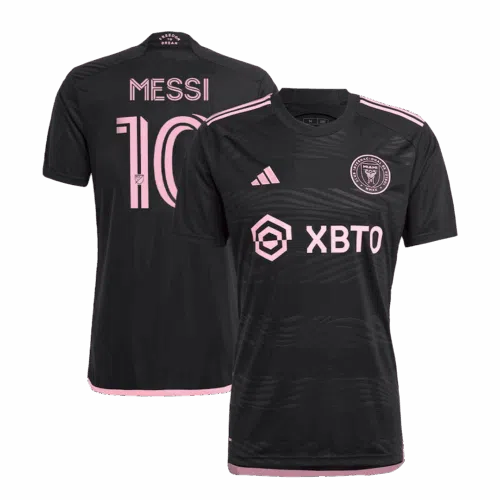
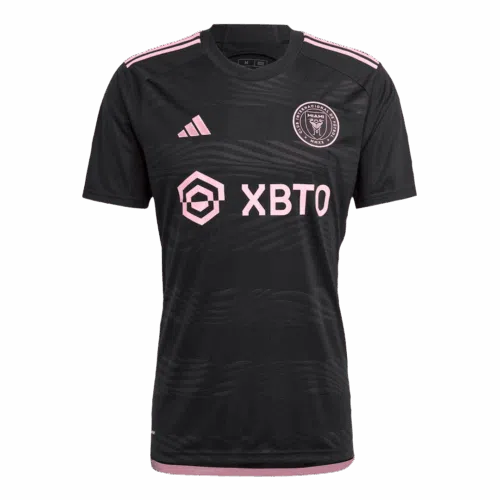
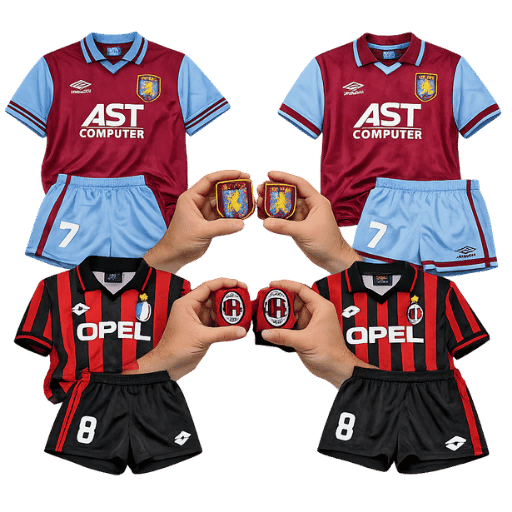
Still searching for your perfect jersey? Explore our best-selling products—we're confident you'll find a style that's just right for you in our diverse collection.
Looking for a soccer jersey and scratching your head over the price difference between a player version vs replica soccer jersey?
You’re not the only one. That price gap — US$90 for a replica vs US$160 for an authentic kit — goes deeper than the labels: fabric weight, construction details, badge application and intended use all play a role. This guide breaks down every real difference.
Quick Specs: The 3-Tier Soccer Jersey Hierarchy
Feature
Replica / Fan
Player Version / Authentic
Match-Worn / Player Issue
Price (²0²6)
$89–$110
$150–$180
$500–$5,000+
Fit
Relaxed / standard
Slim / athletic
Slim / athletic (worn)
Fabric Weight
~150–165 g/m²
~110–130 g/m²
~110–130 g/m² (match-used)
Club Crest
Embroidered (sewn thread)
Heat-pressed (bonded film)
Heat-pressed
Wash Method
Machine OK (cold, gentle)
Hand-wash preferred
Specialist cleaning only
Best For
Everyday fans
Performance / collectors
Serious collectors only
What Are the Three Types of Soccer Jerseys? A Tier-by-Tier Overview
Key Differences: Player and Fan Version Jerseys — Authentic vs Replica Explained
Authentic vs replica confusion starts with terminology — and most first-time buyers get it wrong. Key differences between jersey types are structural, not cosmetic. There are three distinct price points for soccer jerseys, and mistakenly conflating them causes more buyer regret than any other purchasing decision in the sport.
Any big soccer store will stock both identical versions of the same Manchester City jersey with one labeled “Replica” on it with a retail price tag of $99 and another called “Authentic” on the hook at $159. If you’re a brand new fan you’ll read “replica” and automatically assume it’s a counterfeit/fake and something you should be avoiding. It’s not.
Replica football kits The term that official shirt manufacturers such as Adidas, Nike and Puma uses is Replica for the football jerseys for fan. These are licenced from, manufactured by and approved for official football clubs. They are not fake products.
Illegal knockoffs — the real counterfeits — carry no brand authorization, no licensing, and are not sanctioned by any club. That’s an entirely separate category.
Pro Tip: “ Replica” is actually the industry-standard name used by brands like Nike, Adidas and Puma to refer to licensed, authentic fan jerseys in a similar style to replica replicas that are issued by the club or country’s team. Unofficial replicas sold illegally online are called “counterfeit” — a separate and entirely different product category.
Here’s how the three authentic jersey tiers actually work:
Replica / Fan Jersey — The official fan’s licensed shirt, designed for everyday comfort. Standard polyester, looser fit, embroidered club crest. What 70–80% of supporters own.
Player Version / Authentic Kit — The player and fan version distinction starts here. This is the on-pitch performance spec worn by professionals. Lighter fabric, slim athletic fit, heat-pressed crest — priced higher for the engineering difference.
Match-Worn / Player Issue: The genuine garments which certain players have worn during contest matches, and which are purchased by clubs or matchwornshirt.com for resale. Items for collectors – not general merchandise.
What is the player version jersey?
A player version jersey (also called an ‘authentic kit,’ ‘match jersey,’ or ‘on-field version’) is worn by professional players in competitive matches at the exact same specification — same advanced fabric technology, same slim athletic cut, same heat-applied badge. Player versions are commercially available to fans who want the same jersey worn by players on the pitch and have the advantage that they cost approximately 55-65% more per jersey than replica replicas. As previously explained, player version kits are not actually what the players wear in the match itself and so therefore do not cost as much as, for example, a professional used playing shirt and a player jersey will not be as tough for casual fan wear.
Fabric Technology — What Players Wear on the Pitch (Nike, Adidas & Puma)
In material terms, design differences between player version and replica kits are measurable: actual weight, lighter materials, ventilation structure, and performance engineering. This is where the price gap is genuinely earned — and where most buyers are surprised by what “lighter” actually means.
What is the difference between player version and normal jersey?
Mainly it is down to fabric weight, material tech of the used fabrication. Player version using 110-130 g/m² high performance polyester fabrication while Replica version 150-165 g/m² with better endurance. This ~40g/m² weight advantage is everything it costs, better performance of moisture transfer, breathability, reduced air resistance etc. If you get original and replica jersey on the hand you can feel real difference between them and it almost feel like it is made of paper.
📐 Engineering Note: Fabric Weight Comparison
Player versions will usually weight between 110-130 g/m2 while replica ones between 150-165 g/m2. Which implies between 30-40% less material in term of weight per square meter. This lower material weight allow for quick transmission of moisture from the body to the exterior layer of the jersey during a intense match. Nevertheless, high-tech performance material is more likely susceptible to damage with frequent washings, especially under a high heat.
Each major brand engineers its own Dri-FIT technology equivalent — Nike’s Dri-FIT ADV, Adidas HEAT.RDY, Puma ULTRAWEAVE — to separate the authentic tier from standard fan options. These are advanced materials, not just a marketing label.
ULTRAWEAVE (lightest-ever jersey fabric, optimized performance)
Surprisingly, to many potential buyer the Ultra-Light weight material tech in player version shirts leads them to become even less durable as well as fragile for regular use. The former buyer writes: The current line of authentic jersey are made paper thing and not intended to last. Replicajersy is sport t-shirts still and are fine for work (as well as traveling, etc).
For anyone who plays even recreationally, performance fabrics designed for performance deliver a real advantage: better breathability, improved moisture management, and reduced aerodynamics drag at sprint pace. For match-day watching, travel, or casual wear, a replica is the more practical choice — and will hold up for many more years of regular use.
Fit & Construction — Why Player Versions Feel Tighter (And How to Size Correctly)
However, the most likely part which may go wrong with football jerseys is in term of fit. Player version shirts feature a slim fit engineered for elite athletes — tight, sleek panels that conform to the body contour, following movement throughout a match to reduce jersey snagging and air resistance at sprint pace. Alexis Sanchez, for instance famously wears a much tighter version of authentic jersey for its properties of reduce air friction and for muscle compression during play.
📐 Sizing Rule: Player Version vs Replica
Player versions will size 1-2 smaller than normal European casual sizes. If you usually use Size Medium, try Size Large or even Size Extra Large if you have a looser style of wearing during a normal day. Replica jersey uses normal sizes and these fit like the perfect t-shirt.
An uncomfortably tight fit for long-needs-of-regular-growsportspeople at standard sizing
Size needs to go up (1-2 sizes) for cheap off-pitch use
Badges, Crests & Applications — How to Tell Them Apart by Touch
Without even unbuttoning the tag, you can visually tell a player version jersey from a replica. Crest inspection — the club badge that emblazons the chest — is one of the few visual differences a buyer can see at a glance between these two types, and you can even tell them apart by feel in seconds. Worth learning if you buy secondhand or need to identify a vintage shirt by touch.
Physical Detail
Replica / Fan
Player Version / Authentic
Crest attachment
Embroidered (sewn thread — raised, textured)
Heat-pressed (bonded film — smooth, slight sheen)
Fingernail test
Textured thread fibers — you feel individual stitches
Smooth, flat, slightly waxy surface
Weight of crest
Heavier (thread bulk adds weight) — varies by club
Lighter overall — some large crests (e.g. Man United) can be heavier
Wash durability
Very durable — thread won’t peel or lift
Can lift at edges after 50–100 wash cycles if not cared for
Ironing risk
Never directly over logo
Never — heat will melt bonded film
Test to ID: Run your fingernail across the crest. Embroidered thread/grainy texture = official player version. Smooth, glossy surface = heat-pressed/logo transfer = replica. This applies to jerseys from any era.
One finding that surprises most jersey buyers: the embroidered crest on your $99 replica will survive more wash cycles than the heat-pressed badge on the $160 player version. Thread can’t peel, but the heat bonded film on a badge can peel after multiple cycles in a very high heat dryer or contact with fabric softener. This is one reason collectors find 20-year-old replica crests in mint condition while shirts with player-issue badges sometimes show lifts/edges.
One other lesson worth knowing: on both replica and player jerseys, the club crest adheres via the same split I described above. Brand logos/highlights – the manufacturers name printed across the chest – is often heat-pressed or vinyl-screened on both. A Reddit user from the “r/SoccerJerseys” group commented exactly: “It’s the same with namesets and sponsors. They’re not really made to last forever.” So for tumble drying, genuine kits should still be air dried (or tumble dried on very low heat) to protect their sponsor applications.
Beyond the crest, team branding elements — manufacturer logos, sponsor patches, competition badges — are typically heat-pressed or screen-printed on both replica and player version jerseys. Embroidered details are reserved almost exclusively for the club crest itself. Knowing the crest application method is one of the most reliable physical tells — see our guide to authenticate a vintage soccer jersey for the full process.
Price Guide 2026 — Exact Cost Differences by Brand
Nike, Adidas Jerseys, and Puma: 2026 Retail Price Comparison
Nike jerseys, Adidas jerseys, and Puma each price their player version at 40–65% above replica. Price discrepancy is consistent across all three brands — expect to pay 40–65% more for a player version. Nike player version jerseys cost around $150–$180 USD, while replicas come in at the lower cost of $90–$110. Here’s a full breakdown of current US retail prices as of May 2026:
Brand
Replica / Fan Jersey
Player Version / Authentic
Premium (%)
Nike
$89.99–$109.99
$149.99–$179.99
+55–65%
Adidas
$79.99–$99.99
$139.99–$164.99
+65–75%
Puma
$74.99–$89.99
$119.99–$179.99
+50–100%
Prices vary based on club, season, economy and whether you’re customizing. Data above reflects dominant US outlets as of May 2026, European offerings tend to be 90-110 (replica) and 140-160 (authentic) full retail.
What a fan found if they tried to buy a Chelsea kit in Stockholm in 2026: an Adidas replica ($105 USD) available for purchase online while someone enjoying her Saturday viewing the Cup Final from her settee looked on, and an authentic available for the same price. She wanted the coolest looking shirt for her weekends. When she read the authentic needed hand washing and ran 1-2 sizes small, she bought the replica — looks just as good from the stands.
Player version up-charge is real — not a marketing gimmick. Whether it’s worth it depends entirely on what you plan to wear the jersey for.
Which Soccer Jersey Should You Buy? — The 3-Scenario Decision Framework
Which One Should You Buy: Replica or Authentic?
To choose the right jersey and make an informed decision, start from your actual use case — not the price tag. Our 3-Tier Jersey Hierarchy makes it straightforward: Replica for the fan, Player Version for the performer and collector, Match-Worn for the investor. Here’s the scenario breakdown:
Are replica or authentic soccer jerseys better?
One is no better than the other — they just suit different use cases. An authentic (player version) soccer jersey is a better choice for intense performance, hot climates and for the serious collector focused on maximal investment value. A replica soccer jersey is ideal for more casual use by the casual fan, for machine washing as frequently as you’d like, as well as gifts when precise sizing may be uncertain. For the vast majority of supporters, a replica jersey provides an almost identical on-field look at significantly lower cost — the badge colors, customization options, and club details are indistinguishable from the stands.
Your Situation
Buy This
Why
Watching matches at home or stadium
Replica
Durability over performance; embroidered crest survives beer spills and crowd friction for years
Playing recreational / pickup soccer
Player Version
Moisture-wicking performance fabric pays off when you’re actually sweating through 90 minutes
Buying a gift for a fan
Replica
Standard sizing is more forgiving; lower financial pressure if size is slightly off
Collector / long-term investment
Player Version
Higher resale value in the collector market, especially for iconic club and international seasons
Budget under $100
Replica
Official, licensed, nearly identical appearance from any distance — without the fabric premium
Hot-climate wearing (summer)
Player Version
30–50 g/m² lighter fabric makes a meaningful comfort difference during warm outdoor wear
Decision logic behind The 3-Tier Jersey Hierarchy is straightforward: Keep buying Replica when you wear your shirt solely as a fan. Upgrade to Player Version only when you actively play sport, when weather is warm enough for the fabric difference to matter, or when building a collection. Upgrade to Match-Worn only when you’re willing to ‘buy the trophy’ rather than a shirt and prepared to carry it as an asset. Browse authentic soccer jerseys across many clubs and eras.
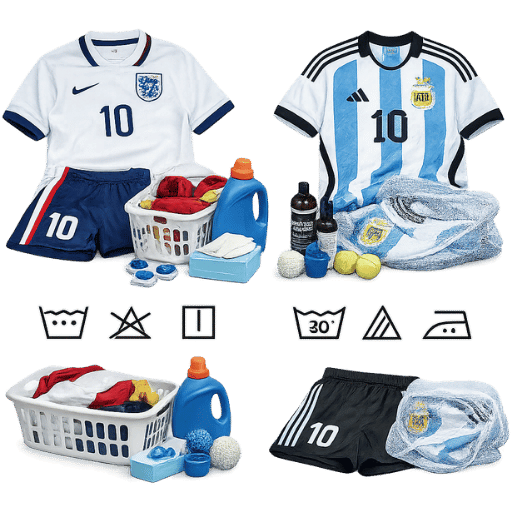
Washing & Care — Replica Soccer Jerseys vs Authentic: Different Rules for Fan Wear
Your soccer jersey wear-and-tear will either last years, or it won’t-it depends on you. Cleaning instructions can differ significantly from authentic to replica soccer jerseys-this isn’t a matter of one material being ‘specialer,’ but due to different heat-resistance and agitation tolerance that varies from material-to-material. In most cases, ignoring these rules will quickly age your jersey’s graphic before time!
Step
Replica / Fan Jersey
Player Version / Authentic
Wash method
Machine wash OK — cold, gentle cycle
Hand-wash preferred; machine only inside-out
Temperature
Max 30°C / 86°F
Max 30°C / 86°F — room temperature is safer
Detergent
Mild — no fabric softener
Mild — no fabric softener (critical)
Crest protection
Flip inside-out to protect sponsor logos
Always flip inside-out — heat-pressed crest is sensitive
Drying
Tumble dry low OR air dry (air dry preferred)
Air dry only — no dryer
Ironing
Never directly over any logo or patch
Never — heat melts bonded film
Never use fabric softener on either style jersey-especially modern tech material jerseys like our Nike authentic line. This will negatively impact AeroReady & Dri-FIT material’s inherent wicking and drying performance, and will also degrade heat-sensitive adhesion that is often used to apply emblems or cresting. Most impact will be visible within just 3-5 washes; a gentle liquid detergent is perfectly sufficient!
In their words, one customer who often wears authentic kits as everyday attire commented, “I was a collector but got to where I loved wearing my real kits and it just made it very difficult keeping them in pristine condition.” For weekly wearers, having their player version jersey come out of the washing machine unscathed and ready to wear again is a real practical advantage. For our complete washing guide by jersey type, see the full soccer jersey care guide with step-by-step instructions.
The Collector’s Angle — Classic Football Shirts: Player Issue vs Replica
For the modern jerseys of past 5 years or so, the main differentiator between replica and player version football jerseys comes down to athletic performance vs comfort. However, when the authentic football jersey dates back to an earlier era – for classic and retro soccer shirts from the 1980’s, 1990s, and early 2000s – the differentiator takes on a entirely new dimension all together – with major implications to collection value and to the very meaning of ‘authentication.’
It’s not just a top stating your club support, it’s a global business making millions off collectors buying old kits.
In the world of vintage there’s a very particular meaning to a “player issue” shirt that goes above the current authentic/replica division.
What this means is that player-issue shirt in the 90s was manufactured to different specifications to the replica worn at your club store in the same season. Details Collectors will look for that set genuine vintage soccer shirts apart and prove them player issue rather than replica include:
Hand-feel of fabric – If we look at the days before 2000 player issue shirts were often constructed from heavier woven synthetic fabric or even earlier polyester blended fabric rather than the wholly polyester nature of modern day replicas.They are different to touch – they just feel denser and less slippery to grip.
Internal labeling – The name or number applied onto player issue shirts from some of the major manufacturers would often sport an internal label such as the “Match” or “Player issue” marking; they also tended to bear their own manufacturing codes which would also differ from retail production lines.
Lack of retail-customised naming/numbering – A real player issue vintage shirt will normally lack the usual press/Heat applied heat transfer name and number set that is evident on retail made replicas. This type of naming/numbering was applied at the ground by team club kit men, not at some retail store via a heat press machine.
Density of stitch – During the 90s, stitching density on crests/club emblems was a hallmark of player issue tops due to their heavy density in comparison to replica shirts in the same era.
Size definition – This is a tricky one but vintage player issue shirts are not usually named by S,M,L &XL or size labels and rather by a description of the raw dimensions or size – eg chest size in centimeters.
It has long been said that collectors around the world have confirmed that if a true iconic player issue shirt – for example from an Italian 1994 World Cup kit, Brazil 1982 squad, a Man United 1999 treble season team – comes onto the market the values of the player issue items dwarf the original replicas for that year.
For maximum investment value in player-issue shirts — the vintage sector of the collectibles market — provenance documentation is the single biggest factor separating a high-value asset from a common find.
2025–2026 Market Trends: Authentic Soccer Jerseys, National Teams & Collector Growth
Authentic soccer jersey market isn’t static — if you invest today, planning your holding strategy for resale in future years matters.
Global football shirt market value sits at an estimated $7.21 billion as of 2026 and is projected to reach $11.74 billion by 2035, at a CAGR of 5.4%.
Search data is equally revealing from a demand viewpoint. Search volume for “authentic soccer jersey” — per DataForSEO tracking — reached a structurally elevated 22,200 in June 2025 versus June 2024. Year-over-year, this pattern goes beyond seasonal fluctuation.
By contrast, “replica soccer jersey” trend reveals classic seasonal fluctuations without underlying Structural YoY rise.
Looking strictly at 2026, the FIFA World Cup shared by the US, Canada, and Mexico is the singular largest demand event in the 4-year kit purchasing cycle. Most likely candidates for collector value — 2025-2026 authentic national kits such as USMNT, Mexico, Brazil, England, France — stand to be solid investments purchased now and held beyond July 2026, once retail markups capture scarcity. Window for obtaining your 2026 WC player version kit at this retail price narrows with tournament traction.
More than anything the collector category shows structural rather than faddish growth. Indeed as The Guardian commented in their June 2025 report “the boom in classic football shirts shows no sign of waning.” Platform statistics from niche sites suggest that for the last several years, MatchWornShirt and their peers have migrated from their beginnings as a niche to a viable commercial chunk of the jersey economy. Explore the latest developments in our overview of 2026 soccer jersey design trends.
Frequently Asked Questions
What is the difference between a replica jersey and a player jersey?
View Answer
Four things: fabric, fit, badge, and price. A player jersey uses performance-grade fabric (~110–130 g/m²), athletic slim cut, and heat-pressed crests — the on-pitch specification. A replica uses standard polyester fabric (~150–165 g/m²), relaxed fan fit, and embroidered crests built for daily wear. Expect to pay 40–65% more for the player version. Both are officially licensed from the same manufacturers (Nike, Adidas, Puma) and approved by the clubs.
Are replica or authentic soccer jerseys better?
View Answer
Neither is universally better — it depends on what you’re doing while wearing it. Authentic (player version) jerseys outperform replicas in one specific context: physical activity in hot conditions, where the lighter 110–130 g/m² fabric and superior moisture-wicking make a real, felt difference. For everything else — watching from a couch, sitting in a stadium, wearing to work on match days — the replica performs identically in appearance. It’s also machine-washable, sized more generously, and costs 40–65% less. The honest answer: 80% of buyers who choose a replica over an authentic won’t regret it. The 20% who should consider player version are those who plan to actually play, those building a collection, and those buying in summer heat.
What is the difference between player version and normal jersey?
View Answer
Same badge, same colors, different build. The “normal” version (replica) uses standard Dri-FIT or AeroReady polyester in a relaxed cut. The player version uses premium tech — Nike Dri-FIT ADV, Adidas HEAT.RDY, Puma ULTRAWEAVE — in a slim athletic cut with heat-pressed crests. Worn by professionals on the pitch.
Does “replica” mean the jersey is a fake or counterfeit?
View Answer
No — and this confusion costs buyers money. “Replica” is the official term Nike, Adidas, and Puma use for their fan jerseys. Every replica sold by an authorized retailer is fully licensed and club-approved. Counterfeit jerseys — the actual fakes — are different products entirely: no brand logo, no licensing, often manufactured with inferior unbranded materials in facilities with no club authorization. The easiest way to tell the difference: a genuine replica jersey (fake or real) will always carry the official manufacturer’s quality tag and holographic licensing label. A counterfeit typically won’t.
How can I tell if a jersey is player version just by touching it?
View Answer
Run your fingernail across the club crest. Raised thread = embroidered = replica. Smooth, slightly waxy = heat-pressed = player version. Player version jerseys also feel noticeably lighter in your hands — the thinner fabric weight is detectable without a scale.
Should I size up when buying a player version soccer jersey?
View Answer
Yes — almost always. Player version jerseys are cut for professional athletic builds: narrower shoulders, slimmer torso, minimal chest room. For casual everyday wear, size up one full size from your normal t-shirt size. A standard Medium t-shirt wearer will typically feel comfortable in a player version Large. If you’re between sizes, go up.
There is one exception: if you plan to actually play in the jersey during physical activity, your regular size gives the intended on-pitch fit — close to the body, unrestricted at the arms. The slim cut is engineered for athletic movement, so it will not feel restrictive when you’re running. For display purposes or everyday fan wear, the larger size is the right call. Replica jerseys use standard sizing — no adjustment needed.
Ready to Find Your Jersey?
Browse authentic soccer jerseys for classic player-issue items, retro kits, and licensed official new-era kits from all of the biggest clubs and national teams.
In this Guide, any Fabric Weight data are derived from industry-standard GSM ranges within Football shirt manufacturing provided by shirt manufacturers and the sports apparel sector (May 2026). Gram weights will differ per brand, per season and across production runs. Price Data based on typical US high street pricing (at the major online soccer retailers as at May 2026 – price subject to seasonal changes and promotions).
At Classic Football Shirts we specialise in original and vintage Football Shirts and our aim is to inform customers what they’re buying.
I write about football jersey fit and when different shirt styles make sense. My articles cover youth goalkeeper sizing and long-sleeve jerseys, helping players and families think through comfort, movement, weather, and the role of the shirt before they buy.