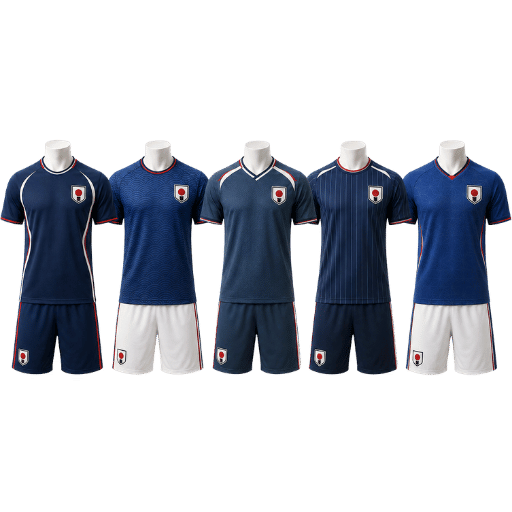
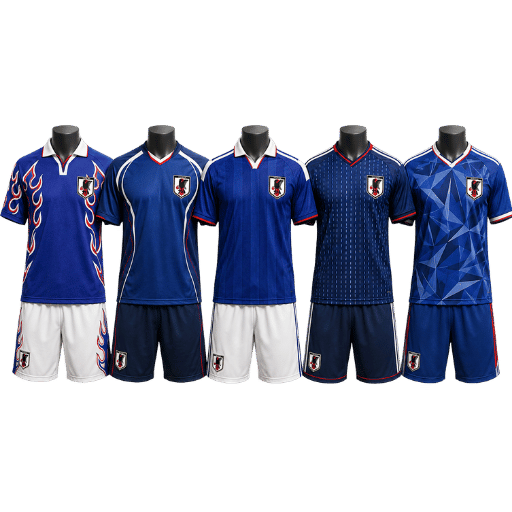
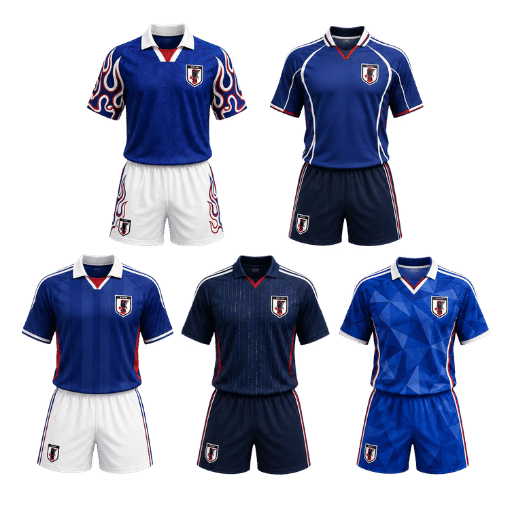
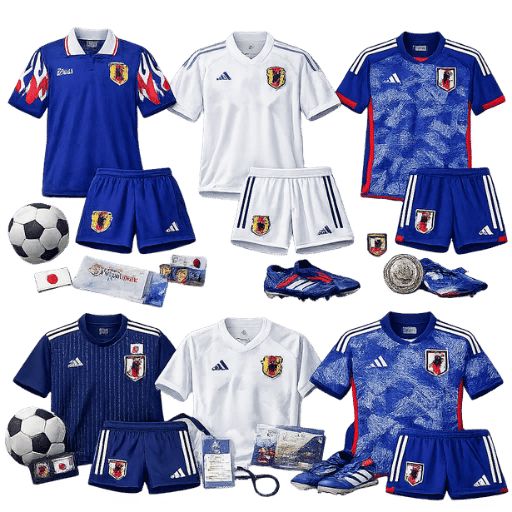
Still searching for your perfect jersey? Explore our best-selling products—we're confident you'll find a style that's just right for you in our diverse collection.
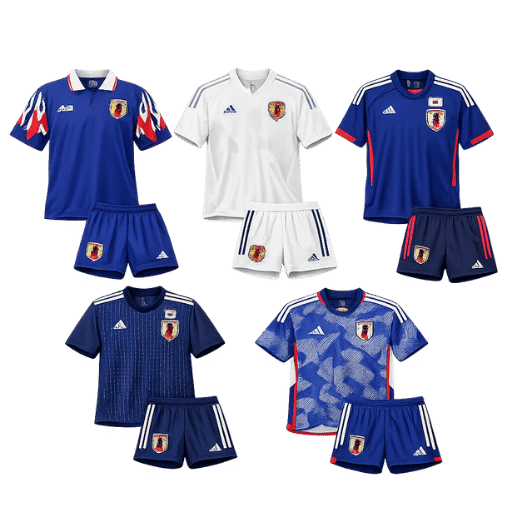
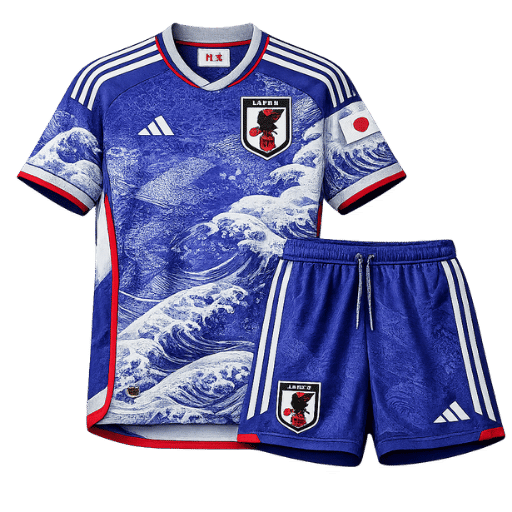
If you searched for japan world cup jerseys ranked, you probably want more than a nostalgia list. Japan shirts sit in a rare space: some are wearable blue football jerseys, some are culture-led design objects, and a few have become serious collector targets.
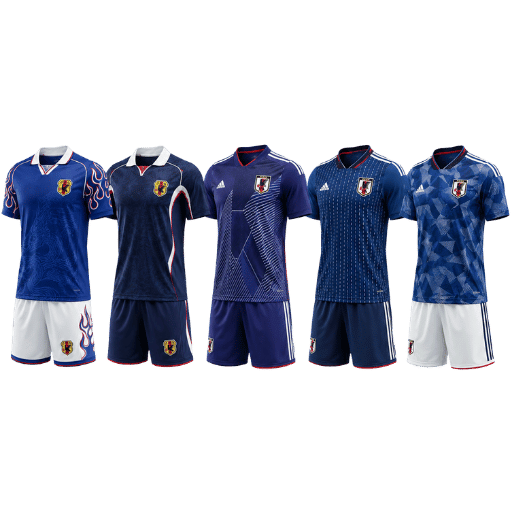
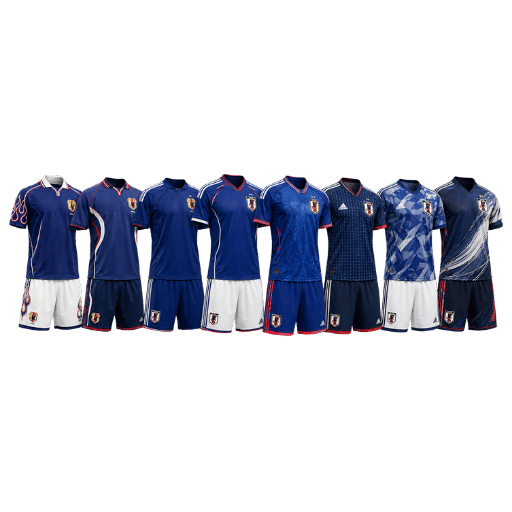
Japan did not arrive at the men’s FIFA World Cup until 1998, but the shirt story has moved fast since then. Asics flame graphics, adidas indigo storytelling, origami patterns, and the 2026 horizon concept all sit inside a short 28-year run. Ranking these shirts is harder than ranking older World Cup nations, because every tournament kit still feels close enough to argue over.
Quick Specs
Ranking range
Japan World Cup shirts from France 1998 through the 2026 cycle
Top pick
1998 Japan home by Asics
Best modern buy
2022 Japan home or 2026 Japan home, depending on fit preference
Biggest 2026 debate
ESPN ranked the 2026 away at #2 and the home at #42, while Fox put the home at #2 in a 20 best list.
Before buying, check the current authentic soccer jerseys and vintage retro soccer jerseys categories. Japan shirts move in and out of stock quickly, and the right call often depends on whether you want match-era history or a clean modern wear.
How We Ranked Every Japan World Cup Jersey
The ranking uses five checks: tournament memory, visual identity, Japan-specific symbolism, collector demand, and buying risk. A shirt can win on design and still drop if fakes are common or if the fit is hard to wear. A safer modern shirt can climb if it has a clear story, strong public reaction, and home and away relevance.
Advantages
Japan has a tight World Cup kit timeline, so each design shift is easy to place. Shirts from 1998, 2018, 2022, and 2026 all have source-backed design stories.
Limits
Lower-ranked shirts rely more on editorial judgement. Older away shirts also have less official online proof than the modern adidas cycle.
Every Japan World Cup Jersey at a Glance (1998-2026)
This table is the article’s decision layer. Each shirt gets a job: collector trophy, daily wear, design reference, or buyer-beware target.
Rank
Shirt
Best For
Buying Note
1
1998 home
Top collector piece
High fake risk; inspect tags and era details.
2
2022 home
Modern classic
Origami story plus Qatar 2022 memory.
3
2026 away
Statement buy
Ranking buzz is high; wait for real stock photos.
4
2026 home
Wearable current shirt
Official $100 replica uses KD3345 product code.
5
2018 home
Symbolism
KACHI-IRO story gives it depth.
6
2010 home
Balanced blue era
Less dramatic, easier to wear.
7
2002 home
Host-year nostalgia
Look for JFA and adidas details.
8
2018 away
Design nerd pick
First Japan away kit without blue.
9
2022 away
Quiet origami option
White with black shorts in the 2022 set.
10
2006 home
Mid-2000s adidas look
Better as a period piece than a top design.
11
2014 home
Subtle modern blue
Good if condition is clean.
12
1998 away
Completionist buy
Home shirt carries the stronger story.
13
2002 away
Host-year set builder
Less iconic than the home version.
14
2006 away
Era collector
Buy only with clear photos.
15
2010 away
Secondary kit fan
Condition matters more than hype.
16
2014 away
Budget shelf filler
Lower identity than the best Japan shirts.
Ranks 16-12: The Shirts That Needed A Stronger Identity
Our bottom five are not bad football shirts. They just have less to say. Japan’s best World Cup kits are loud in a specific way: flame sleeves, deep indigo, origami, or horizon graphics. Weaker shirts tend to feel like template-era adidas work with a national badge added late.
So 2014 away, 2010 away, 2006 away, 2002 away, and 1998 away sit here. Buy them if you are building a full Japan set, not because they are the first shirts people will ask about. If the price is close to a stronger home shirt, move up the list instead.
Ranks 11-7: The Useful Middle Tier
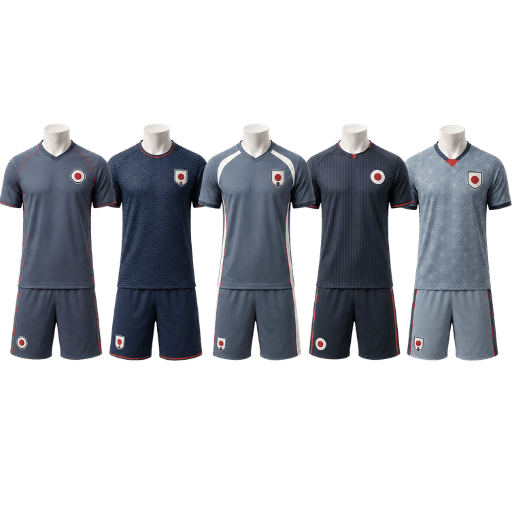
Middle-tier shirts work best for narrower buyers. A calm blue 2014 home looks cleaner than its ranking suggests. Early adidas-era and host-era context lift the 2006 home and 2002 home. JFA gives the 2018 away its technical surprise: the release describes Japan’s first away kit without blue, with three stripes on the left shoulder and the idea of white cloth ready to be dyed into KACHI-IRO.
JFA gave the 2018 home one of the strongest official federation stories in Japan kit history, so it lands higher. KACHI-IRO, a dark indigo tied to the “color of victory,” appears with a red neck detail and a back-neck lining that referenced five prior World Cup kits. More than trim, it turns a dark blue base into a timeline.
Ranks 6-2: The Japan Kits Close To Classic Status
Rank 6 goes to the 2010 home, the cleanest shirt from the pre-origami adidas period. It lacks the shock value of 1998 and the modern story of 2022, but the shirt wears well and avoids the overdesigned feel that can date a kit badly.
At this point, the 2026 home sits at rank 4. adidas lists the replica at $100, with product code KD3345, Japan Blue / Ash Blue colors, Climacool, slim fit, and 100% recycled polyester doubleknit. Official retail proof also shows 51 reviews and a 4.7 rating as of this check. Those are retail signals, not long-term legacy proof, so the shirt stays below the known classics.
By contrast, the 2026 away is more volatile. ESPN ranked it #2 among all 2026 World Cup shirts and described its 12 narrow colored stripes as the key visual idea, while Fox did not put the away above the home in its top-20 list. Collectors should like that disagreement. Already, the away shirt is memorable enough to split opinion.
Rank 2 belongs to the 2022 home because it connects design and match memory. Nippon.com reported the blue shirt’s origami image lines, yellow numbers for visibility, and September 23, 2022 debut against the United States. Then Japan beat Germany and Spain at the 2022 World Cup before going out to Croatia in the round of 16. FIFA’s Spain match feature records the 2-1 win, 44,851 attendance, goals in the 48th and 51st minutes, and Japan’s 18% possession, the lowest winning-team World Cup possession since records began in 1966. Few modern shirts get that much legacy fuel so quickly.
Rank 1: Why The 1998 Flame-Sleeve Japan Jersey Still Wins
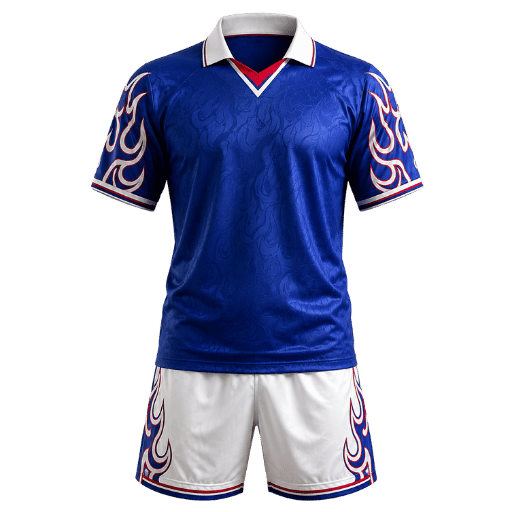
Japan’s 1998 home wins because it is not just a nice shirt. As the country’s first World Cup shirt, the Asics design brings flame graphics, a 1990s fit, and enough visual nerve to sit beside the great late-century shirts from Mexico, Croatia, Germany, and Nigeria.
SoccerBible ranks the 1998 home first among Japan home shirts, praising the collar, baggy fit, and flames. BBC Sport’s 2026 feature on the best World Cup jerseys ever also places Japan 1998 in the wider conversation around special tournament kits, and kit designer Matthew Wolff gives the best reason why: “A shirt becomes iconic partly because of what happened while someone was wearing it.”
SoccerKit’s own 1990s soccer jerseys guide also names the Japan 1998 home as an Asics flame-sleeve shirt from Japan’s maiden World Cup. Customers who want one Japan shirt that explains the whole collecting appeal should still start here.
5-Era Flame-to-Origami Matrix
Japan’s World Cup kit history makes more sense by era than by year. The matrix below keeps the ranking from becoming a simple taste contest.
Era
Years
Core Design Signal
Best Shirt
Buyer Type
Fire arrival
1998
Asics flames
1998 home
Collector
Host-year blue
2002
Early adidas identity
2002 home
Nostalgia buyer
Template tension
2006-2014
Safer adidas blue
2010 home
Wearer
Indigo symbolism
2018
KACHI-IRO and heritage lining
2018 home
Story buyer
Paper and horizon
2022-2026
Origami, stripes, sea-sky haze
2022 home / 2026 away
Modern collector
Where The 2026 Japan World Cup Kits Land Now
June 2026 opinion is still moving, so the 2026 shirts need a separate note. Media rankings have already judged the kits before any match memory can attach to them. Current ranking signals are useful, but incomplete.
Fox placed the Japan home at #2 in its 2026 top-20 list, calling out its retro Teamgeist feel and the haze-on-the-horizon graphic. ESPN put the Japan home much lower at #42 but ranked the away at #2, praising the retro baseball styling and 12-stripe idea.
Our read: the away has the higher ceiling if Japan produces a 2026 moment while wearing it. Daily wear favors the home because the colors are easy, the official specs are clear, and the design still feels specific to Japan rather than a blank template.
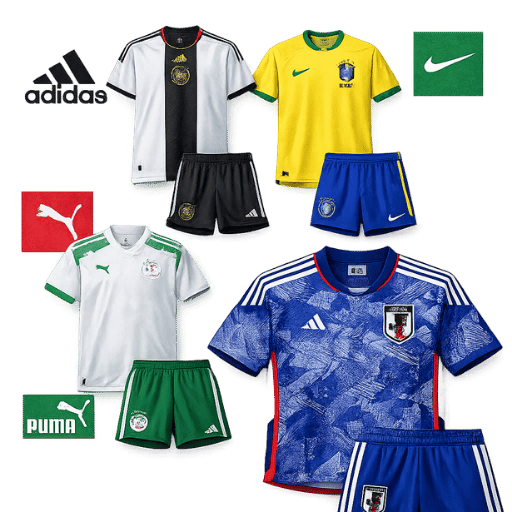
Adidas, Nike, Puma And Algeria: Why Broad 2026 Kit Rankings Can Misread Japan
Broad 2026 FIFA World Cup jerseys lists judge Japan against a full field of adidas jerseys, Nike shirts, Puma football kits, Umbro references, and even smaller maker names such as Kappa, Kelme, and Reebok. That matters because a world cup kit ranking built around every nation rewards different cues than a Japan-only list.
Some teams win quick points with a throwback, a third kit, a dark green away strip, a red and white national flag idea, vertical stripes, pinstripes, a gradient, or a striking collar and cuffs detail. Japan’s best kit candidates work differently. The new adidas home design is built around horizon color, while the away jersey turns 12 stripes into a home and away shirts conversation rather than a plain white backup.
That is why this article keeps the Japanese national team separate from broader World Cup 2026 fields. A list comparing Algeria, Curaçao, Bosnia and Herzegovina, Norway away, France away, Senegal’s kits, Belgium’s shirts, Argentina’s latest set, Croatia’s old classics, and Nike’s 2002 work can be useful, but it does not answer the buyer question here: which Japan home jersey, away kit, or home and away kits deserve the money?
Context can still sharpen the verdict. Once Japan qualified for the World Cup, world cup fever made every detail easier to overread: a 1994 World Cup throwback, Trefoil badge nostalgia, two-tone sleeves, a white and light away and third package, or a home nation story can all distract from what the shirt actually does. For Japan, the strongest cues remain specific: flame cuffs in 1998, origami in 2022, an abstract graphic on the 2026 home, and horizon hue rather than generic blue.
Which Japan World Cup Jerseys Are Worth Collecting?
Not every high-ranked shirt is the right buy for every person. Use this buyer table before you chase a rare listing or settle for a cheaper modern replica.
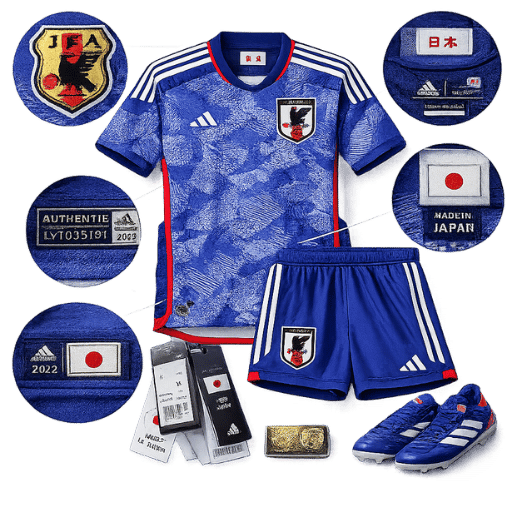
Japan shirts create two different authenticity problems. Modern adidas shirts need product-code, tag, fit, and material checks. Older Asics-era shirts need a maker-year check first, because a fake can look convincing until the label logic fails.
Engineering Note: Maker-Year Mismatch Test
Treat 1998 as an Asics-era checkpoint and 1999 onward as the start of Japan’s adidas stint, based on specialist kit history. If a supposed 1998 original carries later adidas-style coding logic, reject it unless the seller can prove a special issue. On 2026 home shirts, match the official KD3345 product code, Japan Blue / Ash Blue colorway, slim fit, Climacool spec, and 100% recycled polyester fabric callout.
SoccerKit’s vintage soccer jersey authenticity guide gives practical checks: product codes on 2000-and-newer shirts, inside wash labels, real photos rather than stock images, and a label/tag video for high-value listings. The same guide flags uniform low pricing across multiple pre-2000 sizes and prices 50% below comparable specialist sellers as warning signs.
If you are choosing between two Japan shirts, take the listing with better proof, not only the lower price. A clean 2018 home with full label photos can be a better buy than a suspicious 1998 flame shirt photographed from 2 angles.
What Comes Next For Japan Kit Design?
Across the last 3 World Cup cycles, Japan kit design shows a clear direction. Generic blue is giving way to national design systems: indigo victory color in 2018, origami in 2022, and sea-sky horizon language in 2026. The next great Japan shirt will probably have a cultural idea you can explain in 1 sentence.
Most collectors would say yes: the 1998 Japan home is the best Japan World Cup jersey.
Why is the Japan 1998 jersey so popular?
Collectors chase it because the shirt joins 3 separate signals: Japan’s first men’s World Cup, an Asics maker story, and flame graphics that do not look like a safe template. A clean original also carries period details, so tag photos and seller proof matter more than a low price.
Is the Japan 2022 home kit already a classic?
Yes. Among modern Japan shirts, the 2022 home has the strongest case because the origami design had a clear national idea before kickoff. Japan’s Qatar wins over Germany and Spain then gave the shirt match memory faster than most new kits ever get.
Should I buy the 2026 Japan home or away kit?
Choose the 2026 home if you want an easy blue shirt with official specs, current sizing, and a lower styling risk. Pick the 2026 away if you want the bigger design swing: its stripe layout has already earned major praise, but its long-term status depends on how the tournament treats it.
How can I avoid fake Japan football shirts?
Start with the era. A 1998 Asics shirt should not carry later adidas-style logic. On 2000-and-newer shirts, compare product codes, wash labels, badge finish, seller photos, and price. When the listing is expensive, ask for a short video of the inside tags instead of relying on cropped photos.
Where can I buy Japan soccer jerseys?
Start with the shop, then compare the authentic and vintage categories. Rare Japan shirts are worth waiting for when the proof is thin.
References
Sources used for design history, match context, current 2026 rankings, and buyer checks:
I write about football jersey fit and when different shirt styles make sense. My articles cover youth goalkeeper sizing and long-sleeve jerseys, helping players and families think through comfort, movement, weather, and the role of the shirt before they buy.