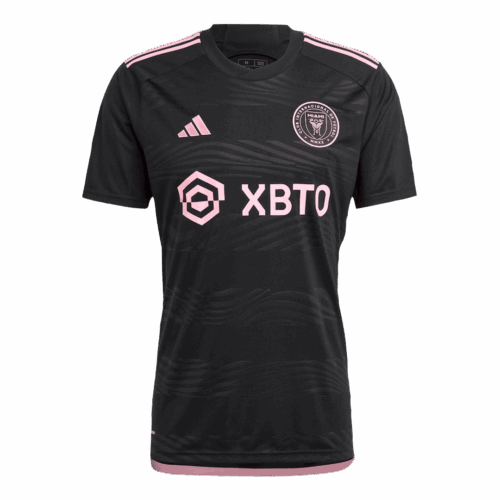
Still searching for your perfect jersey? Explore our best-selling products—we're confident you'll find a style that's just right for you in our diverse collection.
If you’re weighing CONCACAF Gold Cup jerseys vs World Cup jerseys, the short answer is that they come from two different competitions with different rules, different design briefs, and different resale markets. A Gold Cup shirt is built for a 16-team regional championship that runs every two years; a World Cup shirt is built for a 48-team global event that runs every four. That single fact shapes everything from how bold the design get to how many were ever made – and whether the one in your cart is worth $100 or worth holding onto for a decade.
This guide compares the two side by side: what each tournament is, why the kits look and feel different, how to tell authentic from replica, what Mexico and the USA actually wear, which is more collectible, and how to buy a real one in the 2026 World Cup year without getting burned by a fake.
Quick Specs: Gold Cup vs World Cup Kits
Tournament reach
Gold Cup = regional (CONCACAF) · World Cup = global (FIFA)
Frequency
Gold Cup every 2 years · World Cup every 4 years
2025/2026 field
Gold Cup 16 teams · World Cup 2026 48 teams
Authentic price band
~$150–$175 USD when offered
Collectibility driver
Gold Cup = scarcity · World Cup = prestige + nostalgia
Gold Cup vs World Cup Jerseys at a Glance
Before the detail, here’s the whole comparison on one screen. We call this the 10-Point Gold Cup vs World Cup Kit Matrix – ten dimensions that decide which shirt fits your wardrobe, your team loyalty, or your collection. In practice, this regional split is the first thing we walk buyers through at Classic Football Shirts, because almost every pricing risk and costly mistake traces back to one of these ten rows.
CONCACAF Gold Cup jerseys vs World Cup jerseys compared across 10 dimensions — from a 16-team regional field to a 48-team global one in 2026.
Category
CONCACAF Gold Cup Jersey
World Cup Jersey
Tournament scope
Regional — North America, Central America, Caribbean
Global — all six FIFA confederations
Frequency
Every 2 years (biennial)
Every 4 years
Teams (2025 / 2026)
16
48 (up from 32)
Kit brief
Often a special/one-off edition, or the flagship shirt plus a tournament patch
Flagship home & away built to sell worldwide
Design tone
Bolder, regional storytelling
More conservative, brand-flagship
Build tiers sold
Replica + sometimes authentic
Replica, authentic, player-issue
Typical authentic price
~$150 USD when offered
$150–$175 USD
Production run
Shorter, tournament-specific
Large, multi-year
Collectibility driver
Scarcity (short run)
Prestige + nostalgia
Who wears it
CONCACAF nations only
Qualified nations worldwide (CONCACAF gets 6 slots in 2026)
What Is the CONCACAF Gold Cup, and How Does It Differ From the World Cup?
The CONCACAF Gold Cup is the regional championship of North America, Central America and the Caribbean. The FIFA World Cup is the global championship that every continent feed into. They’re run by different bodies, on different cycles, with very different fields – and that’s the real reason the jerseys diverge.
Q: Is the Gold Cup the same as the World Cup?
No. The Gold Cup is a continental tournament for CONCACAF members, held every two years; the 2025 edition was the 18th, contested by 16 teams, and Mexico won its record 10th title by beating the United States 2-1 in the final.
The World Cup is FIFA’s global event held every four years. The 2026 edition is the first ever to feature 48 teams – up from 32 – and runs from 11 June to 19 July 2026 across a record 104 matches. In other words, winning the Gold Cup makes you the best in your region; winning the World Cup makes you the best on earth. At its core, that regional-versus-global gap is the reason the two kits diverge: a shirt built for one short regional tournament every 2 years simply is not designed like one built to sell worldwide across a 4 year cycle.
Q: Does CONCACAF have anything to do with the World Cup?
Yes – the Gold Cup and the World Cup are connected through qualifying. CONCACAF is one of FIFA’s six confederations, and for 2026 the region holds six direct slots: the three co-hosts qualify automatically, with three more places decided through CONCACAF qualifiers and the knockout playoff rounds. So a player can wear a Gold Cup shirt one summer and a World Cup shirt the next, for the same nation, in two completely different kits.
💡Pro Tip
2025 and 2026 are a rare back-to-back, with both events staged on the same three countries’ soil. That overlap is why so many buyers are now comparing Gold Cup and World Cup shirts in the same shop window for the first time.
How Gold Cup Kits and World Cup Kits Are Designed Differently
The design brief is the real divide — we call it the Regional-vs-Global Kit Divide. A World Cup kit has to please a worldwide audience and sit on shelves for two years, so designers play it safe and brand-forward. A Gold Cup kit serves one short regional tournament, so the brief allows bolder graphics, heritage themes, and the occasional one-off shirt.
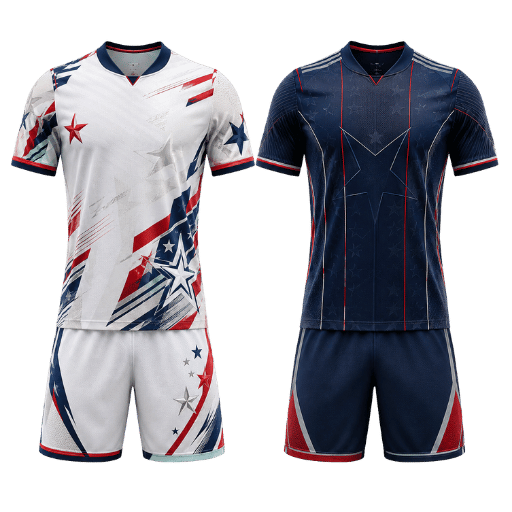
The United States’ 2017 kit is the textbook case — a rare, custom “Stars and Stripes” shirt with bold band graphics, issued only for that one Gold Cup. Mexico has done the same with its Copa Oro designs, including a black-and-gold 2025 Gold Cup edition inspired by national heritage. You can see the lineage documented by kit historian Football Shirt Culture for further context. In practice, the reason a Gold Cup shirt can look so different is the short regional run: because designers take risks they would never take on a global flagship, the bolder one-offs are the kits collectors chase hardest at Classic Football Shirts.
📐 Kit Spec NoteThe quickest special edition tell is a crest and any tournament insignia. With a genuine Special edition, graphic design features appear all over the front, a “flagship + patch” gold cup shirt is really just a standard home jersey with a small competition badge or sleeve patch sewn on the chest or sleeve. Ensure body graphic isn’t duplicated on the team retail home strip before assuming anything scarce has materialized on your hands.
⚠️Common Myth
Gold Cup kits always involve new designs.
– Myth. Whilst it’s true there have been a few one-off’s (USA 2017, obviously) most Gold Cup shirts are just the model’s flagship home top with a tournament badge slapped on, and whether the particular example is the former or latter makes a hell of a difference as to its collectible status.
Authentic vs Replica vs Player-Issue: Decoding Jersey Tiers
Whether the shirt says “World Cup” or “Gold Cup” on the box, it ships in one of three build tiers, and the price and construction gap between them is real. The distinction matters to buyers, too: academic research on sponsorship and licensing confusion finds shoppers often struggle to tell an official product from a look-alike — which is exactly what these tiers clear up.
Q: What is the difference between authentic and replica soccer jerseys?
An authentic (or “match”) jersey is the player-grade product: lighter engineered fabric such as adidas Heat.RDY or Nike Dri-FIT ADV, a slim athletic cut, laser-cut ventilation, and a heat-applied crest. A replica (sold as the “Stadium” or fan version) uses heavier standard polyester, a regular relaxed cut, and a printed or embroidered badge. In short: buy authentic for match-grade feel, replica for everyday comfort at about half the price.
Authentic vs replica vs player-issue soccer jerseys — fabric, fit, crest and price (USD) across the three build tiers.
Tier
Fabric & fit
Crest
Price (USD)
Best for
Fan / Replica
Standard polyester, regular/relaxed cut
Printed or embroidered
~$80–$100
Everyday wear, value, durability
Authentic / Match
Player tech (Heat.RDY / Dri-FIT ADV), slim cut, laser-cut vents
Heat-applied (heat-pressed) film
~$150–$175
Match-grade feel, collectors
Player-Issue
Same as authentic, often with name/number + match detailing
Heat-pressed + match patches
Resale premium
Serious collectors
The pricing bands shown below represent Manufacturer retail values for the 2025-2026 cycle; they fluctuate with each new issue and can be considered guidance only.
The 4-Signal Authentic-Kit Test
Material & fit:real feels thin and breathes much better and fitted with thin cut;Fake feels much thicker, less breathability, and also much roomier.
Crest: Authentic uses a die-cut heat pressed badge. Replica will be stitched, or printed-and there are tons of fake ones printed these days-quickest single photo clue.
Sponsor & maker marks: check that the brand logo and any tournament patch are sharp, correctly placed and consistent with official imagery.
Tag & wash label: confirm the product code, sizing format and any hologram/swing tag match the manufacturer’s real packaging.
Mexico (El Tri): Gold Cup Jersey vs World Cup Jersey
Mexico is the team most shoppers ask about, and for good reason – El Tri are the most successful side in Gold Cup history with 10 titles, and a co-host of the 2026 World Cup. That means Mexico fans face the Gold-Cup-vs-World-Cup choice more directly than anyone.
Q: What jersey is Mexico using for the World Cup?
For 2026, Mexico’s kits are made by adidas and follow the conservative global-flagship pattern: a green home shirt as the constant, with an away kit and a third kit before the tournament. The Gold Cup, by contrast, is where Mexico runs special editions — including the black-and-gold 2025 Gold Cup shirt. So a “Mexico jersey” isn’t one design: the Gold Cup and World Cup versions from the same year can look completely different.
If you’re buying El Tri, decide first which competition you want to represent. Browse authentic Mexico national team shirts by tournament rather than by colour, because the green home shirt carries across both – it’s the special-edition details that set a Gold Cup kit apart. Because El Tri refresh their look almost every year, the most expensive mistake we see at Classic Football Shirts is a buyer paying a special-edition price for a standard retail shirt — a regional pitfall worth slowing down for.
⚠️Common Mistake
Assuming every Mexico shirt is interchangeable. Buyers regularly pay a special-edition price for a standard retail home shirt, or miss a genuine Copa Oro one-off because it looked “like the normal green kit.” Match the shirt to the exact tournament and year before you pay a premium.
USA / USMNT: Gold Cup Jersey vs World Cup Jersey
The United States tell the same story from the other side. The USMNT have seven Gold Cup titles, and as a 2026 co-host they go straight into the World Cup. Their kits, made by Nike, split the same way: flagship World Cup shirts built for the long retail run, and bolder Gold Cup editions made for a single summer.
The 2017 Gold Cup kit is the one collectors point to – a one-off Stars-and-Stripes shirt unveiled specifically for that tournament, distinct from any retail home jersey of the era. It’s exactly the kind of short-run shirt that ages into a collector’s piece, which is why used authentic versions trade well above their original price. In practice, the 2017 shirt is the USA kit we field the most questions about at Classic Football Shirts, because its single-summer run makes authentic versions genuinely scarce — and the real risk for buyers is paying that scarcity premium for a later retail shirt that only looks similar. For the broader timeline of US shirts, ESPN’s 2026 World Cup kit ranking is a useful reference point.
“For fans, the shirt is identity; for the underground market, scarcity is the product. The value of a jersey often has less to do with the badge on the chest than with how few were ever made.”
Berkeley Economic Review, “Real Fans, Fake Shirts”
Which Is More Collectible? Rarity, Value, and the Vintage Market
Most people guess wrong here, and it costs them money. The instinct is that a World Cup shirt must be worth more than a Gold Cup shirt because the World Cup is the bigger event. In the collector market, that isn’t how value works.
We call the correction Scarcity-Beats-Prestige: the rarer the shirt and the better the story, not the tournament prestige, the higher the value. World Cup flagship shirts are manufactured in such high quantities over such a long time frame-two years-that the supply is gargantuan. A one-tournament Gold Cup special (think the USA 2017 shirt) is printed for only a limited time and then never seen again, so those rarer ones appreciate faster than an infinitely more famous World Cup kit. Match-worn versions, player-issue gear, of all these shirts then sit at the top of that gradient simply because there’s only one of each. On the ground, the resale patterns we track at Classic Football Shirts back this up: a scarce regional one-off can outpace a far more famous flagship, because collectors pay for rarity and story, not the size of the tournament.
Which jersey to buy by goal — matching a Gold Cup or World Cup shirt to resale, nostalgia, everyday wear, or low fake-risk.
Your goal
Choose
Why
Maximum resale potential
Short-run Gold Cup special or match-worn shirt
Scarcity drives appreciation
Nostalgia / iconic moment
World Cup kit from a memorable run
Narrative and recognition hold value
Everyday representation
Replica home kit
Durable and affordable
Low fake-risk investment
Authenticated vintage from a specialist
Provenance reduces counterfeit risk
If you’re going for the long game, you’re much safer holding a documented authentic retro and vintage football shirt than the wild card purchased from some anonymous individual.
How to Buy Authentic Gold Cup and World Cup Jerseys (and Spot Fakes)
Counterfeiting is a major, major problem, particularly surrounding national team jerseys. U.S. Customs and Border Protection and ICE Homeland Security Investigations seized 267,511 counterfeit sports-related items in a single year, worth an estimated $97.8 million MSRP, and enforcement bodies are targeting fake soccer jerseys before and during every major tournament. Next year, 2026, is World Cup year, so fakes will flood the market: have a checklist.
Buy from an authorized retailer – either a specialist shop, official supplier, or licensed reseller, not a pop-up account where the prices are unbelievably cheap.
Perform the 4-Signal Authentic-Kit Test on every item of interest: fabric/fit, badge application, sponsor and maker logos, and the wash tag.
A deep, deep discount on a brand new item should be a red flag – an current authentic almost never goes on sale for anything near below retail.
For vintage and special-edition shirts, you’ll want to check provenance – – receipt proof or specialist authentication.
Federal agencies such as ICE Homeland Security Investigations recommend buying from an authorized seller, stating plainly that counterfeit jersey sales spike around major soccer events. You can read more in the ICE warning, or see the scale of the trade in the CBP intellectual-property seizure report; as a safe starting point, consider consulting an official catalogue ofauthentic soccer jerseys over relying on open-market finds alone.
What’s Changing for 2025–2026: Gold Cup, World Cup 26, and the Kit Calendar
The most significant departure this cycle is the World Cup being co-hosted across the whole of CONCACAF – Mexico, the United States and Canada – for the first time, alongside being the first-ever 48-team edition. That fundamentally shifts the job of a collectors buying strategy. Hosting duties now tend to concentrate production interest and special-release releases around Mexico, USA, and other CONCACAF teams more than a standard cycle, meaning more of both nations’ shirts of all kinds are out there.
The practical upshot here’s simply about timing. World Cup flagship kits hit the shelf in their own set window – adidas, for example, released its 2026 home kits last November 2025 and they’re sticking around on the shelves long term. Gold Cup specials will hit the market for one summer and then be gone for good. If it’s a World Cup kit you’re after, you’ve a pretty large buy window; if it’s a Gold Cup special, it’s now or look to pay up on the resale market later. For the most up to date info and designs for 2026, you can also check out how the kits are being dropped with the latest from ESPN and Sports Illustrated. In practice, the buyers who do best at Classic Football Shirts treat the regional host year as a calendar: because World Cup flagships sell for a long window but Gold Cup specials vanish within weeks, the costly mistake is hesitating on the short-run shirt.
💡Buyer’s takeaway for 2026
Choose the competition you’re playing in, buy your World Cup flagships well into their extended buying window, and snatch your Gold Cup specials as soon as you can find them – a limited availability and short run for those is precisely what makes them valuable later.
Frequently Asked Questions
Q: Is the Gold Cup more important than the World Cup?
View Answer
No, they’re not really equivalent. The Gold Cup is the championship for CONCACAF’s regional conference of national teams, and the World Cup is FIFA’s top global tier – the Holy Grail of men’s football. winning the Gold Cup means more in Central/North America, but the World Cup is the world game’s ultimate title with far more prestige. They’re both important in their spheres, but for completely different reasons, and their associated kits should, logically, also be designed accordingly.
Q: Do national teams wear the same jersey for the Gold Cup and the World Cup?
View Answer
Not necessarily. while a nation’s central home colors rarely deviate, Gold Cup versions of team kits are more often “special” or standalone designs, as opposed to the all-purpose flagship home and away models for a World Cup campaign. the same country could have different styles of shirts for these two tournaments less than a year apart, which is why checking the kit year, country and event is essential for anyone considering a purchase.
Q: Are Gold Cup jerseys special edition?
View Answer
Sometimes it can be, though. Certain Gold Cup shirts can indeed be special one-offs created only for the particular tournament-the US’s 2017 kit is an excellent example. Others can still be quite similar to a national team’s typical kit with an added Gold Cup emblem, which is where examining any unique body patterns of the shirt could save a shopper some cash.
Q: Why are authentic jerseys more expensive than replicas?
View Answer
Authentic jerseys use the same player-grade fabric, slim cut, ventilation and heat-pressed crest the squad wears on the pitch, which costs more to make than a standard replica. They are also produced in smaller runs than fan versions, and that limited supply lifts both the retail price and the resale value.
Q: Are Gold Cup jerseys worth collecting?
View Answer
Yes, especially some of the rarer Gold Cup specials — they could be one of the smarter purchases to make if you’re interested in collecting. These kits were, in effect, designed for a single moment in time, and limited quantities mean they are never made again.
That scarcity can lead to higher appreciation than an ubiquitous World Cup replica down the line, though authenticated, match-issued versions are the most desirable and value-retaining option for many collectors.
Q: How can I tell if a World Cup or Gold Cup jersey is fake?
View Answer
For a start, check the badge: real crests are detailed and heat-pressed, whereas many fakes use a flat printed or sloppily embroidered patch. Then scrutinise the fabric weight and cut, the clarity and placement of sponsor and maker logos, the product code, and any hologram tag against the manufacturer’s real packaging.
Stick to official channels, licensed retailers or established specialists, and be wary of bargain prices on brand-new release shirts. Hundreds of thousands of counterfeit sports goods are seized every year, and the numbers climb around major tournaments, so the run-up to the 2026 World Cup calls for extra vigilance. If a deal seems too good to be true and the seller cannot show provenance, walk away rather than risk a fake.
We sell authentic, retro and vintage football shirts, so the Gold-Cup-vs-World-Cup question – special editions, build tiers, and what actually holds value – is one we field from collectors every week. This guide reflects how we authenticate national-team kits and steer buyers away from counterfeits, written for the 2026 World Cup host-year market. Reviewed by the Classic Football Shirts team.
I write about football jersey fit and when different shirt styles make sense. My articles cover youth goalkeeper sizing and long-sleeve jerseys, helping players and families think through comfort, movement, weather, and the role of the shirt before they buy.