Still searching for your perfect jersey? Explore our best-selling products—we're confident you'll find a style that's just right for you in our diverse collection.
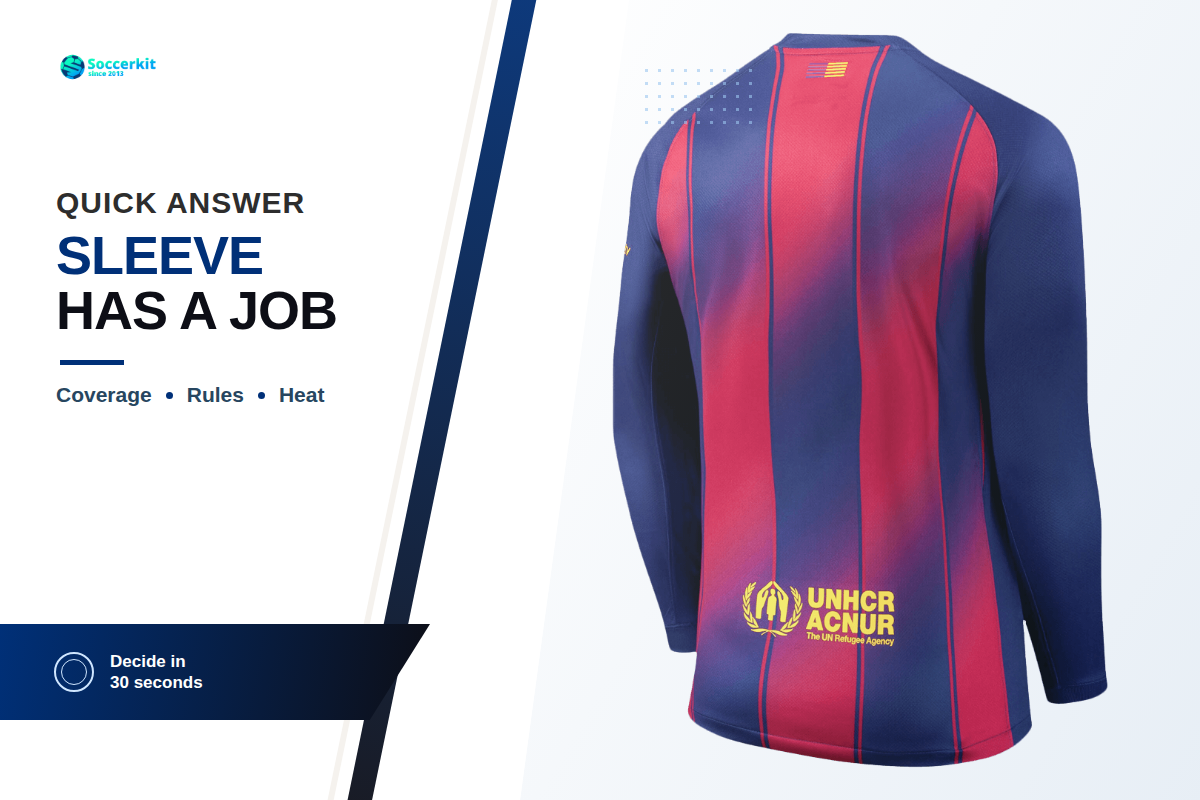
Long sleeve soccer jersey when to wear is a buyer question about choosing long sleeves only when coverage, comfort, rules, and heat conditions make the sleeve useful. The short answer is this: wear one when the sleeve has a real job. That job might be cool-weather coverage, sun coverage, turf protection, goalkeeper use, stadium layering, retro style, or collector appeal. Don’t wear one just because it looks more serious.
Quick answer: A long sleeve soccer jersey makes sense when coverage is useful and heat is manageable. In active play, check temperature, humidity, airflow, workload, and kit rules first. In casual wear, matchday, or collecting, fit, condition, and sleeve details matter more than weather alone.
Quick Specs
Best for
Cool matchdays, sun coverage, goalkeepers, retro looks, collectors, and careful layering.
Avoid when
Heat, humidity, heavy exertion, tight cuffs, or match rules make the sleeve a drawback.
Main buyer check
Shoulders, chest, cuff, sleeve length, print condition, and whether the shirt is authentic or replica cut.
Long sleeves aren’t automatically better than short sleeves; they’re better only when coverage solves a real problem.
Sun coverage is different from tested UPF protection. Don’t assume a normal jersey is UPF-rated unless the garment says so.
During strenuous play, heat risk can outweigh sleeve coverage, especially in humid or low-airflow conditions.
In organized matches, shirt sleeves, undershirt color, goalkeeper distinction, and equipment rules can matter.
Collectors often choose long sleeves for era, player association, scarcity, and condition, not because the shirt is warmer.
Quick Answer: When Should You Wear a Long Sleeve Soccer Jersey?
A long sleeve soccer jersey is worth wearing when the sleeve improves the situation: cooler air, bright sun, turf contact, goalkeeper coverage, stadium layering, retro styling, or collector value. It’s the wrong choice when it traps heat, restricts your arms, violates team-kit rules, or makes you buy a poor fit just for the look. In outdoor use, pair the sleeve decision with CDC sun-safety guidance, because coverage, shade, sunscreen, and heat conditions still work together.
DataForSEO found no reported volume for the exact question, but the parent term long sleeve soccer jersey shows 3,600 monthly searches in the United States, while long sleeve football jersey shows 880 and long sleeve football shirt shows 480. SoccerKit also has a visible long-sleeve product path inside its authentic jerseys category, including Barcelona, Liverpool, and Fernando Torres long-sleeve pages.
6 monthsDFS trend window reviewed
28 daysGSC window checked
100%keyword facets mapped
98%UPF 50 fabric UV block context
Key takeaway
Choose long sleeves for a defined use case, not as a default upgrade. The sleeve has to beat heat, fit, rules, and care trade-offs.
Are long sleeve soccer jerseys better?
Long sleeve soccer jerseys are better for some situations and worse for others. They can add coverage, style, and collector appeal, but a short sleeve jersey or base layer can be smarter for hot play, tight kits, or strict team uniform rules.
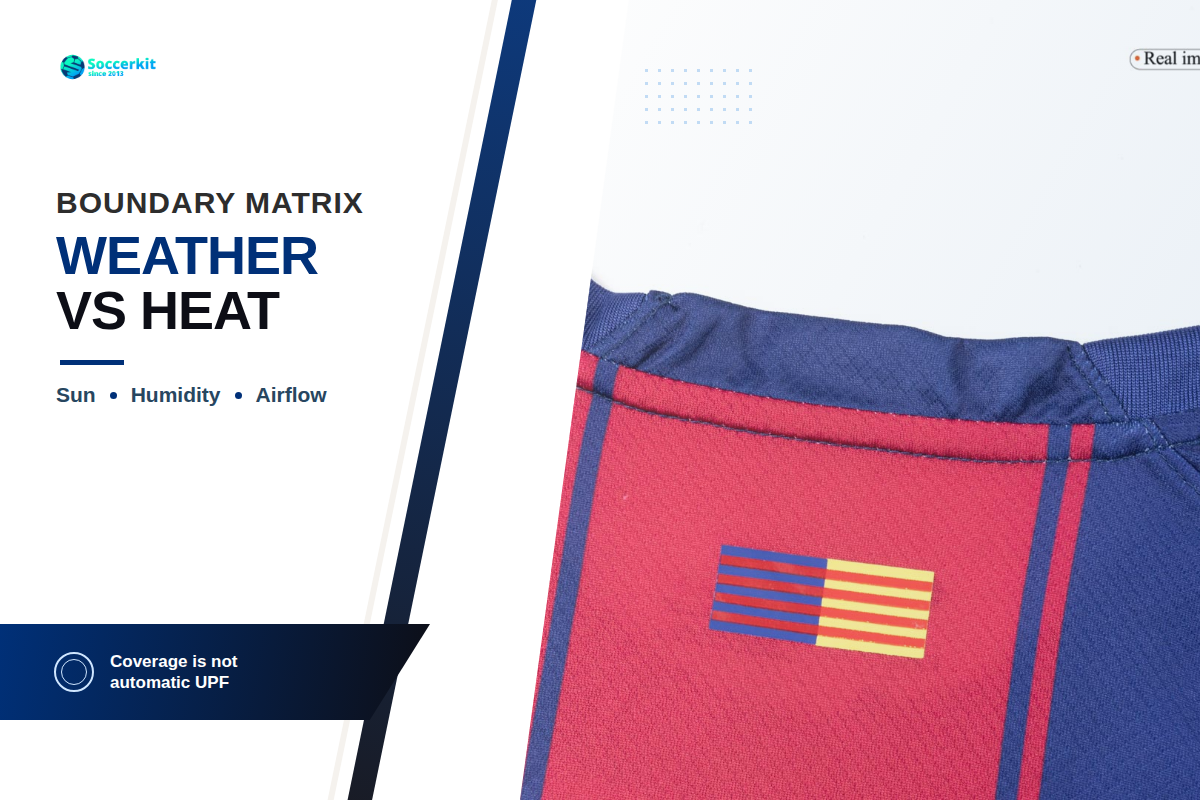
Weather, Sun, and Heat: 7-Point Long-Sleeve Boundary Matrix
The Long-Sleeve Boundary Check asks four questions before weather decides the outfit: does the sleeve add useful coverage, will it trap too much heat, does the kit setup follow the rules, and will the shirt still fit after layering? This is stronger than a simple temperature rule because soccer use changes by workload, sunlight, humidity, wind, and fabric.
Sun is a good example. Long sleeves cover more skin, and the Skin Cancer Foundation notes that UPF 50 fabric blocks about 98% of UV rays. That doesn’t mean every long sleeve soccer shirt is UPF 50. Unless a jersey is tested and labeled, treat the sleeve as coverage, not as medical-grade sun protection.
During active play, heat matters more. CDC/NIOSH heat-stress guidance and OSHA heat guidance both point to environmental heat, workload, clothing, acclimatization, and related conditions. A long sleeve can be useful on a cool windy field, but it can be the wrong layer during high-effort play in humid sun.
7-Point Long-Sleeve Boundary Matrix
Use-case type
Wear long sleeves when
Do not rely on them when
Limitation / not suitable for
Cool evening match
You need light coverage over 90 minutes of sitting or low movement.
You are sprinting or playing full intensity.
Layering may feel tight in player-cut shirts.
Bright sun
You want more skin coverage and the fabric is breathable.
You need verified UPF protection but the garment has no UPF label.
Use sunscreen and shade planning too.
Humid training
Rarely, unless the session is light and airflow is good.
Heat, humidity, and workload are high.
Short sleeve or a technical base layer is usually safer.
Artificial turf
You want arm coverage for dives, slides, or contact.
The sleeve restricts movement or overheats you.
Coverage is not padding.
Stadium seats
Wind, shade, or travel layers make coverage useful.
You need a heavy insulation layer.
Bring a jacket when conditions change.
Indoor watch party
Air conditioning or style makes sleeves comfortable.
The venue is crowded and warm.
Avoid heavy underlayers.
Organized match
The shirt and underlayer follow team colors and competition rules.
A base layer clashes with the sleeve color/pattern.
Check Law 4 and local league rules.
Collector wear
The sleeve detail is part of the era, player look, or rarity.
Condition is fragile or cuffs are stretched.
Wear lightly or display instead.
Daily casual outfit
The shirt works with jeans, trousers, jacket, or scarf.
You are building a full kit outside sport context.
Keep the rest of the outfit simple.
Use a short try-on sequence before committing: a 5 min fit check, a 30 sec elbow bend, a 10 sec overhead reach, and a 2 min walk with the layer you plan to wear. If the cuff pulls, the elbow tightens, or the shirt traps heat before a 15 min warm-up, the long sleeve is probably the wrong option for a 45 min half or a 90 min match.
At what temperature should you wear long sleeves?
There’s no universal temperature for long sleeves. A cool, windy 60 F stadium seat can feel right for a long sleeve jersey, while a humid 75 F five-a-side game can feel too hot. Use weather, effort, airflow, and layering together.
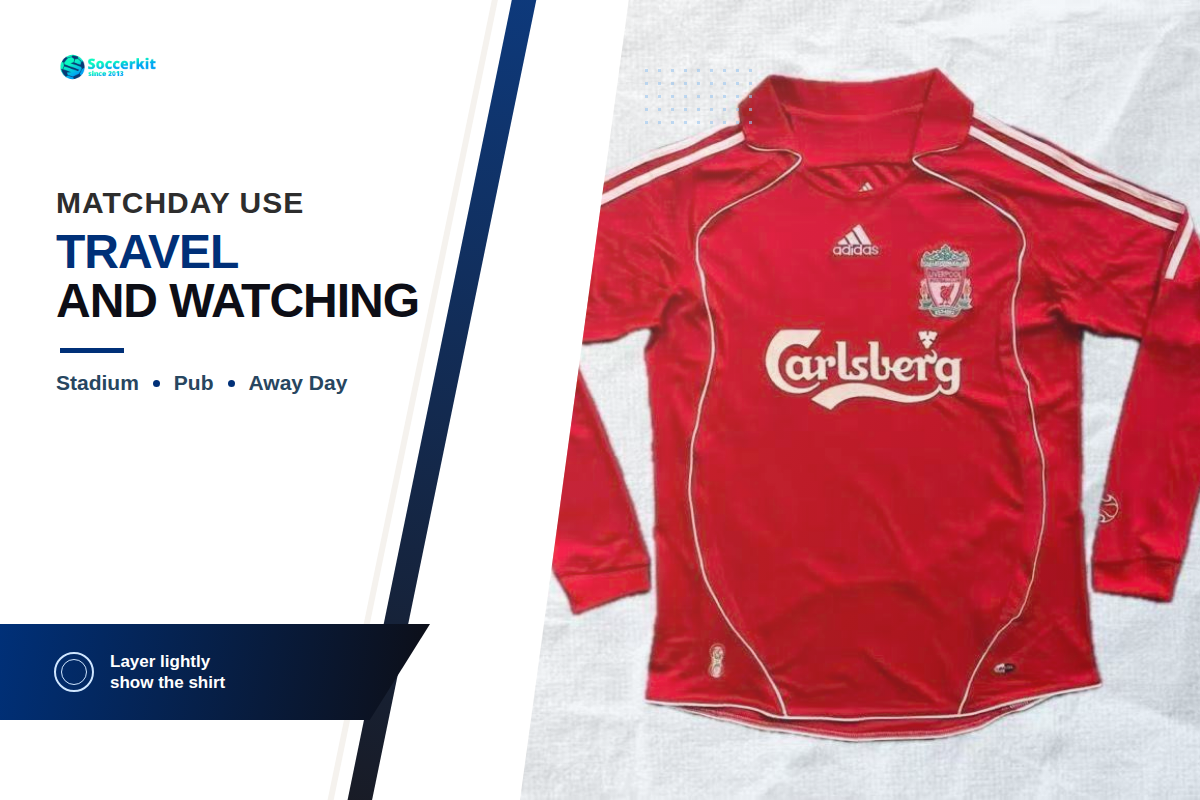
Matchday, Travel, and Watch Parties
As a fan piece, a long sleeve football jersey is often a comfort and styling choice before it’s a performance choice. It works well for shaded seats, cool train platforms, pub watch parties, and late-season fixtures where a short sleeve shirt feels too bare but a jacket hides the jersey.
SoccerKit’s authentic jerseys category already frames jerseys for match day clothing, training outfits, casual street wear, collectibles, gifts, and customization. That range matters: someone buying a Barcelona Home Long Sleeve Jersey 2025/26 may use it differently from someone looking at a retro Torres shirt. If the day includes outdoor queues, travel, or sun, OSHA’s heat-exposure overview is a useful reminder that clothing, activity level, and conditions still matter for fans too.
9-Way Wear Occasion Matrix
Occasion type
Best long-sleeve role
Better alternative
Outdoor night match
Light visible layer
Short sleeve plus jacket in rain
Away-day travel
Comfortable sleeve coverage
Hoodie if luggage space is low
Watch party
Smart fan piece
Short sleeve when crowded
Indoor futsal
Usually style only
Training top
Youth sideline
Parent/fan coverage
Coat if weather turns
Pick-up game
Coverage for cool low-intensity play
Short sleeve for high effort
Goalkeeper training
Arm coverage
Padded keeper top if impact is expected
Collector display day
Era-correct look
Display only if fragile
Casual weekend outfit
Statement shirt
Short sleeve under overshirt
Casual Styling Without Full-Kit Cosplay
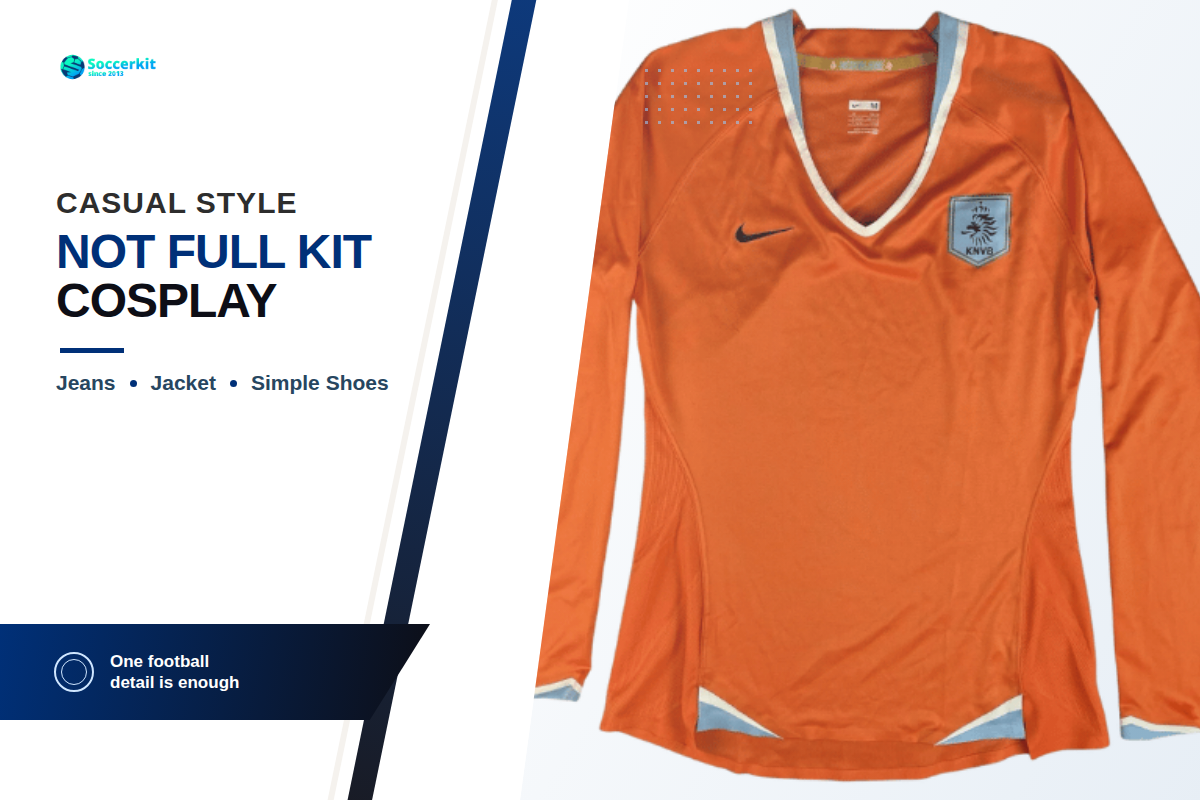
A long sleeve soccer shirt can work casually when the rest of the outfit is quiet. The jersey already has color, sleeve trim, crest, sponsor print, and sometimes a player name, so jeans, plain trousers, clean sneakers, or a simple jacket usually work better than matching shorts and socks.
Fashion media has treated football shirts as everyday style pieces, but the safest casual rule is still restraint. Use one football detail as the hero and let the rest of the outfit support it. At outdoor watch parties or on travel days, CDC sun-safety guidance keeps the style choice grounded: a jersey sleeve does not replace sunscreen, shade, or verified sun-protective clothing.
Do
Pair a long sleeve soccer shirt with plain denim or relaxed trousers.
Use a neutral jacket when the jersey has a loud sponsor or sleeve trim.
Let retro cuffs or sleeve stripes be the main detail.
Use clean shoes rather than cleats outside sport settings.
Don’t
Wear a full kit casually unless it is an actual match or costume context.
Layer a tight player-cut sleeve over a bulky hoodie.
Buy a fragile vintage shirt for heavy daily wear.
Choose sleeves only because the short sleeve version sold out.
Can you wear a soccer jersey casually?
Yes, you can wear a soccer jersey casually if the rest of the outfit makes it look intentional. Long sleeves usually look more like a shirt than a gym top, which helps, but fit and condition still decide whether it looks sharp or awkward.
Playing and Training: Heat Risk vs Coverage
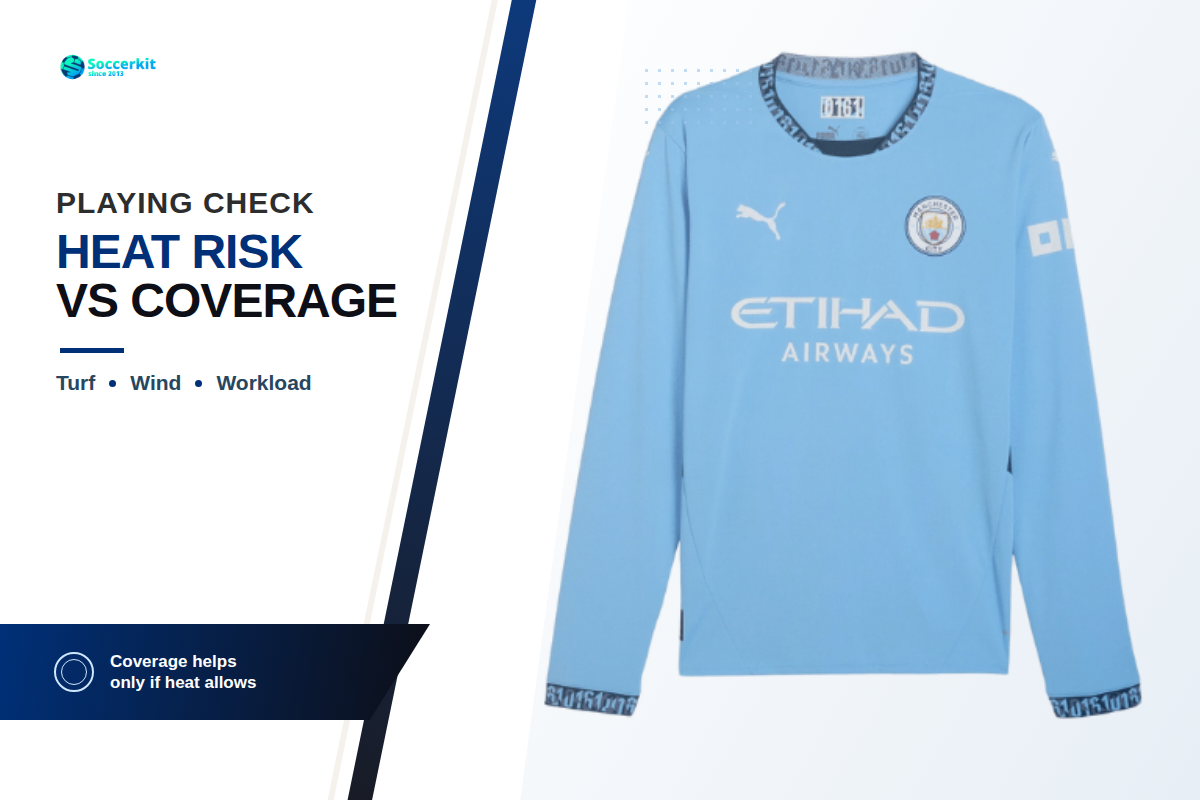
In training and matches, long sleeves help only when coverage beats heat load. A goalkeeper on turf, a light technical session in wind, or a cool-weather warm-up can justify sleeves. A hot, humid, high-workload game usually pushes the decision toward short sleeves or a breathable base-layer plan.
OSHA’s technical heat guidance considers humidity, wind, temperature, radiant heat, clothing, and workload. Those same factors belong in a soccer decision, even though the source is written for workplace heat risk. The point isn’t that a jersey is dangerous by itself; the point is that sleeves are one part of the heat equation.
“The safest long-sleeve rule is not ‘cold equals sleeves.’ It is ‘coverage must still beat heat, fit, rules, and care.'”
Sleeves Help or Hurt in Play
Condition
Long sleeves can help
Long sleeves can hurt
Goalkeeper dives
More arm coverage on turf
Not a substitute for padding
Sun exposure
More skin covered
Can trap heat; not always UPF-rated
Cool wind
Useful light barrier
May still be too light for cold rain
Humid five-a-side
Rarely needed
Heat and sweat can build quickly
Contact-heavy play
Less bare skin exposed
Sleeve can pull if too tight
Goalkeepers, Youth Players, and Match Rules
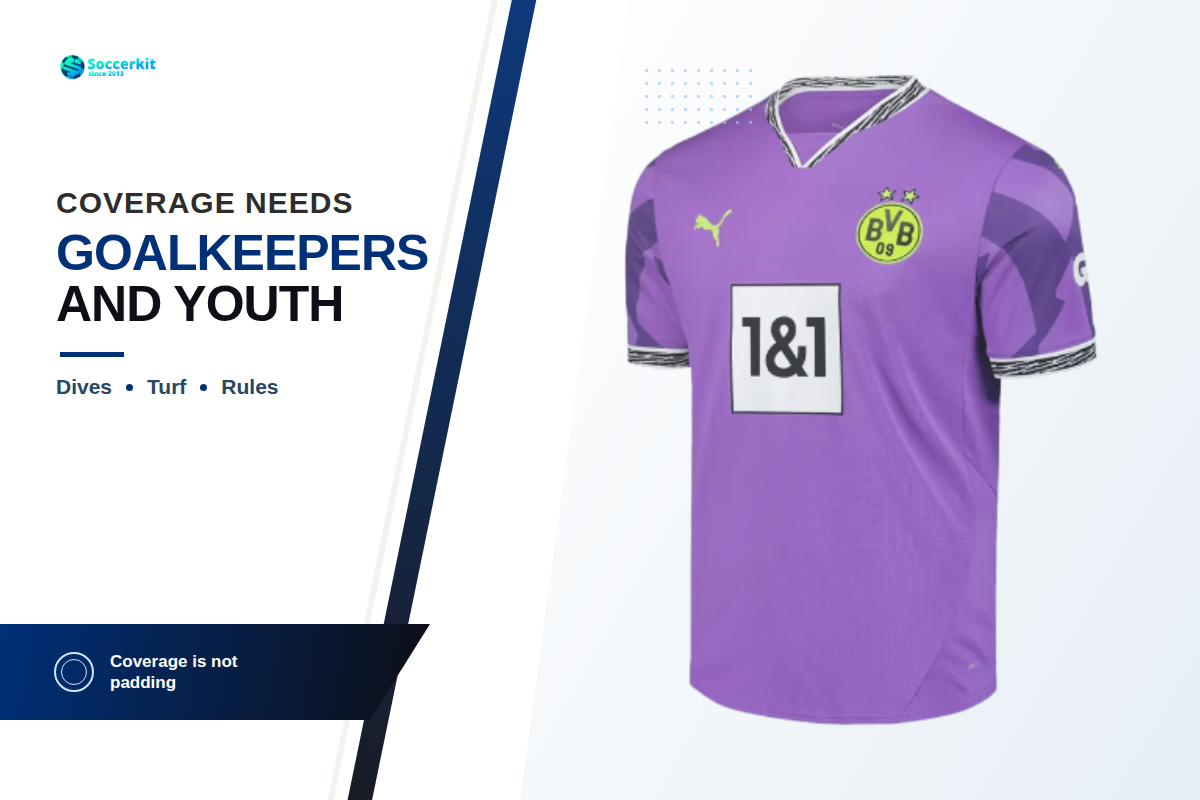
Goalkeepers and youth players often have the clearest coverage case for long sleeves, but organized play adds rules that casual wear doesn’t. A goalkeeper must be distinguishable, and base layers or undershirts can be restricted by sleeve color and pattern rules.
IFAB Law 4 and the FA’s Law 4 page both put equipment inside a rule framework, including shirt sleeves, undershirts, goalkeeper distinction, slogans, and dangerous equipment. Before a league match, check local rules rather than assuming any long sleeve or base layer is acceptable.
Match-rule checklist
Does the shirt have sleeves and match the team’s required kit?
If using an undershirt, does the visible sleeve match or follow the required sleeve color/pattern?
Is the goalkeeper clearly distinguishable from players and officials?
Are slogans, patches, jewelry, and accessories allowed by the competition?
Will the sleeve or cuff create a safety issue during play?
If you’re buying for a young player, separate two jobs: comfort for casual wear and compliance for matches. A long sleeve Liverpool or Barcelona shirt can be a great fan piece, while a team match top may need a different cut, color, or league-approved underlayer. In warm youth training, CDC/NIOSH heat-stress guidance supports the same caution: clothing, effort, and environment should be checked together.
Collector and Retro Value: When Long Sleeves Are the Point
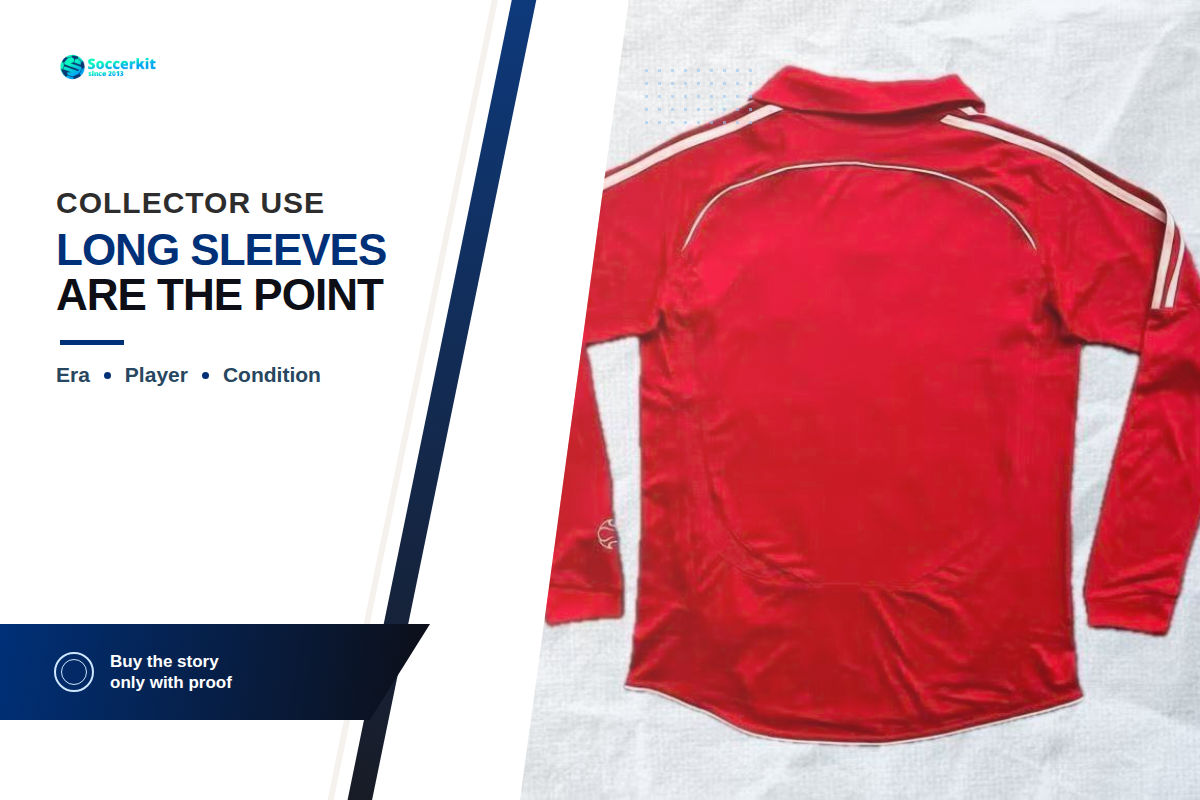
Among collectors, long sleeves can be the whole reason to buy the shirt. Sleeve length can signal a specific era, player look, goalkeeper tradition, match issue, winter feel, or a less common variant. That doesn’t prove every long sleeve is more valuable; it means the sleeve is part of the story you’re buying.
Vintage football shirt coverage from Vogue and the Guardian supports the wider collector interest in football shirts, but neither source proves a universal long-sleeve premium. Use condition, authenticity, player association, rarity, and provenance before assuming value. If you plan to wear a collector shirt, FTC care-label guidance is still a practical boundary before washing, drying, or storing a rare sleeve detail.
Collector Signal Checklist
Signal
Why it matters
Check before buying
Era-correct sleeve
Some eras made long sleeves more visible on pitch.
Compare season photos and shirt archive records.
Player association
A known player look can drive interest.
Verify name set, number style, and season.
Cuff condition
Long sleeves show wear at cuffs first.
Check stretching, bobbling, stains, and repair.
Sponsor print
Print survival affects display quality.
Look for cracks, lift, and heat damage.
Authenticity
Replica, player issue, and match worn mean different things.
Check labels, fabric, stitching, and seller notes.
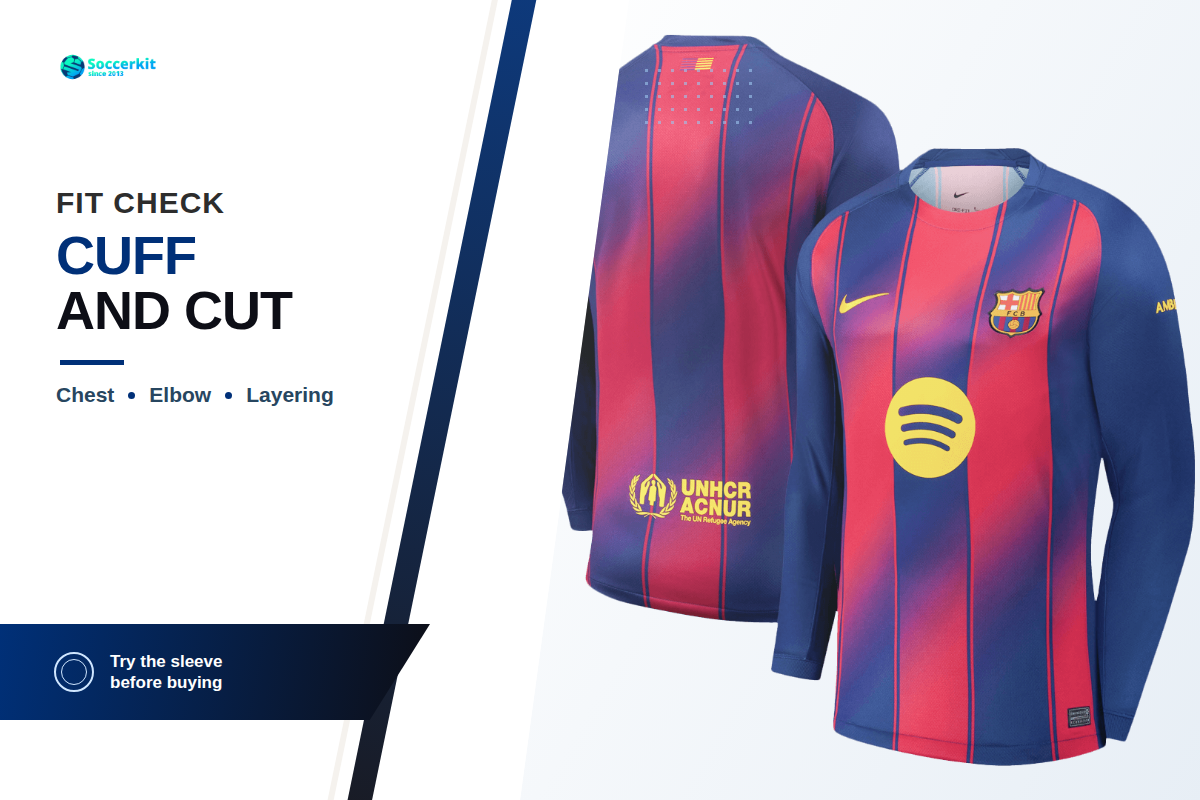
Fit matters more on a long sleeve soccer jersey because sleeves add two extra failure points: cuff position and arm movement. A shirt can fit the chest but still feel wrong if the cuff lands too far over the hand, pulls across the elbow, or bunches under a jacket.
Use SoccerKit’s soccer jersey sizing guide and any product-specific notes before buying. Authentic or player-version cuts often sit closer to the body, while replica or fan versions may leave more room for layering. When fit plans include washing or altering care routines, FTC care-label guidance supports following the garment’s regular-care instructions first.
Sleeve Fit and Cuff Check
Raise both arms and check whether the hem rides too high.
Bend the elbow and check whether the sleeve pulls across the forearm.
Confirm cuff condition on vintage shirts before wearing them heavily.
If layering, test the base layer under the jersey, not just the jersey alone.
With authentic soccer jerseys, assume the cut may be slimmer until size notes prove otherwise.
When browsing products, compare club-specific pages such as Liverpool Away Long Sleeve Soccer Jersey 2025/26 and Liverpool Home Long Sleeve Soccer Jersey 2025/26 against your actual sleeve and chest measurements.
When Not To Wear a Long Sleeve Soccer Jersey
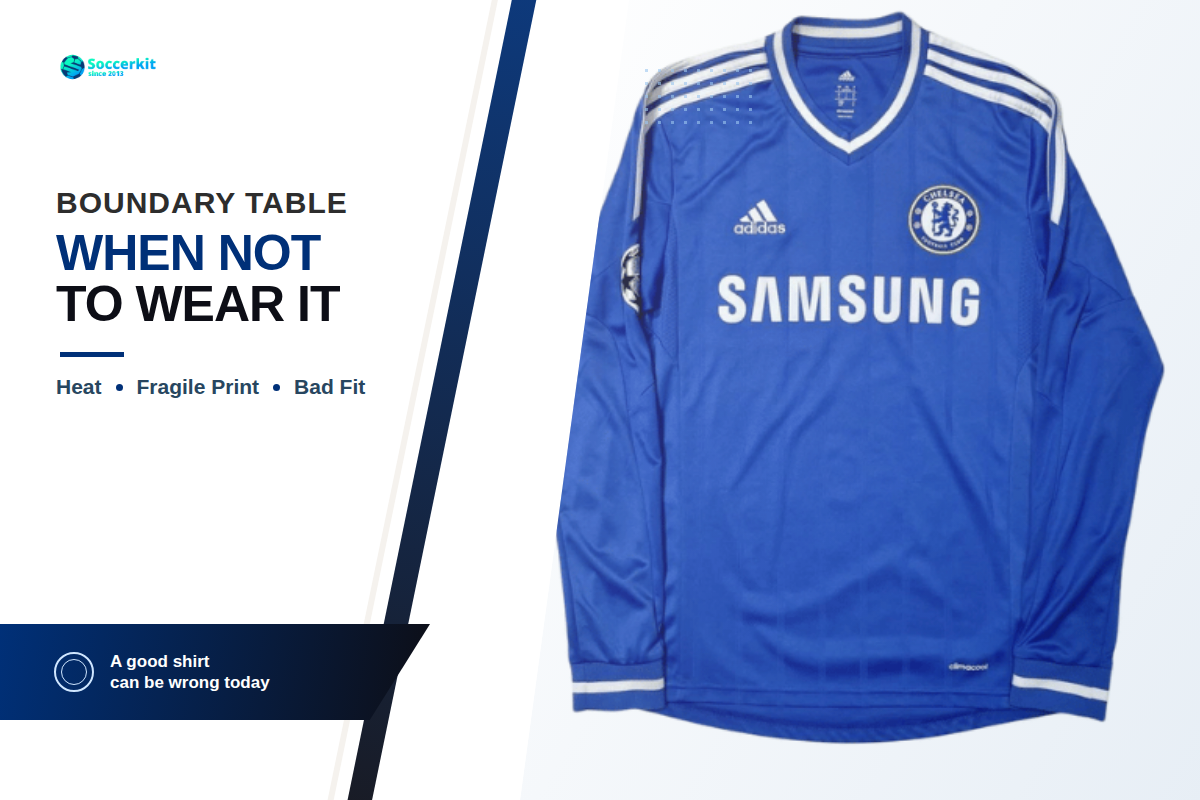
Don’t wear a long sleeve soccer jersey when the sleeve creates the problem you’re trying to avoid. Heat buildup, tight cuffs, fragile vintage prints, bad layering, and match-rule conflicts are all good reasons to choose a short sleeve shirt, base layer, or different jersey. OSHA’s heat-exposure overview is the clearest boundary source for why heat, clothing, and workload should not be treated as a style issue only.
Do-Not-Wear Boundary Table
Boundary
Why it matters
Better move
High heat plus hard play
Clothing and workload add to heat strain.
Short sleeve or technical training top.
No tested UPF label
Coverage is not the same as a UPF claim.
Use sunscreen, shade, and labeled sun clothing.
League kit mismatch
Undershirt or sleeve colors may be restricted.
Check rules and team kit requirements.
Fragile vintage print
Heat, friction, and washing can damage print.
Wear lightly or display.
Bad fit at cuff
Sleeve discomfort gets worse over time.
Change size or choose replica fit.
Crowded indoor venue
Heat and spilled drinks are common.
Short sleeve plus jacket.
Rain without shell
A jersey is not weatherproof.
Add a rain layer.
Heavy hoodie underneath
Player cuts can distort or pull.
Size check or wear the hoodie outside.
Buying only for trend
Trend buys often ignore fit and condition.
Choose a club, player, or era you actually wear.
Care, Cuffs, Print Survival, and Where To Go Next
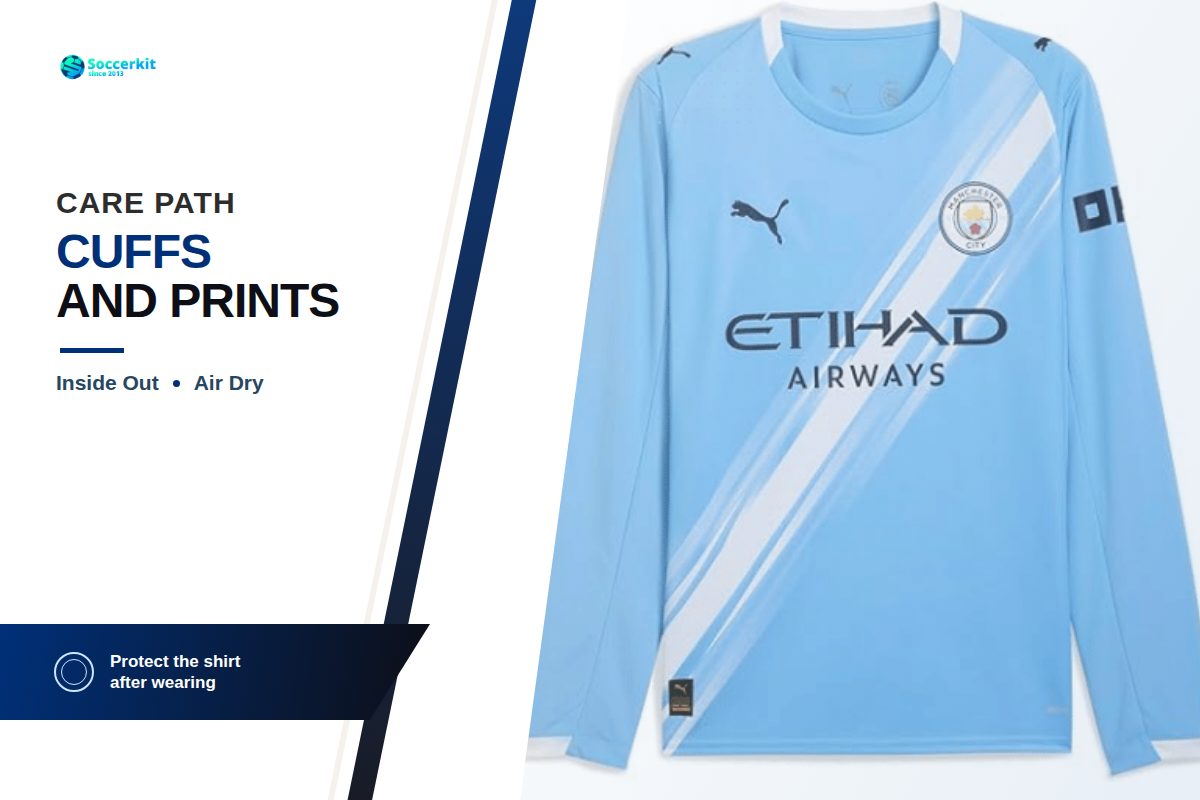
Long sleeves add more fabric, more cuff wear, and more print-contact risk, so care matters. Wash and dry based on the garment label, protect heat-transfer graphics, and be more careful with older cuffs, sleeve badges, and sponsor prints.
The FTC’s Care Labeling Rule guidance and AAFA care-label guidance both reinforce the same practical point: care instructions matter because textile products can need specific regular-care methods. On long sleeve football shirts, that means the label comes before generic internet washing advice.
Check the label – use the care symbols and washing instructions before deciding temperature or cycle.
Turn the shirt inside out – reduce friction on sponsor prints, sleeve patches, and namesets.
Avoid heavy heat – heat can stress prints, cuffs, and synthetic fabric.
Air-dry when condition matters – especially for vintage, player, or collector shirts.
Store sleeves flat – avoid cuff stretching and shoulder hanger marks on older shirts.
With high-condition shirts, use simple timing guardrails rather than guesswork: run a 30 sec color-transfer check before first wash, spot-check sleeve prints for 10 sec before ironing any nearby fabric, let damp cuffs air out for 24 hours before storage, re-check stored shirts every 6 months, and avoid leaving a worn shirt sealed in a bag for 7 days. These are handling boundaries, not replacements for the label.
In collector storage, a light inspection after 30 days can catch cuff stretching, print lift, or damp odor before it becomes a bigger issue. After that, reviewing the shirt every 12 months is usually enough for shirts kept flat, dry, and out of direct light. Avoid casual shortcuts such as a 20 min dryer cycle, a 2 hr sun-dry session, or a 1 year sealed-plastic storage period unless the garment label and condition make that safe; even a 5 min heat mistake or 3 days of damp storage can mark an older print.
Some soccer players wear long sleeves for coverage, comfort, tradition, goalkeeper protection, or personal routine. In modern matches, many players use short sleeves plus base layers instead. The practical reason matters more than the sleeve itself: a goalkeeper may want arm coverage, a winger may want freer airflow, and a fan may want a retro player look. In cold weather, sleeves can also be psychological comfort, but performance still depends on fabric, movement, and heat buildup.
Are long sleeve soccer jerseys better than short sleeve?
Answer
They are better only when the sleeve solves a specific need. Short sleeves can be better for hot play, tight fits, or layering under an approved base layer. When buying, compare the job: coverage, styling, collection value, or match compliance. If the sleeve adds no benefit, choose the better-fitting short sleeve version.
At what temperature should you wear long sleeves?
Answer
Use temperature with effort and airflow. A cool, windy spectator setting may suit long sleeves, while a humid training session can be too warm even at a moderate temperature. Do not use a single number as the rule. Ask whether you will sit, walk, warm up, or play hard, then choose the sleeve length. Also consider sun, shade, wind, and humidity. If two people are in the same weather but one is watching and one is sprinting, they may need different sleeve choices.
Can you wear a soccer jersey casually?
Answer
Yes. Keep the rest of the outfit simple, avoid full-kit styling outside sport settings, and make sure the sleeve length and cuff fit look intentional.
Should I size up for a long sleeve soccer jersey?
Answer
Size up only if the product cut, shoulder width, chest, and cuff length require it. Authentic cuts can be slimmer, but a larger size can also make sleeves too long.
Are long sleeve jerseys good for collectors?
Answer
They can be, especially when the sleeve is tied to an era, player, match style, or rarer variant. Condition and authenticity still matter more than sleeve length alone.
Find the right long sleeve jersey
Start with the use case, then check club, cut, cuff, condition, and care before buying.
This guide uses public keyword data, SoccerKit site evidence, official safety and equipment-rule sources, textile care guidance, and credible football-shirt media. It doesn’t claim that every long sleeve jersey is UPF-rated, more valuable, or better for play.
I write about football jersey fit and when different shirt styles make sense. My articles cover youth goalkeeper sizing and long-sleeve jerseys, helping players and families think through comfort, movement, weather, and the role of the shirt before they buy.